
Embrace the Spirit, Not the Stress
A traditional Onam Sadya, a banquet in Malayalam, can feature anywhere from 24 to over 64 vegetarian dishes. This is a feast celebrating abundance and togetherness. For a first-timer, the key is to remember this spirit and not get overwhelmed by the numbers.
You do not need to make every single dish. A smaller, well-made selection is far better than a stressful, exhaustive attempt. Start with a manageable number of core dishes—even a simple spread with five to seven items captures the essence of the celebration beautifully. The goal is to enjoy the process and the meal with loved ones, not to replicate a professional catering spread.
Focus on the Must-Have Dishes
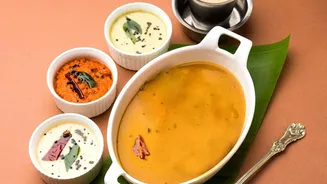
To create a balanced and authentic-tasting Sadya, focus on a few essential categories. Start with steamed Kerala Matta rice, which is the foundation of the meal. For the main curries, Parippu (a simple moong dal curry with ghee) is the traditional first course, followed by Sambar, the famous lentil and vegetable stew. Add Avial, a thick mixture of various vegetables in a coconut and yogurt gravy, which is a signature Sadya dish. Include a simple Thoran, a dry stir-fry of vegetables like cabbage or beans with grated coconut. Finally, you'll need a tangy element like a pickle (Achar) and the essential crunch of Pappadam.
Planning and Prep Are Your Best Friends
The secret to a smooth Sadya cooking experience is meticulous planning. Many experienced cooks recommend starting prep work a day or two in advance. You can make pickles like Inji Puli (a sweet and sour ginger-tamarind paste) a few days ahead, as their flavours improve with time. The day before, do all your vegetable chopping for dishes like Avial and Sambar. You can also grate coconut, which is a key ingredient in many dishes, and store it. Some cooks even prepare certain dry dishes or Sambar the day before. On the day of the feast, your focus will be on the final cooking and assembly, which makes the process far less chaotic.
The Art of the Banana Leaf
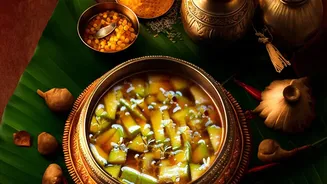
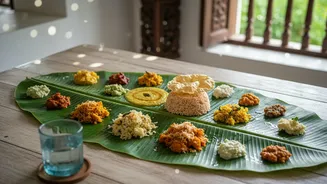
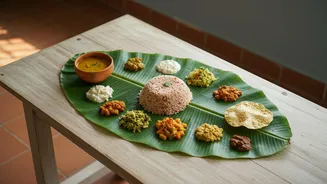
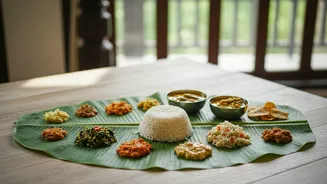
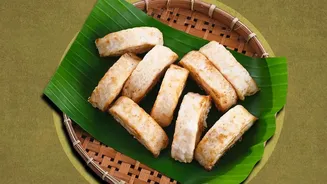
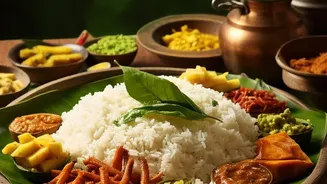
The Sadya is served on a banana leaf for a reason; it adds a subtle flavour and is eco-friendly. There's a specific order and placement for everything, which creates a balance of flavours. The narrow end of the leaf should point to the left of the diner. Items are served on the top half of the leaf, starting from the left with a pinch of salt, a banana, and crispy snacks like banana chips (Upperi) and jaggery-coated Sarkara Varatti. Pickles and side dishes like Pachadi (yogurt with pineapple or cucumber) and Olan (ash gourd in coconut milk) follow. The bottom half is reserved for the rice, which is served in the centre. The main curries are then poured over the rice in succession.
The Sweet Finale: Payasam
No Sadya is complete without Payasam, the dessert course. There are many varieties, but two popular ones are Ada Pradhaman (made with rice flakes, jaggery, and coconut milk) and Parippu Pradhaman (made with lentils, jaggery, and coconut milk). For beginners, using a ready-made payasam mix can be a great time-saver without compromising on taste. Traditionally, the Payasam is served directly on the banana leaf and can be eaten mixed with a small, mashed banana to enhance the flavour. After the sweet course, a final serving of rice with Rasam (a tangy soup) and buttermilk helps cleanse the palate and aids digestion, bringing the grand feast to a close.