






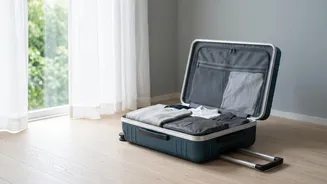

The 'One Bag' Rule Is Now Strictly Enforced
The most significant change for passengers is the strict enforcement of the 'one cabin bag' rule by India's Bureau of Civil Aviation Security (BCAS). While the rule itself isn't new, its rigorous application across all Indian airports—for both domestic
and international flights—is a recent development that has caught many travellers by surprise. Previously, passengers might have carried a small suitcase, a laptop bag, and a handbag. Now, you are permitted only one primary piece of hand luggage. Any additional items like a handbag, purse, or laptop bag must fit inside that single cabin bag. This policy was tightened to reduce congestion and streamline security checks as air traffic in India continues to grow.
Cabin Bag Weight and Size Limits
While the number of bags has been restricted, the weight and size limits for that single bag remain largely consistent, though enforcement is now much stricter. For most domestic airlines like IndiGo, SpiceJet, and Akasa Air, economy passengers are allowed one cabin bag weighing up to 7 kg. Air India is slightly more generous for some economy fares, allowing up to 8 kg. Business and First Class passengers typically have a higher allowance of 10-12 kg. The standard dimensions for a cabin bag are generally around 55 cm x 35 cm x 25 cm, but this can vary slightly between airlines, so checking with your specific carrier is crucial. Gate agents are increasingly weighing and measuring bags before boarding, meaning overweight or oversized bags will be sent to check-in, often for a hefty fee.
What About a Personal Item?
The 'one bag' rule has caused some confusion regarding smaller personal items. Officially, BCAS rules often permit one main cabin bag plus one small personal item, such as a lady's handbag, a slim laptop sleeve, or a small backpack that can fit under the seat in front of you. However, reports from airports suggest that at the final boarding gate, airline staff frequently insist that this personal item be consolidated into your main cabin bag. To be safe, it is best to pack with the expectation that everything must fit into one piece of luggage. A slim laptop sleeve is less likely to be challenged than a bulky backpack. The allowance for this personal item is typically around 3 kg.
Liquids, Power Banks, and Restricted Items
The rules for carrying specific items remain unchanged but are important to remember. All liquids, aerosols, and gels (LAGs) in your cabin bag must be in containers of 100 ml or less. All these small containers must fit into a single, transparent, resealable one-litre plastic bag. It’s the size of the container that matters, not the amount of liquid inside, so a half-empty 200 ml bottle of shampoo will not be allowed. One critical rule is that all power banks and spare lithium batteries MUST be carried in your cabin baggage; they are strictly forbidden in checked luggage for safety reasons. Sharp objects like knives and scissors with blades longer than 6cm must be placed in your checked bags.
Updates to Checked Luggage and Customs
For domestic flights, the standard checked baggage allowance for most economy fares remains 15 kg. For international flights, the allowance is typically higher, often one or two bags of 23 kg each, especially on routes to the USA. However, some airlines have introduced fare families with different baggage limits, so it's vital to check your ticket's allowance. For international arrivals, there's good news. The Baggage Rules, 2026, increased the duty-free allowance for Indian residents from ₹50,000 to ₹75,000. Additionally, passengers aged 18 and over can bring one new laptop duty-free, over and above this limit.