


The Grand Return: Artemis Program
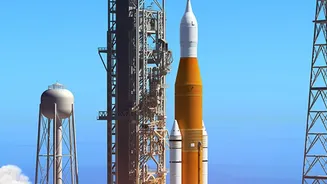
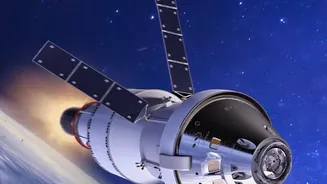
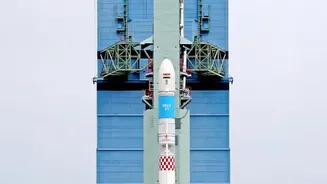
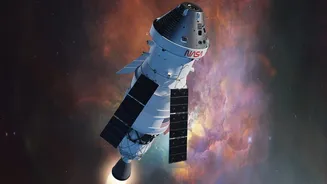
The crown jewel of NASA's current efforts is the Artemis program, which aims to establish a sustainable human presence on the Moon for the first time. Following a successful uncrewed test flight (Artemis I) and a crewed lunar flyby in April 2026 (Artemis II),
all eyes are on the next giant leap. Artemis III, currently targeting a 2027 launch, is planned as a demonstration mission to test the human landing systems that will eventually carry astronauts to the lunar surface. NASA is working with commercial partners like Blue Origin and SpaceX to develop these landers. The ultimate goal, a crewed landing near the Moon's south pole, is slated for Artemis IV in 2028. This ambitious program isn't just about planting flags; it's about building a long-term lunar base, learning to live off-world, and using the Moon as a stepping stone for future human missions to Mars.
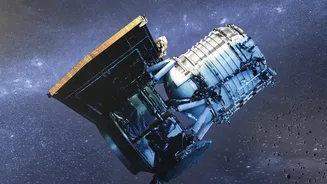
A New Eye on the Universe: Nancy Grace Roman Space Telescope
Set to launch as early as August 30, 2026, the Nancy Grace Roman Space Telescope is NASA's next great observatory. While the James Webb Space Telescope zooms in on specific targets with incredible detail, Roman will provide a panoramic view of the cosmos, capturing an area 200 times larger than Hubble's infrared field of view in a single snapshot. This wide-angle lens will allow it to map the structure of the universe, hunt for thousands of new exoplanets, and tackle one of the biggest mysteries in physics: dark energy. Roman also features a technology demonstrator, a coronagraph, designed to block the light of distant stars to directly image the planets orbiting them. Named after NASA's first chief of astronomy, this telescope will build on the legacies of Hubble and Webb to write the next chapter of cosmic discovery.
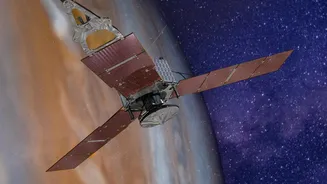
Destination Jupiter's Moon: Europa Clipper
Launched in October 2024, the Europa Clipper spacecraft is on a long journey to Jupiter's icy moon, Europa. It's scheduled to make a crucial Earth gravity-assist maneuver in December 2026 before arriving in Jupiter's orbit in 2030. Scientists believe Europa hides a vast, salty ocean beneath its frozen shell, making it one of the most promising places in the solar system to search for the ingredients for life. Europa Clipper is not a life-detection mission itself, but it will use a suite of advanced instruments to perform dozens of close flybys, studying the ice shell's thickness, scanning for potential plumes of water vapor erupting into space, and determining the ocean's depth and saltiness. Its findings will characterize this ocean world in unprecedented detail and help determine if it truly has the potential to be habitable.
The Red Planet Delivery Service: Mars Sample Return
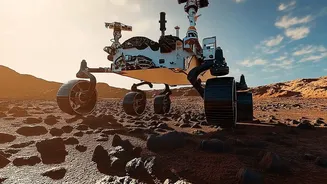
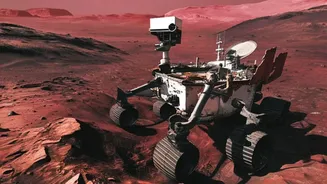
NASA's Perseverance rover has been diligently collecting rock and soil samples in Mars' Jezero Crater since it landed in 2021. The next, incredibly ambitious step is bringing them home. The Mars Sample Return (MSR) mission is a complex, multi-stage collaboration with the European Space Agency (ESA) to retrieve these pristine samples and return them to Earth for study in the 2030s. While the program's initial architecture faced budget and schedule challenges, NASA is re-evaluating the plan, with a final decision on the path forward expected in 2026. The goal is to launch a lander to retrieve the samples and a Mars Ascent Vehicle to rocket them into orbit, where an ESA-built orbiter will capture them for the long flight home. Getting these samples into labs on Earth would be a historic first, allowing scientists to use our most powerful instruments to search for signs of ancient life and unlock Mars' geological secrets.
Prospecting for Water: VIPER Lunar Rover
While Artemis focuses on sending humans, the VIPER (Volatiles Investigating Polar Exploration Rover) is a robotic prospector designed for the Moon's south pole. After being canceled due to budget constraints in 2024, the mission was revived and is now slated for a 2027 launch, with Blue Origin contracted for the delivery. The golf-cart-sized rover's mission is critical: to search for and map out concentrations of water ice in the permanently shadowed regions of the Moon. These are some of the coldest places in the solar system, where water ice could have remained frozen for billions of years. By drilling into the lunar soil, VIPER will create the first resource maps of another world. Finding accessible water is a key enabler for a long-term human presence, as it can be converted into drinking water, breathable air, and rocket propellant.