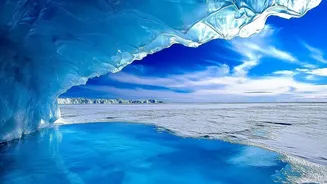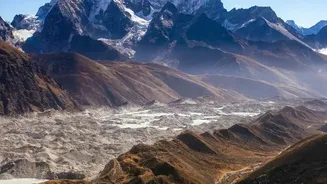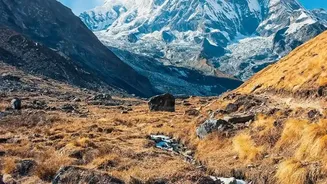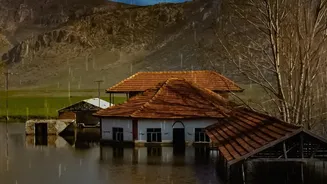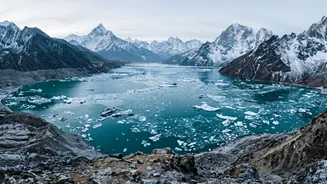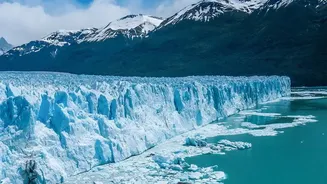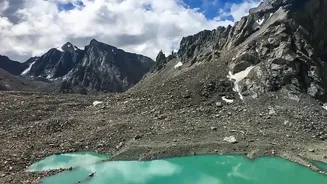





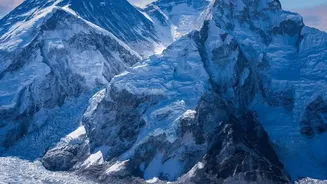
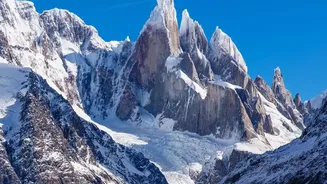
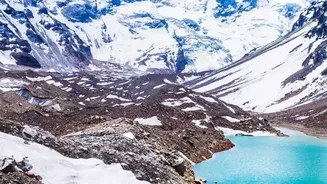
The serene, crystal-clear lakes of the high Himalayas mask a growing threat. As glaciers melt at an alarming rate, these lakes can burst their banks, unleashing devastating floods. Recent UN reports sound a fresh alarm on this danger.
A Silent and Sudden Threat
A Glacial Lake Outburst
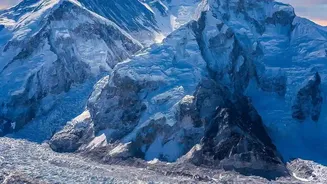
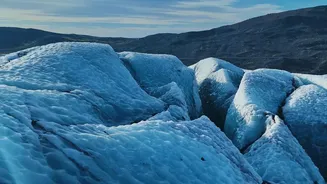
Flood, or GLOF, is a catastrophic event where water dammed by a glacier or a moraine (a ridge formed by rocks and sediment carried by a glacier) is suddenly released. As climate change warms the planet, Himalayan glaciers are melting at an unprecedented rate. This meltwater pools into new or rapidly expanding lakes. These natural dams are often unstable, composed of loose rock and ice. They can be breached by triggers like heavy rainfall, landslides, or even the sheer pressure of the growing body of water, leading to a sudden and violent flood downstream that can travel for kilometres, destroying everything in its path.
A Region on High Alert
The Hindu Kush Himalaya region is a global hotspot for GLOF risks. Recent reports released ahead of the COP31 climate summit highlight the accelerated warming in these mountain regions. A UN-led study identified over 400 potentially dangerous glacial lakes across the vast Hindu Kush Himalaya region, which spans eight countries including India, Pakistan, Nepal, and China. Globally, around 15 million people are considered at risk from GLOFs, with more than half of them living in just four countries: India, Pakistan, Peru, and China. In the High Mountain Asia region alone, over 9 million people are exposed to the danger. The frequency of these events has increased dramatically, rising nearly fivefold since the 1950s.
India's Alarming Vulnerability
While India may not have the highest number of GLOF events, it bears the most severe human cost. A pre-publication UN-led study examining the period between 1835 and 2025 found that India recorded the highest number of deaths from these floods among eight Himalayan countries, with a staggering toll of 6,119 lives lost. This is despite having fewer recorded incidents than countries like China and Pakistan. This points to extreme vulnerability in downstream communities. A separate analysis identified 130 glacial lakes in India that have expanded significantly, with dozens located in the Indus, Ganga, and Brahmaputra river basins, putting states like Sikkim, Uttarakhand, and Himachal Pradesh on high alert.
The Engine of the Crisis
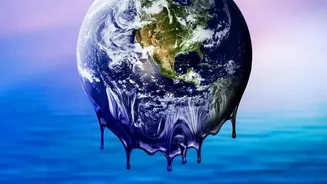
The driving force behind this escalating threat is climate change. Mountain regions are warming much faster than the global average; a 1.5°C global temperature rise could mean a 1.8°C to 2.2°C increase in the Hindu Kush Himalaya. This 'hydrological whiplash' caused by accelerated melting not only creates the immediate danger of GLOFs but also threatens longterm water security for the 1.3 billion people who depend on the ten major rivers originating from the Tibetan Plateau. Reports from the World Meteorological Organization (WMO) and other bodies confirm that ice loss from glaciers is accelerating, with glaciers now losing ice about six times faster than they did in the 1990s.
A Call for Urgent Action
The UN reports stress that while the threat is immense, GLOFs are a hazard that can be managed with foresight and cooperation. The key recommendations focus on developing and implementing robust early warning systems. In Sikkim, for example, sensors have already been installed on some vulnerable glaciers and rivers to provide advance warnings. However, reports note a significant gap in longterm adaptation strategies and highlight the critical need for transboundary coordination, as many dangerous lakes and river basins cross international borders. Experts urge that lessons must be learned from past tragedies like the 2021 Chamoli disaster and the 2023 Sikkim floods to urgently improve risk assessment, monitoring, and community preparedness.