
What You Are Looking For
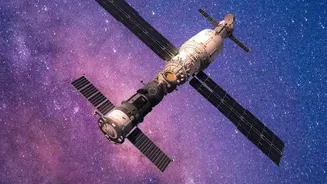
Spotting the ISS is a surprisingly simple and awe-inspiring experience. You don’t need a telescope or any special equipment. To the naked eye, it appears as a very bright, fast-moving point of light, similar to an airplane but without flashing lights.
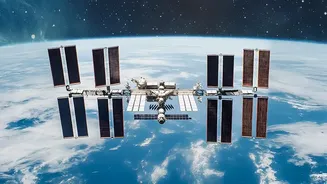
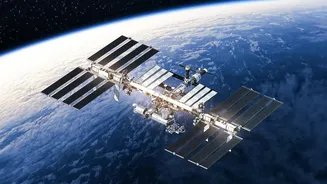
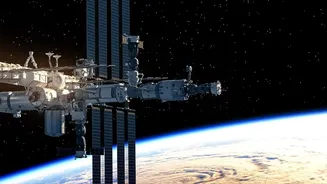
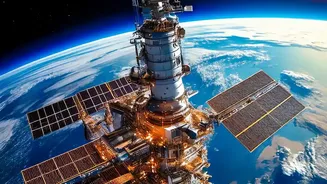
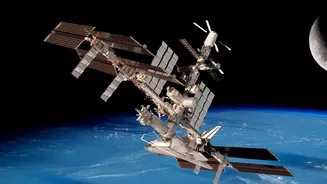
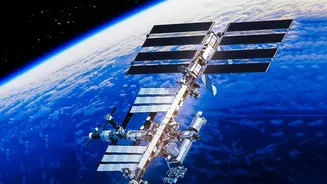
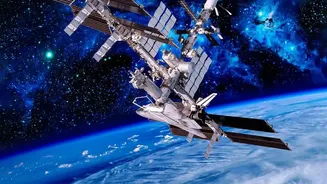
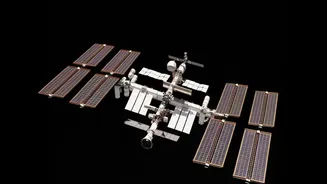
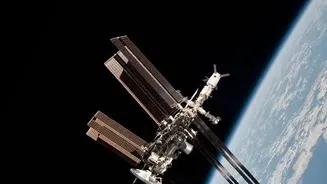
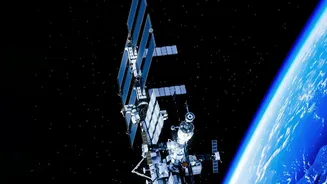
It crosses the sky in a steady, silent arc, often outshining every star and planet. The thrill comes from knowing you are watching a 100-metre-wide habitat, a home and workplace for astronauts, speeding around our planet at 28,000 kilometres per hour.
The Magic Window: When to Look Up
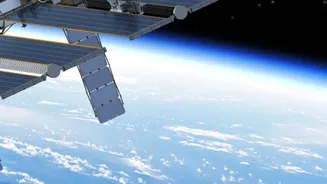
The ISS doesn't have its own lights powerful enough to be seen from Earth; what we see is reflected sunlight. This means sightings are only possible during the twilight hours—just before sunrise or just after sunset. During these times, the sky on the ground is dark, but the station, flying high above, is still bathed in the sun's rays. It emerges from the Earth's shadow into the sunlight, travels across the sky for a few minutes, and then disappears back into shadow. Depending on its orbit, you might get several viewing opportunities in a week, or just one a month.
Your Pocket Guide to the Cosmos
This is where mobile apps become your essential tool. Modern stargazing apps transform your smartphone into a personal planetarium, taking the guesswork out of spotting the station. They use your phone's GPS to know your exact location and its internal compass and gyroscope to know which way you're pointing. By combining this data with the publicly available orbital path of the ISS, these apps can show you exactly where to look in your specific sky, at that exact moment. They provide a real-time, augmented-reality view of the cosmos.
Top Apps for Tracking the Station
Several excellent apps are designed specifically for this purpose. NASA's official Spot The Station app is a fantastic, user-friendly option that provides notifications and a clear augmented reality view to guide your eyes. Another popular choice is ISS Detector, which not only tracks the ISS but can be expanded to include other famous satellites, like the Hubble Space Telescope, and even Starlink satellite trains. Heavens-Above is a long-standing favourite among astronomy enthusiasts, offering precise predictions and detailed sky charts. Most of these apps function similarly: they alert you minutes before a pass is about to begin and provide a live map or arrow to follow.
A Step-by-Step Guide to Your First Sighting
Ready to give it a try? First, download one of the recommended apps, like Spot The Station or ISS Detector, and grant it location access. Enable notifications to get an alert a few minutes before the ISS is due to appear. The app will tell you the exact time, duration, and path of the pass—for example, 'Appears in the West, disappears in the Northeast'. When it's nearly time, head outside to a spot with a clear view of the sky, away from tall buildings or trees. Let your eyes adjust to the darkness for a few minutes. When the pass begins, hold your phone up to the sky. Many apps have an AR feature that overlays the station's path on your camera's view, making it incredibly easy to follow.
Tips for a Perfect Viewing Experience
For the best experience, check the weather; a clear sky is essential. Be patient, as it can take a moment for your eyes to pick out the moving light as it rises above the horizon. The app will show you its trajectory and maximum height, so you'll know how high in the sky to look. Remember that what you are seeing is not just a satellite, but a symbol of human exploration. Sharing the experience with family or friends can make it even more memorable, a collective moment of wonder as you watch people living and working in space, flying right over your heads.