


Welcome to Citizen Science
The concept is called “citizen science,” and it’s a global movement where volunteers (like you!) help professional scientists collect and analyse data. In the past, this might have meant keeping detailed paper logs of weather or wildlife sightings. Today,
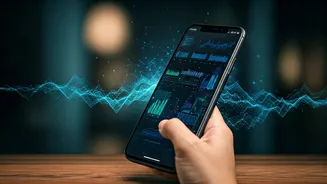
your smartphone, with its high-resolution camera, GPS, and powerful processor, makes contributing easier than ever. Researchers are studying everything from biodiversity loss and light pollution to protein folding and climate change, and they need more eyes, ears, and processing power than their teams alone can provide. By downloading an app and spending just a few minutes a day or a week, you can contribute to massive datasets that lead to real discoveries, policy changes, and a better understanding of our world.
Document India's Incredible Biodiversity
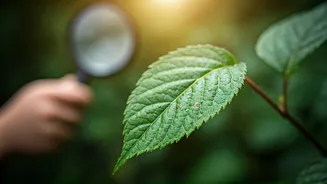
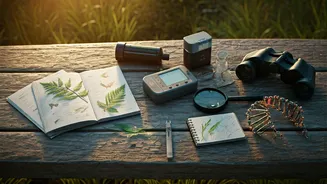
One of the most popular and accessible platforms is iNaturalist. This app, a joint initiative of the California Academy of Sciences and the National Geographic Society, turns you into a naturalist. The process is simple: see a plant, insect, or animal you don’t recognise? Snap a photo. The app’s AI, along with a community of experts, will help you identify it. Every observation you upload, complete with its GPS tag and date, becomes a data point. In a country as biodiverse as India, this is incredibly valuable. Your photos can help track the spread of invasive species, monitor the health of native plant populations, or record sightings of rare butterflies in your own neighbourhood. It’s a fantastic way to learn about local flora and fauna while creating a permanent record for science.
Help Map the Stars (and Light Pollution)
Are you a fan of stargazing? You can help astronomers understand the impact of light pollution. The Globe at Night project asks citizen scientists to look up at the night sky and report which stars they can see from their location. You don't need a telescope—just your eyes. The app provides star charts for comparison, allowing you to match what you see with a magnitude scale. This data helps create a global map of light pollution, a growing problem in and around India's rapidly expanding cities. By showing scientists where the sky is darkest and where it is brightest, your observations contribute to research on the effects of artificial light on human health, wildlife behaviour, and energy consumption.
Lend Your Phone’s Idle Power
Some of the most groundbreaking science doesn't require you to go outside at all. It just needs your phone’s unused processing power. Apps like DreamLab (from the Vodafone Foundation) and BOINC (developed by the University of California, Berkeley) allow you to “donate” your phone’s computing power to massive research projects while you sleep. Simply install the app, choose a project—such as cancer research, climate modelling, or COVID-19 studies—and plug your phone in to charge. While you’re asleep, your phone will download tiny packets of data, perform complex calculations, and send the results back to the research team. Your device becomes one small part of a global supercomputer, helping to solve problems that would otherwise require years of computing time.
Become an Expert Birdwatcher
For bird lovers, eBird is the gold standard. Managed by the Cornell Lab of Ornithology, this platform allows you to submit checklists of birds you see and hear, whether you’re on a dedicated birding trip or just walking through a local park. India is home to an astonishing variety of resident and migratory birds, and eBird helps scientists track their populations, migration routes, and habitats on a massive scale. Your simple observation of a sparrow or a sunbird, when combined with thousands of others, helps researchers understand how bird populations are shifting in response to urbanisation and climate change. The platform also serves as a personal birding journal, keeping track of your life list and helping you find new species in your area.