



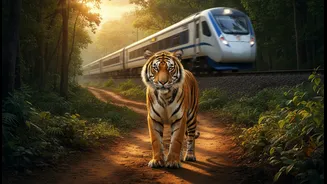


The Promise of Progress
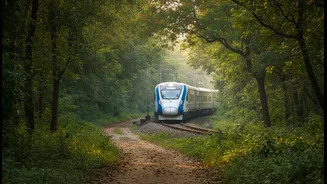
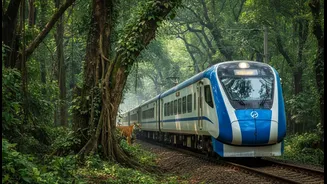
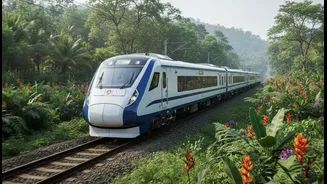
The Vande Bharat Express has become a symbol of modern India—fast, comfortable, and connecting the country like never before. These semi-high-speed trains have slashed travel times, making them a popular choice for business travellers and tourists alike.
Several new and existing routes are now making wildlife getaways more accessible, bringing passengers within a few hours' drive of iconic national parks such as Jim Corbett in Uttarakhand, Ranthambore in Rajasthan, and Gir in Gujarat. By connecting major cities to stations near these natural treasures, the trains boost local economies and offer a convenient alternative to flights or long road trips, promoting tourism in previously hard-to-reach areas. For many, this represents a welcome leap forward, opening up India's stunning biodiversity to a wider audience.
The Unavoidable Risks to Wildlife
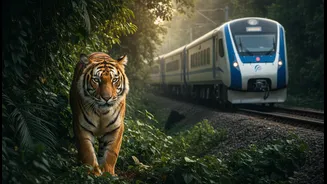
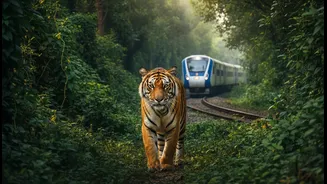
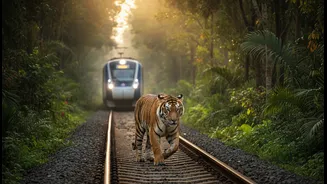
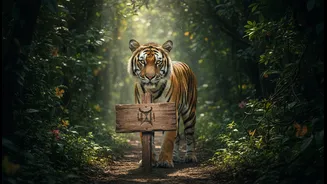
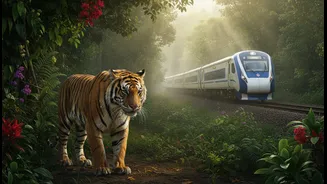
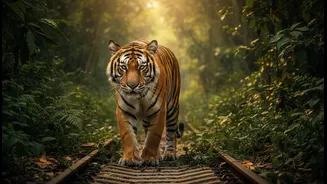
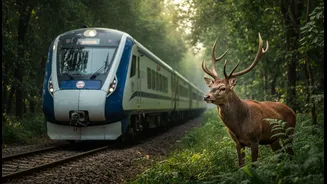
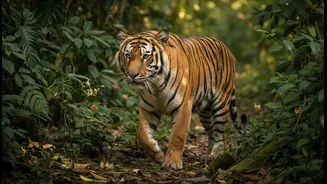
However, this expansion comes with significant risks. Many railway tracks, both old and new, cut directly through ecologically sensitive zones, including established wildlife corridors for elephants, tigers, and other species. High-speed trains amplify the danger of collisions, which are often fatal for animals and can pose safety risks to passengers. The issue is not just about direct impact; the noise and vibrations from frequent, fast-moving trains can disrupt animal behaviour, fragment habitats, and alter migration patterns. Conservationists have long raised alarms about infrastructure projects in fragile ecosystems like the Western Ghats, where doubling railway lines has sparked debates over the irreversible damage to biodiversity hotspots. Safety reports have also noted that the lighter build of Vande Bharat trains could make them more vulnerable in collisions compared to traditional locomotives.
Finding a Middle Path: Mitigation and Technology
Recognising the conflict, Indian Railways and the Environment Ministry are collaborating on solutions. In high-risk zones, especially elephant and tiger corridors, several measures are being implemented. These include building physical infrastructure like underpasses and overpasses to provide safe passage for animals, and erecting fencing along vulnerable stretches of track. Technology is also playing a crucial role. AI-powered Intrusion Detection Systems (IDS) that use acoustic sensors are being deployed to detect the presence of elephants near tracks and send real-time alerts to train operators, giving them time to slow down. Other methods being tested include thermal imaging cameras, motion detectors, and even the sound of honeybees to repel elephants from the tracks.
The Reader Takeaway
So, what does this all mean for the average citizen and traveller? The expansion of Vande Bharat is a classic development dilemma: the need for modern infrastructure versus the imperative of conservation. As a traveller, you can enjoy the enhanced connectivity to explore India’s natural heritage, but it's important to be aware of the complex environmental footprint of that journey. Supporting eco-tourism operators who contribute to local conservation efforts can be one way to travel more responsibly. As citizens, staying informed about the debates surrounding infrastructure projects in sensitive areas is crucial. The effectiveness of mitigation measures like AI detection systems and wildlife overpasses will determine whether India can successfully chart a course where high-speed development and wildlife can coexist. The conversation is no longer about choosing one over the other, but about demanding innovative and sustainable solutions that honour both progress and nature.