



What is Space Weather?
Just as terrestrial weather describes conditions in our atmosphere, space weather refers to the changing conditions in the space environment between the sun and Earth. It’s not about wind and rain; it’s about invisible forces like magnetic fields, plasma,
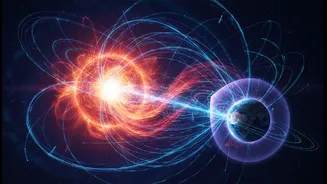
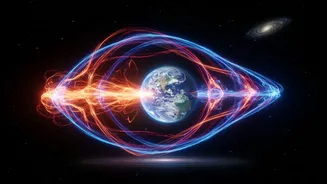
and energetic particles. These conditions are almost entirely driven by the sun’s activity. While Earth’s magnetic field, the magnetosphere, acts as a protective shield, intense solar events can breach these defences and cause noticeable disruptions to our modern way of life.
The Sun's Fiery Temper
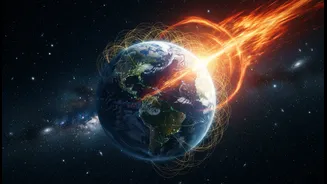
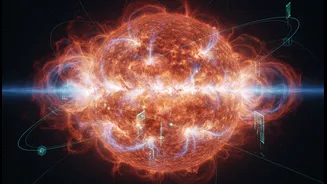
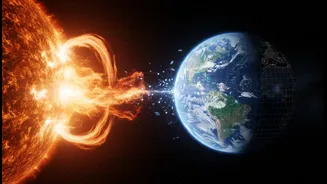
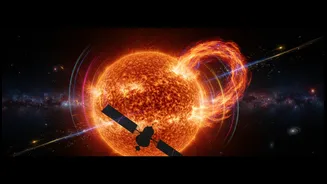
The sun is a turbulent star, and its activity waxes and wanes over an approximate 11-year cycle. Two major types of solar outbursts cause the most significant space weather: solar flares and coronal mass ejections (CMEs). A solar flare is an enormous explosion on the sun's surface, releasing a torrent of radiation that travels at the speed of light, reaching Earth in just eight minutes. A CME is a different beast: a massive eruption that flings billions of tonnes of plasma and magnetic fields into space. These CMEs travel slower, taking anywhere from 15 hours to several days to reach our planet. When Earth is in the path of a CME, it can trigger a geomagnetic storm — a major disturbance of our planet's magnetosphere.
The Impact on Navigation Systems
Our reliance on the Global Positioning System (GPS) is immense, from navigating our cars to guiding precision agriculture and aviation. GPS works by a receiver calculating its position based on signals from multiple satellites. These signals must pass through the ionosphere, a layer of Earth’s upper atmosphere. During a geomagnetic storm, energy from the sun bombards and alters the ionosphere. The charged plasma in this disturbed layer can bend, slow down, or scatter the GPS signal, much like a distorted lens blurs light. This introduces errors in position calculations, which can increase from a few metres to tens of metres, rendering high-precision applications useless. In severe cases, the receiver can lose its lock on the satellite signal altogether.
Threats to Communication and Power
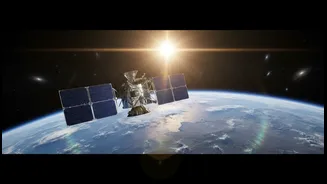
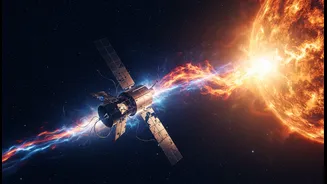
It’s not just GPS that's at risk. Satellites themselves, the backbone of modern communication, are vulnerable. High-energy particles from a solar storm can damage sensitive electronics, degrade solar panels, and even alter a satellite's orbit by increasing atmospheric drag. On the ground, radio communications can be disrupted. Solar flares can cause high-frequency radio blackouts on the sunlit side of the Earth, affecting aviation and marine communications. Furthermore, powerful geomagnetic storms can induce electrical currents in long conductors on the ground, such as power lines and pipelines. These unexpected currents can overload power grids, damage transformers, and lead to widespread blackouts, as famously happened in Quebec in 1989.
India’s Sentinel in Space
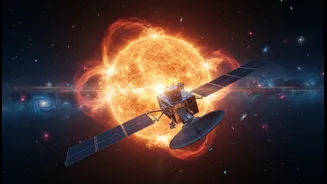
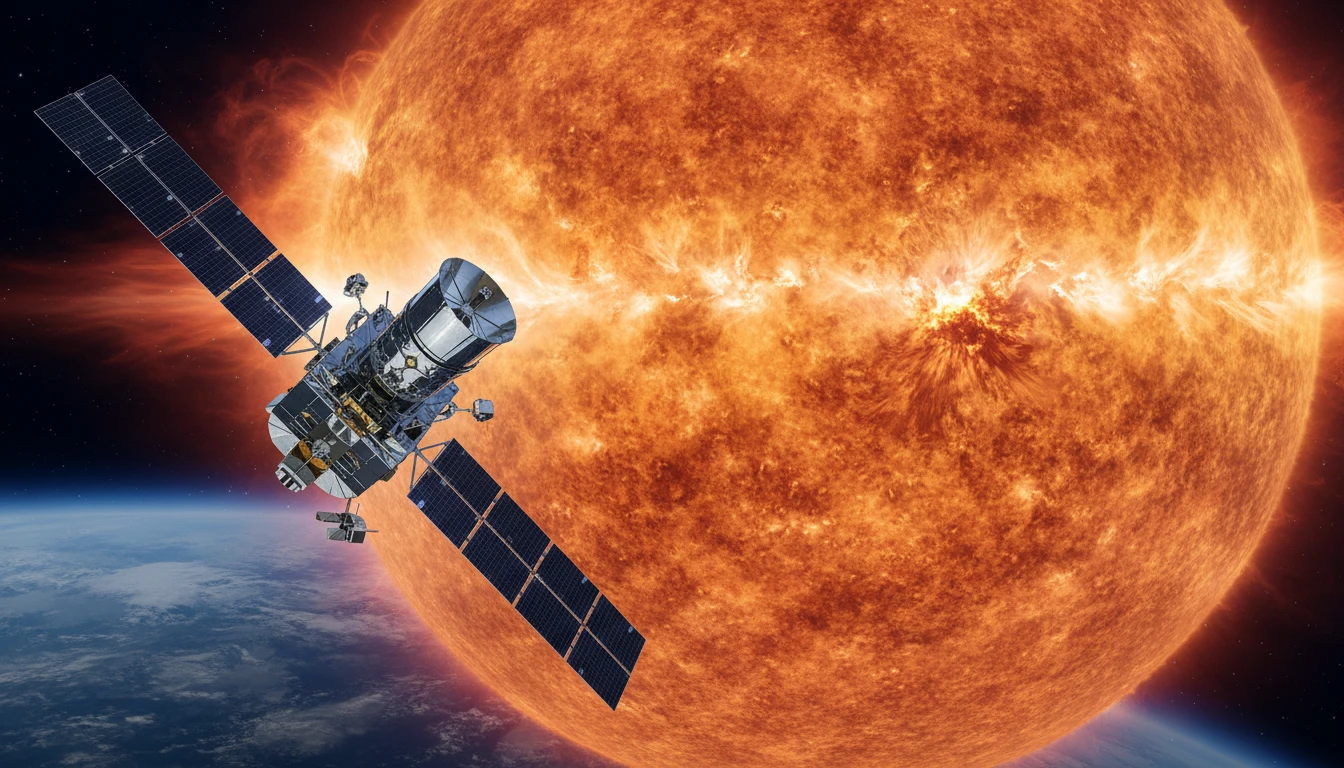
Understanding and predicting space weather is crucial for mitigating its effects. This is where India's own solar mission, Aditya-L1, plays a vital role. Launched by ISRO, Aditya-L1 is strategically positioned at Lagrange Point 1 (L1), about 1.5 million kilometres from Earth, giving it an uninterrupted view of the sun. Its seven sophisticated payloads are designed to study the sun’s atmosphere, analyse the solar wind, and monitor events like CMEs and flares in real-time. By providing early warnings, Aditya-L1 gives operators of satellites, power grids, and communication networks crucial time to take protective measures, safeguarding India's critical infrastructure from the sun's powerful outbursts.