





Why Choose Natural Pest Control?
When your garden is just a few steps from your living room, using synthetic chemical pesticides can feel unnerving. Natural solutions offer peace of mind, especially in homes with children and pets. They are generally less harmful to the environment and target
common pests without the toxic side effects. For many soft-bodied insects like aphids, spider mites, and mealybugs, homemade sprays are a surprisingly effective first line of defence. By opting for gentle methods, you maintain a healthier ecosystem on your balcony, protecting not just your plants but also any beneficial insects that might visit.
Understanding Neem Oil
Neem oil is a powerful, naturally occurring pesticide extracted from the seeds of the neem tree (Azadirachta indica), native to India. Its power lies in a compound called azadirachtin, which works in multiple ways. It acts as an antifeedant, discouraging insects from eating your plants. It also disrupts their hormonal systems, interfering with their ability to grow and reproduce, which gradually reduces the pest population over time. Unlike some chemical pesticides, neem oil is selective and generally does not harm beneficial pollinators like bees, as long as it isn't sprayed directly on them.
How to Mix a Neem Oil Spray
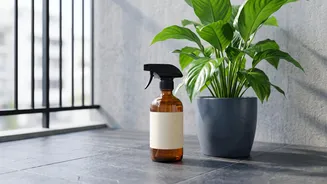
Creating your own neem oil spray is simple, but getting the ratio right is key to avoiding leaf damage. For a standard preventative spray, mix 1 to 1.5 teaspoons of 100% cold-pressed neem oil with 1 litre of warm water. To this, add about half a teaspoon of a mild, biodegradable liquid soap, like castile soap. The soap is crucial because it acts as an emulsifier, allowing the oil and water to mix properly. Without it, the oil will just float on top. Pour the mixture into a clean spray bottle and shake it well before and during application to keep the solution mixed. Always make a fresh batch before each use, as the mixture can degrade over time.
The Simple Power of Soapy Water
An even simpler solution for many common balcony pests is a basic soapy water spray. This method is particularly effective against soft-bodied insects like aphids, mealybugs, and spider mites. The soap works by breaking down the protective outer layer, or exoskeleton, of these pests, causing them to dehydrate and die. It's important to use a mild soap without degreasers, bleach, or harsh detergents, which can harm your plants. Simple castile soap or a basic dish soap that doesn't advertise 'degreasing' properties is an ideal choice for this purpose.
Application Best Practices for Healthy Plants
How and when you apply these sprays is as important as what's in them. The best time to spray is in the early morning or late evening when the sun is not intense and temperatures are cooler. Spraying in direct sunlight or high heat can cause the oil or soap to burn the plant's leaves. Before spraying an entire plant, always perform a 'patch test': apply the spray to one or two leaves and wait 24 to 48 hours to ensure there is no negative reaction. When you do spray, be thorough. Pests love to hide on the undersides of leaves and in the crevices where leaves meet stems, so be sure to cover all surfaces of the plant. For an active infestation, you may need to reapply every 7-10 days.
Common Pests and Potential Precautions
Neem oil and soapy water are effective against a wide range of common garden pests, including aphids, spider mites, mealybugs, whiteflies, and scale insects. However, these treatments are not instantaneous killers; neem oil, for example, can take several days to a week to show its full effect as the pests stop feeding and reproducing. While generally safe, some plants can be sensitive to these sprays. Delicate herbs like parsley and dill, as well as very young seedlings, may be more susceptible to leaf burn. If you overuse these sprays or make them too concentrated, you risk clogging the plant's pores (stomata), which can interfere with its ability to photosynthesize and breathe. Always start with a weaker dilution and observe your plants closely.