




Gaganyaan: India's Giant Leap
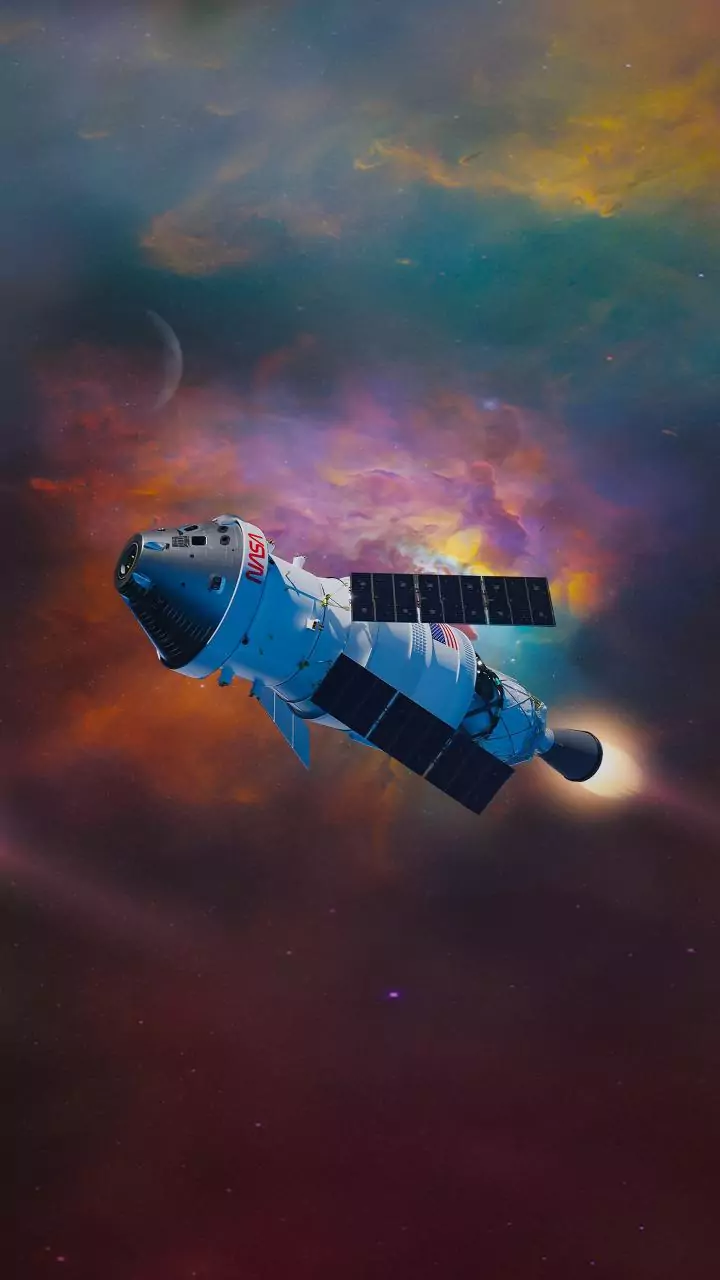
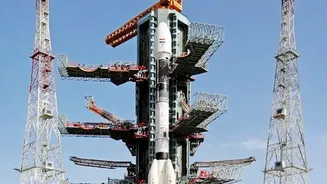
The most anticipated mission is Gaganyaan, India's inaugural human spaceflight program. The objective is to send a crew of three astronauts into a 400-kilometre Low Earth Orbit for a three-day mission and bring them back safely to Earth. This will make
India the fourth nation in the world—after the United States, Russia, and China—to possess independent human spaceflight capability. Following a series of uncrewed test flights, with one featuring the humanoid robot Vyommitra, the first crewed flight is anticipated in the first quarter of 2027. Gaganyaan is more than a single mission; it's a monumental step towards developing critical technologies for life support, re-entry, and crew safety, laying the groundwork for a future Indian space station by 2035 and even a crewed lunar mission by 2040.
Expanding Our Interplanetary Horizons
After the stellar success of the Mars Orbiter Mission (Mangalyaan), ISRO is setting its sights on our planetary neighbours once again. The next major interplanetary ventures include Shukrayaan-1, an orbiter mission to Venus, and Mangalyaan-2, a follow-up mission to Mars. Shukrayaan-1, tentatively scheduled for a 2028 launch, aims to study the dense, toxic atmosphere and surface of Venus, a planet often called Earth's 'twin' due to its similar size. This mission will investigate its extreme greenhouse effect and why it evolved so differently from Earth. Meanwhile, Mangalyaan-2 is poised to be far more ambitious than its predecessor. Tentatively scheduled for launch no earlier than 2026, it is planned to include not just an orbiter but also a lander, a rover, and even a helicopter, marking India's first attempt at a soft landing on another planet. If successful, India would join an elite club of nations that have operated rovers on the Martian surface.
An Eye on Earth and the Sun
While deep space exploration grabs headlines, ISRO's focus on our home planet and star remains sharp. The NASA-ISRO Synthetic Aperture Radar (NISAR) satellite, launched in July 2025, is a flagship collaboration designed to monitor Earth's changing ecosystems, land surfaces, and ice sheets with unprecedented detail. Using advanced dual-frequency radar, NISAR will provide crucial data every 12 days to help understand climate change, deforestation, and natural hazards like earthquakes and volcanic eruptions. Looking starward, the Aditya-L1 mission, India's first dedicated solar observatory, is already operational. Positioned at the Sun-Earth Lagrange Point 1 (L1), it continuously observes the Sun's outer layers, providing vital information on solar flares, coronal mass ejections, and space weather, which can impact satellites and power grids on Earth. Its findings are helping to decode the Sun's behaviour and its effect on our planet's magnetic field.
Fostering a New Space Economy
Beyond government-led missions, the future of Indian space exploration is increasingly collaborative and commercial. The establishment of the Indian National Space Promotion and Authorisation Centre (IN-SPACe) has opened the doors for private companies to participate across the entire space value chain. This policy shift has fueled a boom in space startups, with hundreds of new companies now involved in building satellites, launch vehicles, and downstream applications. IN-SPACe's decadal vision aims to grow India's share of the global space economy from 2% to 8% by 2033, projecting a rise from USD 8.4 billion to USD 44 billion. The recent success of Vikram-1, India's first privately developed orbital rocket by Skyroot Aerospace in July 2026, is a powerful symbol of this new era, demonstrating that private innovation is ready to help carry India's space ambitions forward.