




The Promise of a Single Pot
There's a unique magic to one-pot cooking. It’s an act of culinary minimalism that promises maximum flavour with minimal fuss. All the ingredients—grains, lentils, vegetables, and spices—tumble together, their individual characters melding into a harmonious,
deeply satisfying whole. The aroma fills the kitchen, a singular, comforting scent that signals something good is on its way. Best of all, it means less time scrubbing pans and more time savouring the meal. In a world that often feels complicated, the simplicity of a one-pot meal is a small but profound act of self-care.
Meet India’s Ultimate Comfort Food
Across the vast culinary landscape of India, if one dish reigns supreme as the ultimate comfort food, it is Khichdi. A humble yet profound mixture of rice and lentils, Khichdi is more than just a meal; it’s a feeling. Its history stretches back centuries, with mentions in ancient texts and accounts from travellers. From the simplest version given to a person recovering from an illness to rich, elaborate variations served during festivals, Khichdi adapts to every occasion and every palate. It is, for millions, the taste of home, of nourishment, and of uncomplicated love.
The Soulful Masala Khichdi Recipe
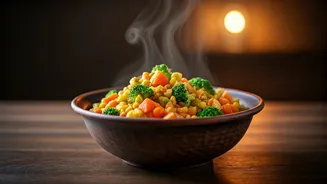
This recipe is for a basic but incredibly flavourful Masala Khichdi that you can make in a pressure cooker. It’s the perfect starting point. Feel free to add finely chopped vegetables like carrots, peas, potatoes, or cauliflower along with the onions and tomatoes to make it more wholesome. **Ingredients:** - 1/2 cup Basmati rice, rinsed - 1/2 cup Toor Dal (split pigeon peas) or Moong Dal (split yellow lentils), rinsed - 1 medium onion, finely chopped - 1 medium tomato, finely chopped - 1 teaspoon ginger-garlic paste - 1-2 green chillies, slit - 1/4 teaspoon turmeric powder (haldi) - 1/2 teaspoon red chilli powder (optional) - 1/2 teaspoon garam masala - 1 teaspoon cumin seeds (jeera) - A pinch of asafoetida (hing) - 2 tablespoons ghee or oil - 3 cups water - Salt to taste - Fresh coriander leaves for garnish
Step-by-Step to a Perfect Bowl
1. **Prepare the Base:** Wash the rice and dal together until the water runs clear. Let them soak for about 15-20 minutes while you prepare the other ingredients. This helps them cook faster and more evenly. 2. **Temper the Spices (Tadka):** Heat ghee or oil in a pressure cooker over medium heat. Once hot, add the cumin seeds. When they start to sizzle and become fragrant, add the asafoetida. This initial tempering is the foundation of your Khichdi’s flavour. 3. **Sauté the Aromatics:** Add the chopped onions and sauté until they turn soft and translucent. Add the ginger-garlic paste and slit green chillies, and cook for another minute until the raw smell disappears. 4. **Build the Flavour:** Add the chopped tomatoes and cook until they become soft and mushy. Now, add the spice powders: turmeric powder, red chilli powder (if using), and salt. Stir well and cook for a minute until the oil starts to separate from the masala. 5. **Combine and Cook:** Drain the soaked rice and dal and add them to the cooker. Mix everything gently for a minute to coat the grains with the masala. Pour in 3 cups of water and give it a final stir. The consistency should be porridge-like; add an extra half cup of water if you prefer it runnier. 6. **Pressure Cook:** Secure the lid of the pressure cooker. Cook on high heat for 3-4 whistles. After the whistles, turn off the heat and let the pressure release naturally. This slow release is crucial for a perfectly cooked, creamy texture.
Serving Your Bowl of Comfort
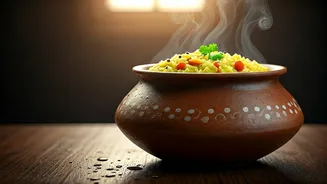
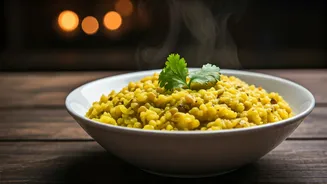
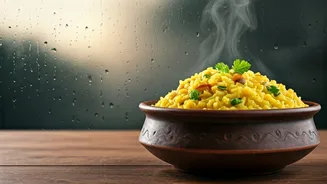
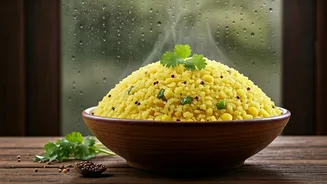
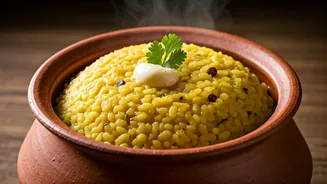
Once the pressure has fully released, open the cooker. The Khichdi will look soft and blended. Sprinkle the garam masala over the top and stir it in. The final, most important step is to serve it hot. Ladle the Khichdi into a bowl, garnish generously with fresh coriander, and top with a spoonful of pure ghee. The ghee will melt into the warm Khichdi, releasing an irresistible aroma and adding a final layer of richness. It’s traditionally enjoyed with a side of plain yoghurt (dahi), a crunchy papad, and a spoonful of your favourite pickle (achaar) for a perfect symphony of textures and tastes.