







Beyond Job Replacement: A Story of Transformation
The conversation around AI and jobs often defaults to a fear of mass unemployment. While some roles, particularly those involving repetitive, manual tasks, are being automated, the bigger story is one of transformation, not outright replacement. Across
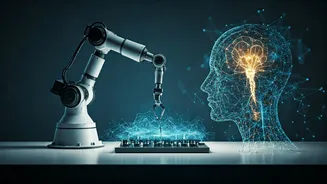
India's IT services, a sector that is a bellwether for white-collar work, engineers report that AI tools now generate baseline code, freeing them up to focus on higher-value tasks like system design and business problem-solving. This shift means productivity expectations are rising, but it's also changing the nature of roles from the ground up. Companies are moving toward a 'human by exception' model, where AI handles routine operations and humans intervene for critical decisions. This pivot is creating a new dynamic where employees collaborate with AI systems, enhancing efficiency and allowing them to tackle more complex and creative challenges.
The New AI-Native Careers
While some jobs evolve, a whole new category of careers is being born directly from AI. Roles that were unheard of just a few years ago, such as AI Specialist, Generative AI Engineer, and AI Ethics Officer, are now among the fastest-growing job titles in India. The demand for professionals who can build, manage, and scale AI systems has surged, with estimates suggesting India will need one million AI professionals by 2026. This boom is driven by companies moving beyond experimentation to deploying AI in core business functions like fraud detection, supply chain forecasting, and customer intelligence. The demand for specialised roles like AI Architect, NLP Engineer, and Machine Learning Engineer is projected to command significant salary premiums, reflecting a wide gap between the supply of talent and industry needs.
The Skills That Matter Now
In this new era, the skills that companies value are changing dramatically. Technical proficiency remains crucial, with Python, machine learning fundamentals, and expertise in deep learning frameworks like TensorFlow or PyTorch topping the list. However, employers are increasingly prioritising AI skills over years of experience, with some indicating they wouldn't hire someone lacking AI literacy. Beyond core tech abilities, skills like prompt engineering—the art of communicating effectively with large language models—are becoming highly sought after. Equally important are the human-centric skills that AI cannot replicate: critical thinking, complex problem-solving, creativity, adaptability, and clear communication. Workers who can blend technical AI knowledge with these soft skills are the ones who will have a competitive edge and command higher wages.
How to Adapt and Thrive
For professionals and fresh graduates alike, the message is clear: adaptation is not optional. The sharp decline in traditional fresher hiring at major IT firms signals that the era of learning basic tasks on the job is fading. Companies now expect candidates to arrive with baseline readiness and practical proof-of-work through projects, internships, and certifications. Fortunately, resources for upskilling are becoming more accessible through government-backed initiatives like the AI Skills Passport and NASSCOM's programs. The focus is shifting from what you have studied to what you can do and build. For non-technical professionals, understanding how to use AI tools for productivity, integrating them into workflows, and knowing how to use APIs can provide a significant career boost. The key is to embrace continuous learning and view AI not as a threat, but as a powerful tool to augment your capabilities.