


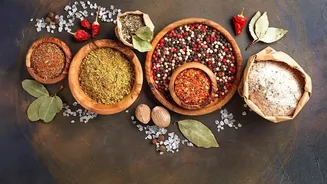
Meet Cumin: The Warm, Earthy Foundation
Cumin, or 'jeera', is a cornerstone spice in the Indian kitchen, beloved for its warm, nutty, and slightly peppery flavour. You'll find it in two forms: whole seeds and ground powder. Whole seeds are often the first ingredient in a 'tadka' or tempering,
where they are sizzled in hot oil or ghee to release their aromatic compounds. This technique, known as 'blooming', infuses the entire dish with cumin's foundational flavour. Ground cumin, on the other hand, is typically added later with other powdered spices, blending seamlessly into sauces and gravies to provide a deep, earthy body. For an even richer, smokier flavour, you can dry-roast whole cumin seeds in a pan until fragrant before grinding them into a powder, which can be used as a finishing spice on dishes like raita.
Discover Tamarind: The Tangy Counterpart
Tamarind, or 'imli', is a fruit that provides a unique sweet-and-sour tang essential to many regional Indian cuisines. Its flavour is complex—primarily sour but with sweet, fruity undertones. Tamarind is available in several forms, but the most common for cooking are the compressed block of pulp, ready-made paste, and concentrate. To use the block, you simply soak a piece in hot water for about 10 to 30 minutes, mash it with your fingers to separate the pulp from the fibers and seeds, and then strain the resulting liquid. Ready-made pastes and concentrates offer convenience, but their potency can vary, so it's always wise to start with a small amount and taste as you go. This tangy liquid is the key souring agent in dishes from lentil soups like sambar to vibrant chutneys.
The Art of the Perfect Balance
The pairing of cumin and tamarind is a classic example of flavour balancing. Cumin’s robust, earthy warmth provides a grounding base that prevents the bright, sharp notes of tamarind from becoming overwhelmingly sour. In return, tamarind’s tanginess cuts through the richness and adds a refreshing lift, creating a layered and dynamic taste experience. Think of them as partners: cumin builds the stage, and tamarind performs on it. Many dishes, from Khatti Dal to various curries and chutneys, rely on this very partnership. The key is not to let one overpower the other. Their shared flavour molecules create a natural affinity, placing them in the top 2% of ingredient pairings.
Techniques for Kitchen Harmony
Achieving the perfect sweet-sour balance is about technique and tasting. When building a dish, start by tempering whole cumin seeds in oil to establish that warm, aromatic base. When you introduce the tamarind liquid, do so gradually. Add a small amount, stir it in, and let it cook for a minute before tasting. It's much easier to add more sourness than to take it away. If your dish becomes too tangy from the tamarind, a small amount of a sweetener like jaggery or brown sugar can help restore balance. Conversely, if the earthiness of cumin feels too dominant or slightly bitter, the acidity of tamarind can help brighten the dish. Don't be afraid to adjust; even a small tweak can bring the flavours into perfect alignment.
Where Cumin and Tamarind Shine Together
This dynamic duo is the secret behind many beloved Indian dishes. In South Indian Sambar or Rasam, cumin is part of the essential spice base, while tamarind provides the signature tangy broth. Many chaat snacks are drizzled with a sweet and sour tamarind chutney, which is often spiced with roasted ground cumin to give it depth. You can experiment by adding a splash of tamarind water and a pinch of cumin to a simple chickpea curry to instantly elevate its flavour. Or, create a simple marinade for grilled vegetables using tamarind paste, ground cumin, and a little salt and oil for a deliciously complex flavour profile.