


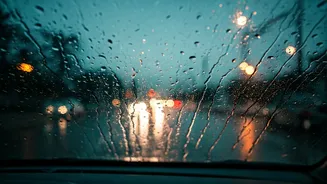



Gear Up to Be Seen
When visibility drops during a downpour, you need to make yourself as conspicuous as possible to other road users. Standard dark-coloured raincoats often blend into the gloomy surroundings. Instead, opt for brightly coloured waterproof gear in shades
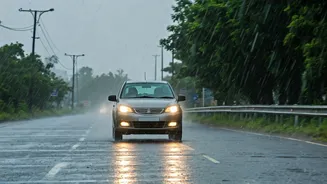
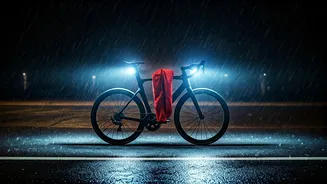
like neon yellow or orange. [15] Many modern riding jackets now come with integrated high-visibility panels. At a minimum, ensure your gear has ample reflective strips on the front, back, and arms, which light up brilliantly in the headlights of other vehicles. [5, 23] A simple, inexpensive reflective vest worn over your regular jacket can be a lifesaver, making you stand out in heavy rain and low light. [21] Remember, in the monsoon, being seen is the first step to being safe.
Prepare Your Motorcycle for the Wet
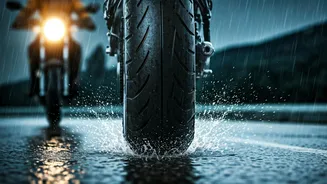
Before you even think about riding, your motorcycle needs a thorough pre-monsoon check-up. Your tyres are your single most important connection to the road. Ensure they have adequate tread depth—at least 2-3mm—to effectively channel water away and prevent aquaplaning. [14] If your tyres are old and the rubber has hardened, they won't provide sufficient grip, even if the tread looks fine. [13] Next, inspect your brakes. Wet roads significantly increase your stopping distance, so your brake pads, discs, and fluid must be in top condition. [4, 6] Finally, check all your lights: headlight, taillight, brake light, and indicators. Clean the lenses and ensure they are all functioning perfectly. Your lights are your primary tool for both seeing and being seen. [8, 14]
Master Your Vision
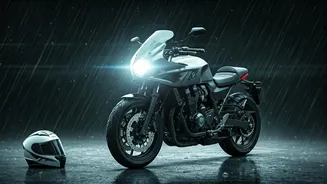
If you can't see clearly, you can't ride safely. A full-face helmet is your best defence against rain hitting your face, but visors are prone to fogging up from the inside and collecting water on the outside. [3] To combat this, invest in a helmet with an anti-fog insert like a Pinlock visor. [5] For the exterior, applying a hydrophobic coating or a simple rain repellent can make water bead up and roll off, improving your view. [3] Some waterproof riding gloves even come with a small rubber squeegee on the index finger to wipe your visor clean on the move. Avoid using dark or tinted visors during the monsoon, as they drastically reduce visibility in already gloomy conditions. [13]
Adopt a Smooth Riding Style
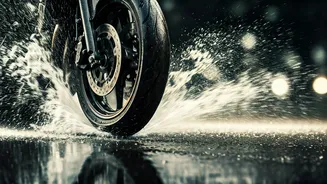
Wet roads demand a gentle touch. Traction is significantly reduced, and any sudden, jerky movements can cause your tyres to lose their grip. [11] This applies to everything: acceleration, braking, and steering. Roll on and off the throttle smoothly. When you need to slow down, apply both brakes gently and progressively. [19] Never slam on the brakes, as this can easily lock a wheel and lead to a skid, especially on bikes without an Anti-lock Braking System (ABS). [13] When cornering, slow down more than you usually would, lean the bike less, and maintain a steady, smooth line. The key is to be predictable and fluid in all your actions. [17]
Read the Road, Not Just Follow It
Indian roads become a minefield of hazards during the monsoon. Puddles that seem harmless can hide deep, wheel-bending potholes. [11] Avoid them whenever possible. Be extremely cautious of painted lines, manhole covers, and metal plates, as these surfaces become incredibly slippery when wet. [19] The first rains are often the most dangerous, as they lift accumulated oil and diesel from the tarmac, creating a treacherous, slick film. It's also wise to avoid riding in the centre of a lane, where vehicles tend to drip the most oil. Instead, try to stay in the tyre tracks left by cars, where the surface is often drier and cleaner. [13] And always increase your following distance to at least four to five seconds to give yourself more time to react. [20]