


The Magical Opening Window
The Valley of Flowers National Park, a UNESCO World Heritage Site, isn't a year-round destination. It officially opens to the public on June 1st and typically closes during the last week of October or the first week of November. This limited window is not
an arbitrary decision but is dictated entirely by nature's clock. For the rest of the year, the valley is buried under a thick blanket of snow, making it inaccessible and inhospitable. The annual opening marks the magical moment when the snow melts away, revealing the fertile ground beneath and paving the way for one of nature's most spectacular floral displays.
Why Monsoon Is The Main Event
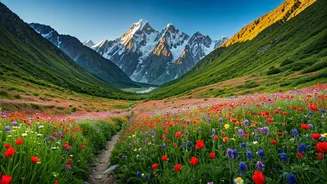
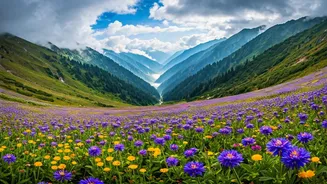
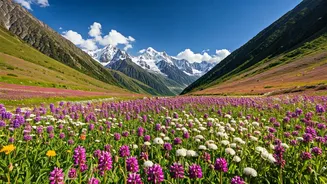
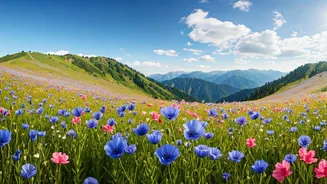
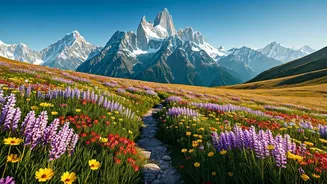
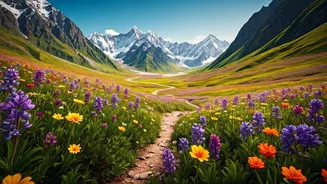
The secret behind the valley's vibrant transformation lies in the monsoon. While trekkers often avoid the rains in other parts of the Himalayas, here it's the main attraction. The summer snowmelt saturates the soil, and the arrival of the monsoon from July to August provides the continuous hydration needed for the alpine flowers to germinate and bloom. This is when the valley is at its most spectacular, with over 500 species of wildflowers creating a breathtaking panorama of colour. Flowers like the Blue Poppy, Brahmakamal, Cobra Lily, and countless others reach their peak during these months. The intermittent rain washes the landscape clean, leaving behind a fresh, dewy, and intensely fragrant environment.
The Journey To Paradise
Reaching the Valley of Flowers is a rewarding pilgrimage in itself. The trek begins from Govindghat, a small town near Joshimath. From here, it's a 14-kilometre trek to the base camp, Ghangaria. This route, which runs alongside the gushing Pushpawati River, is a beautiful journey through lush forests and scenic mountain landscapes. After an overnight stay in Ghangaria, trekkers embark on the final 3-4 kilometre walk to the entrance of the valley. The trail is well-defined but can be steep in certain sections, requiring a moderate level of fitness. Ghangaria also serves as the base camp for the trek to Hemkund Sahib, a revered Sikh pilgrimage site, which many visitors choose to combine with their trip to the Valley.
What Awaits You Inside
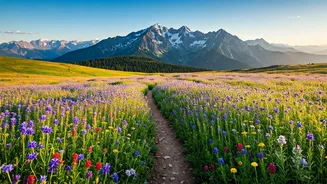
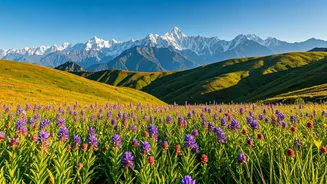
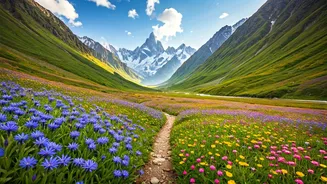
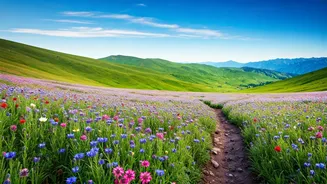
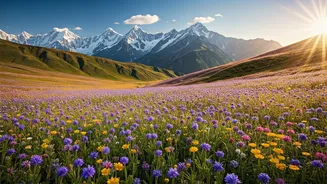
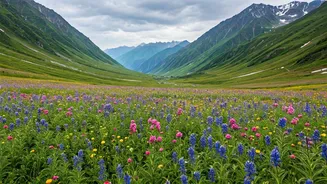
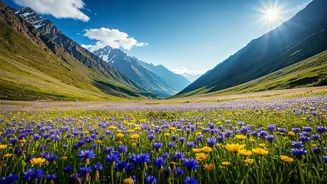
Once you pass the official entry gate, you step into a different world. The valley stretches for about 10 kilometres, a U-shaped glacial corridor surrounded by towering, snow-capped peaks like Rataban and Nilgiri. There isn't one single viewpoint; the entire valley is the destination. The path meanders through meadows bursting with flowers of every imaginable hue—purple, yellow, blue, pink, and white. You'll find yourself walking amidst swarms of butterflies and the gentle hum of insects. The air is crisp and clean, and the sheer scale of the landscape is humbling. It’s a place for quiet contemplation, photography, and simply soaking in the raw, untamed beauty of the high Himalayas.
Rules and Timings to Remember
To preserve its fragile ecosystem, the Valley of Flowers has strict rules. The park is open from 7:00 AM to 5:00 PM, with the last entry permitted at 2:00 PM. Visitors must exit the valley by 5:00 PM, as overnight camping is strictly prohibited. You have to trek back to Ghangaria for the night. A nominal entry fee is charged per person, valid for three days. One of the most important rules is the complete ban on plastics and littering. You are expected to carry all your waste back with you. This ensures that the valley remains pristine for the flowers, the wildlife, and future visitors.
Essential Trekking Tips
While not technically difficult, the trek requires preparation. A decent level of fitness is necessary to handle the long walks and altitude. Sturdy, waterproof trekking shoes are non-negotiable, as the path can be slippery and muddy. Layering is key: carry a waterproof jacket, a light fleece, and quick-drying clothes. A walking stick can provide crucial support on steep sections. Since you’ll be trekking back and forth from Ghangaria, a small daypack is sufficient for the valley visit itself, where you can carry water, snacks, a camera, and a raincoat. Remember to acclimatise properly to avoid altitude sickness.