
Meet Pushpak: India’s Spaceplane
Imagine a vehicle that flies into space like a rocket but lands on a runway like an airplane. That's the core idea behind ISRO's Reusable Launch Vehicle, or RLV, nicknamed 'Pushpak'. For years, space launches have been an expensive, throwaway business.
Rockets deliver their payloads and then their incredibly expensive components are discarded. Pushpak is designed to change this. As a winged vehicle, it can perform its mission and then autonomously navigate back to Earth, executing a precise, high-speed landing on a runway. This ability to be recovered and reused is the key to revolutionizing the economics of spaceflight. The project represents a significant leap, combining the complexities of both a launch vehicle and an aircraft to create a truly hybrid system.
The Journey to Reusability
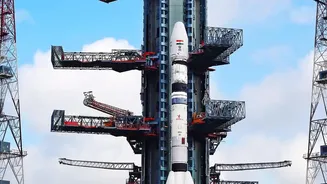
Developing a vehicle that can land itself from space is no easy feat. ISRO has been methodically testing the crucial technologies through its RLV Technology Demonstrator (RLV-TD) program. A major milestone was the successful Hypersonic Flight Experiment (HEX) in 2016, which tested the vehicle's design at hypersonic speeds. More recently, ISRO completed a series of three critical Landing Experiments (LEX). In these tests, a Chinook helicopter lifted the uncrewed Pushpak prototype to an altitude of 4.5 km and released it. The vehicle then had to autonomously navigate, handle challenging crosswinds, and execute a perfect horizontal landing on a runway at the Aeronautical Test Range in Chitradurga, Karnataka. The success of these landing tests has proven the vehicle’s sophisticated autonomous control systems, paving the way for the next, more ambitious phase: orbital re-entry.
The Billion-Dollar Cost Question
The primary driver behind developing reusable rockets is simple: cost. Up to 80% of a traditional rocket launch's cost is tied to the hardware that gets thrown away after a single use. By reusing the most valuable parts of the launch system, ISRO aims to slash the cost of delivering payloads into orbit. The ultimate goal is to reduce the expense by a factor of ten. This would dramatically lower the financial barrier for satellite companies, research institutions, and other nations looking to send hardware into space. While private players like SpaceX have already disrupted the market with their partially reusable Falcon 9 rockets, ISRO’s Pushpak represents a different approach with its winged-body design. Success could make ISRO and its commercial arm, NewSpace India Ltd. (NSIL), an extremely attractive option in the burgeoning global launch market.
India’s Competitive Edge
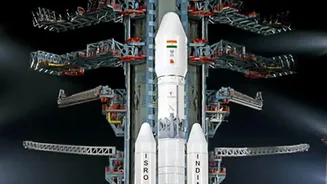
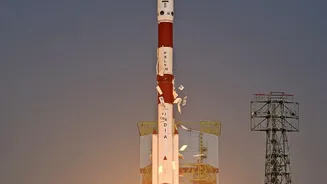
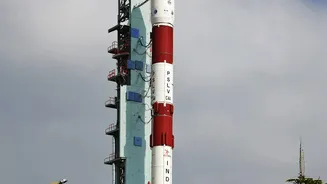
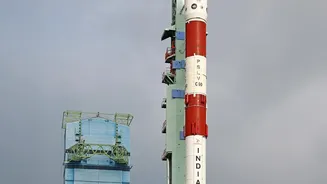
ISRO already has a strong reputation as a reliable and cost-effective launch provider, particularly for smaller satellites using its workhorse PSLV rocket. The agency has successfully launched hundreds of satellites for dozens of countries, carving out a niche in a competitive field. However, the big money is in heavier payloads, a market currently dominated by companies like SpaceX. The development of a fully reusable launch vehicle will allow India to compete more directly in this lucrative segment. With a national goal of increasing its share of the global launch market from under 2% to nearly 10%, reusable technology is not just an ambition but a necessity. ISRO's track record of reliability, combined with the potential for drastically lower costs, positions India to become a major hub for commercial space activity.
The Road Ahead
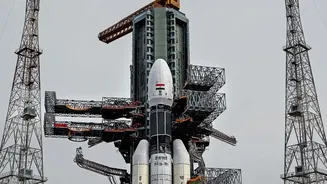
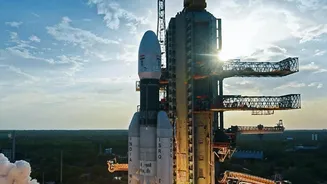
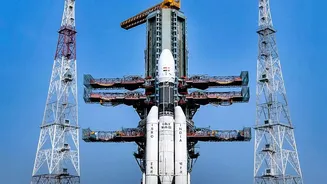
With the crucial landing experiments complete, ISRO is now preparing for the next major test: the Orbital Re-entry Experiment (OREX). This will involve launching Pushpak into orbit aboard a conventional rocket, after which it will have to survive the intense heat of atmospheric re-entry and perform another autonomous landing. The ultimate vision is a Two-Stage-To-Orbit (TSTO) launch vehicle where both stages are fully reusable. This would likely involve Pushpak as the upper stage and a new, reusable booster as the first stage. Alongside the RLV, ISRO is also developing a Next-Generation Launch Vehicle (NGLV) with a reusable first stage to handle heavy-lift missions. While a fully operational reusable system is still some years away, the steady progress of the Pushpak program signals that a new era of affordable and sustainable space access from India is firmly on the horizon.