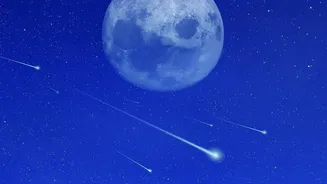






A Gift from Halley's Comet
The Orionid meteor shower is one of the most beautiful and reliable celestial events of the year. What makes it particularly special is its origin. Each 'shooting star' you see is actually a tiny piece of cosmic dust left behind by none other than Comet
1P/Halley, arguably the most famous comet in history. As Earth passes through this trail of debris each October, the particles burn up in our atmosphere at incredible speeds, creating the fiery streaks we call meteors. The Orionids are known for being exceptionally fast, travelling at about 66 kilometres per second. This speed can sometimes result in bright, lingering trails of light that paint temporary strokes across the night sky, making the shower a truly memorable sight.
Peak Viewing Dates and Times
Mark your calendars. The Orionid meteor shower will peak on the night of October 21st and into the early morning hours of October 22nd, 2026. While you might spot some meteors in the days before and after, this window offers the best chance to see the highest concentration of activity. For skywatchers in India, the ideal time to start looking is from midnight until just before dawn. The later you stay up, the better your chances will be, as the shower's radiant point—the area in the sky from which the meteors appear to originate—will climb higher, bringing more of the show into view. This year's viewing conditions are expected to be excellent, as the moon will be a slim crescent and will have set long before the prime viewing hours, ensuring a dark canvas for the meteors to shine.
Finding the Perfect Spot
The single most important factor for a successful meteor shower viewing is getting away from city lights. The light pollution that blankets most urban and suburban areas can drastically reduce the number of meteors you can see. For the best experience, plan a trip to a location with dark skies. This could be a rural village, a remote national park, a hilltop, or a beach far from city glow. Places in India renowned for their dark skies, like parts of Ladakh, Spiti Valley, the Rann of Kutch, or even the outskirts of major metropolitan areas, are ideal. If you cannot travel far, try finding a local park, field, or open area that is shielded from direct streetlights and building lights. The darker your surroundings, the more spectacular the cosmic show will be.
Where to Look in the Sky
The shower gets its name from the constellation Orion the Hunter, as the meteors appear to radiate from a point near it. To find it, look for the three bright stars that form Orion's belt—a prominent feature in the night sky. While the meteors will seem to originate from this region, you do not need to stare directly at it. In fact, the best approach is to lie back and take in as much of the sky as possible. The fast-moving Orionids can appear anywhere and often have long tails, so a wide field of view will give you the best chance of catching them. Simply find a comfortable spot, look up, and let your eyes roam. A telescope or binoculars are not necessary and can actually limit your view.
Essentials for a Great Night Out
To make your stargazing session comfortable and successful, a little preparation goes a long way. First, give your eyes time to adjust to the darkness. It takes about 20-30 minutes for them to become fully dark-adapted, after which you will see much fainter meteors. Avoid looking at your phone screen, as its bright light will reset your night vision. If you need a light, use a red-light torch. Dress in warm layers, as even pleasant evenings can get chilly in the pre-dawn hours. Bring a comfortable blanket, a reclining chair, or a mat to lie on. Stargazing can be a waiting game, so pack some warm drinks and snacks. Patience is key; there can be lulls in activity followed by several meteors in quick succession.