






Moving Beyond the Obvious
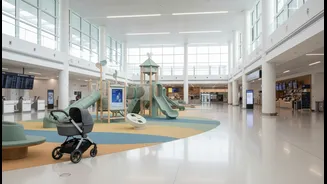
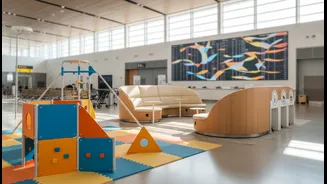
When we think of 'family-friendly' airports, our minds often jump to a colourful, soft-play area tucked away in a corner of the terminal. While these are valuable amenities for burning off pre-flight energy, a truly stress-reducing airport experience
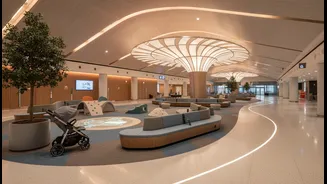
is woven into the very fabric of the building’s design, addressing parental pain points at every step of the journey. The goal is to create an environment that anticipates a family's needs, rather than simply offering a brief distraction. Airports that excel, like Singapore's Changi or Istanbul Airport, integrate family-centric thinking into the entire passenger flow, from arrival to boarding. This holistic approach proves that thoughtful infrastructure is more impactful than isolated features.
A Smoother Start at Check-In
The travel stress often begins the moment a family arrives. Navigating a bustling departures hall with luggage, a stroller, and children can be a chaotic first hurdle. Airports can mitigate this by creating clearly marked, spacious drop-off zones and designated family check-in counters. Some hubs, like London Heathrow, offer priority family parking spots closer to the terminal. But design can go further, with integrated self-service kiosks that are spaced generously to allow a family to cluster without blocking pathways. Clear, intuitive signage that uses universal symbols instead of just text can also reduce the mental load on a parent trying to find their way.
Rethinking the Security Gauntlet
For many parents, the security checkpoint is the most anxiety-inducing part of the airport journey. Unpacking liquids, folding strollers, taking off shoes, and keeping track of children can feel like a frantic scramble. Dedicated family security lanes, common in many European and Asian airports like Paris Charles de Gaulle and Istanbul Airport, are a crucial first step. These lanes allow families to move at their own pace without the pressure of impatient business travellers behind them. Better design in these areas would include wider lanes to accommodate strollers, benches for removing shoes, and screening staff trained to interact with children. The ultimate goal is a process that feels organised and supportive, not punitive.
Designing for the Long Wait
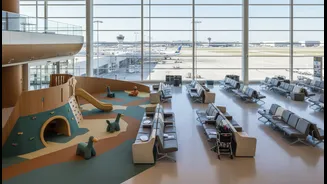
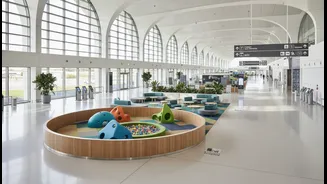
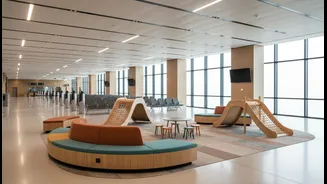
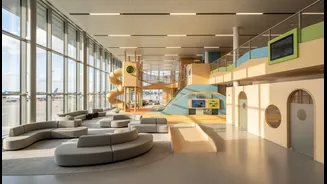
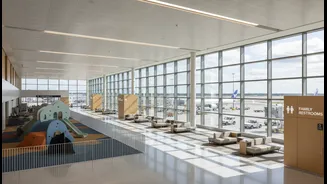
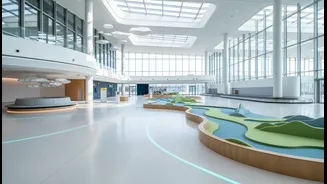
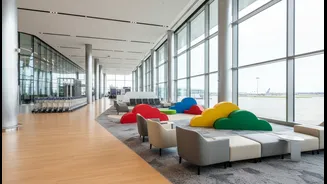
Once through security, families face the next challenge: the long wait at the gate. Standard gate areas with rows of fixed seating are ill-suited for families. Children need space to move, and parents need functional areas to organise their carry-ons. Innovative airports are creating more varied gate-area seating, with small clusters of chairs, tables for snacking, and quiet zones away from the main concourse. Some, like Munich Airport, have supervised play areas, allowing parents a moment of respite. Amsterdam's Schiphol features a 'Kids Forest' play area with interactive elements. The most forward-thinking designs also incorporate sensory rooms with calming lights and sounds for children who may feel overstimulated by the airport's chaotic environment.
Facilities That Truly Serve Families
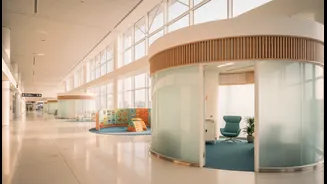
Often, it's the basics that make the biggest difference. Clean, spacious family restrooms equipped with changing tables and child-sized toilets are non-negotiable. Yet many airports still fall short. Leading airports provide dedicated nursing rooms with comfortable seating and privacy for feeding infants. Some even offer complimentary stroller rentals, like Tokyo's Haneda Airport, freeing up parents' hands. These fundamental amenities demonstrate an understanding that travelling with children involves specific logistical needs. Providing these facilities isn't a luxury; it's a core component of inclusive and accessible design that benefits everyone by reducing congestion and stress in public spaces.