


The Great Celestial Moon Race
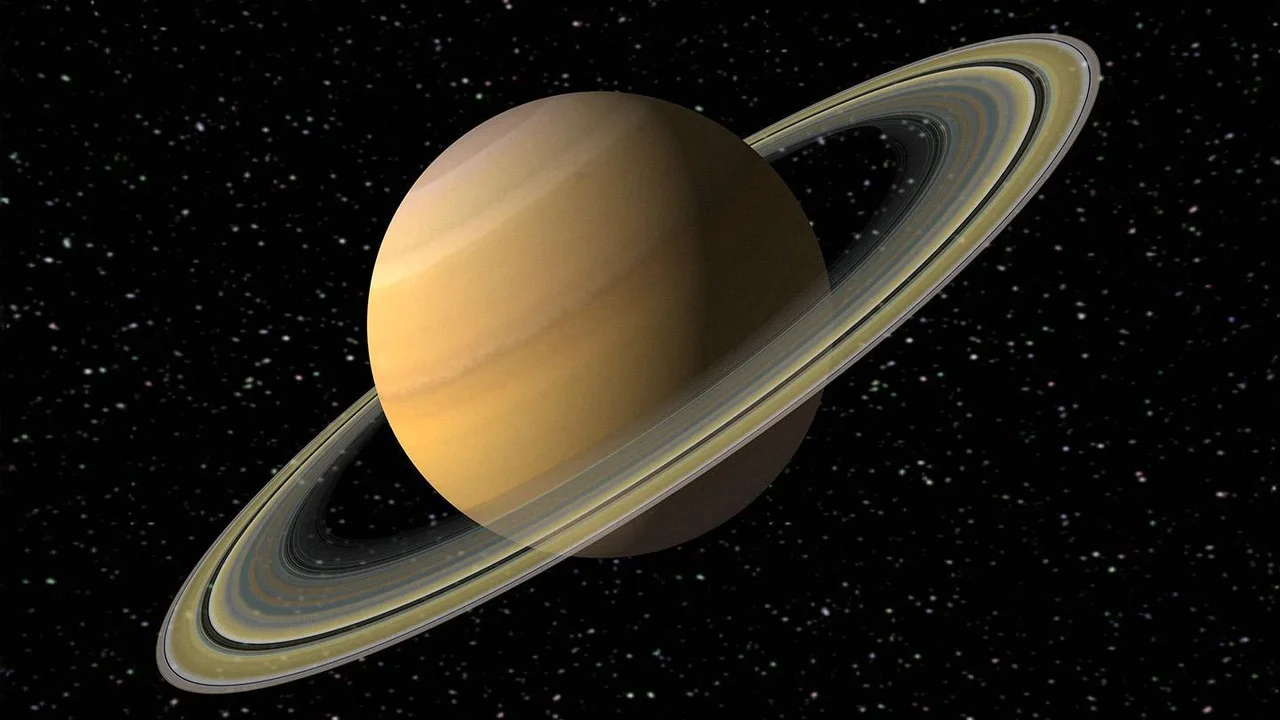
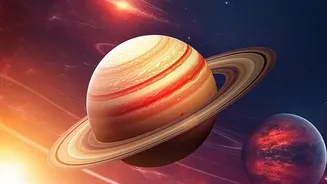
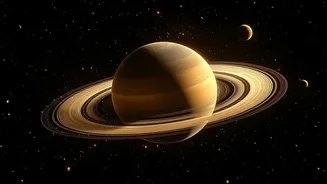
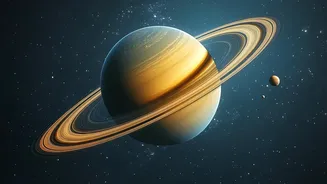
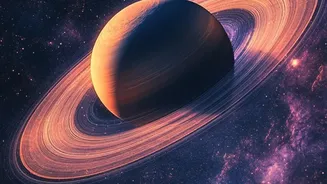
For years, astronomers have watched a friendly rivalry unfold between Jupiter and Saturn. For a long time, Jupiter held the title for the most known moons. However, recent discoveries have put Saturn firmly in the lead. As of mid-2026, Saturn has a staggering
293 confirmed moons, far surpassing Jupiter's count of just over 100. This constant back-and-forth isn't just about finding big, obvious satellites; it’s about getting better at spotting the small, faint objects that were previously invisible to us. And as our technology improves, the definition of what we count as a 'moon' becomes more important than ever.
So, What Exactly Is a Moon?
Here's the surprising part: there is no single, strict, official definition for a 'moon'. The International Astronomical Union (IAU), which handles the naming of celestial objects, defines a moon generally as a natural satellite orbiting a planet or smaller body. But unlike the term 'planet', which has a controversial three-part definition, the IAU hasn't set a minimum size for what constitutes a moon. This ambiguity is at the heart of the issue. Is a chunk of rock a few kilometres across a moon? What about an object just a few hundred metres wide? Without a clear lower limit, the line between a tiny moon and a large piece of ring debris is blurry, leaving it open to interpretation and reclassification as we gather more data.
The Long Road to Confirmation
Discovering a potential moon is just the first step. An object is first given a provisional designation, like S/2023 S 51, which indicates the year of discovery and the planet it orbits. To become a confirmed moon, astronomers must track its path over a long period to prove that it has a stable orbit around the planet and isn't just a passing asteroid. This process can take years of painstaking observation using powerful ground-based telescopes. Dozens of objects around Saturn are currently in this provisional state. If their orbits are confirmed, the moon count will tick up again. If they are found to be transient objects, they get removed from the potential list.
Enter the 'Moonlets'
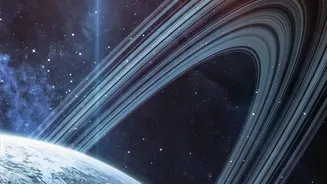
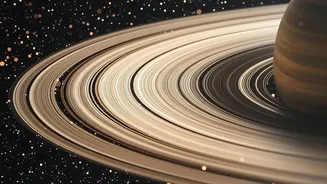
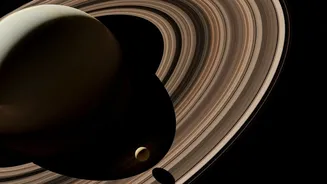
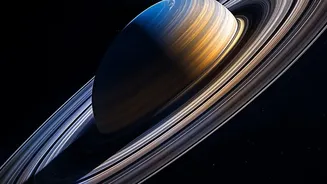
Saturn's famous rings are composed of countless particles of ice and rock, ranging from microscopic dust to objects several hundred meters across. The larger of these objects are sometimes called 'moonlets'. These are too small to be seen directly but can be detected by the gravitational disturbances, or 'propellers', they create in the ring material. The Cassini spacecraft identified many of these tiny bodies embedded within the rings. This raises a fascinating question: Should these millions of moonlets be counted in the official tally? Currently, they are not, but their existence highlights the difficulty in drawing a definitive line. Some of these moonlets even act as 'shepherd moons', their gravity helping to keep the rings sharply defined.
A Story of Capture and Collision
Saturn’s moon population is divided into two main groups: regular and irregular. Regular moons likely formed from the same disk of gas and dust as Saturn itself and have neat, circular orbits. But the vast majority of Saturn’s moons, including most of the recent discoveries, are irregular. These are thought to be captured asteroids or comets that strayed too close and were pulled in by Saturn’s immense gravity. These irregular moons often have tilted, eccentric orbits, and many even circle the planet backwards. Scientists also believe that collisions between these captured objects, or with a larger parent moon that shattered long ago, created many of the smaller moons we see today. This history of capture and fragmentation is a major reason why Saturn boasts such a large and diverse satellite family.