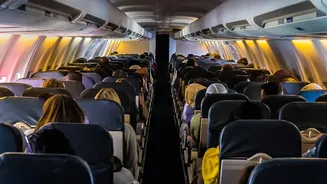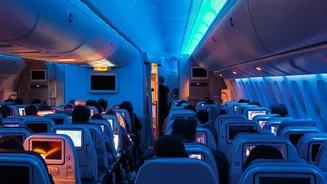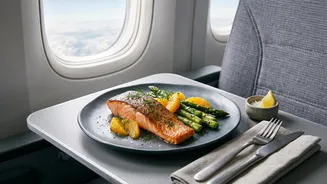








Ever complained that your in-flight meal tasted bland? It’s not just you, and it’s probably not the chef’s fault. The unique environment inside an airplane cabin at 35,000 feet wages a multi-front war on your ability to taste.
The Cabin's Assault on Your Senses
The moment you step onto
a plane, your senses of taste and smell begin to change. The primary culprits are the low pressure and extremely low humidity in the cabin. Commercial aircraft are typically pressurized to an equivalent of 6,000 to 8,000 feet above sea level. This thinner air reduces blood oxygen saturation, which can slightly numb your taste buds. But the bigger factor is the desert-dry air. Cabin humidity can drop to below 20%, which is drier than the Sahara. This arid environment dries out the mucous membranes in your nose, which are crucial for detecting aromas. Since about 80% of what we perceive as 'flavor' actually comes from our sense of smell, this is a major blow to your palate before the meal has even arrived.
How Your Taste Buds Get Dulled
The combination of low pressure and dryness has a direct impact on your tongue's ability to perceive specific tastes. Research commissioned by the German airline Lufthansa found that our sensitivity to sweet and salty flavors can decrease by as much as 30% at cruising altitude. This explains why a dish that was perfectly seasoned on the ground can taste disappointingly bland in the air. However, not all tastes are affected equally. Our ability to perceive sour, bitter, and spicy flavors remains largely intact. This disparity is a key piece of the puzzle that airline caterers must solve.
The Surprising Role of Engine Noise
It might seem strange, but what you hear also dramatically affects what you taste. The constant drone of aircraft engines, which can reach 85 decibels, isn't just background noise; it actively interferes with your palate. Studies from researchers at Cornell University and the University of Manchester have shown that loud, continuous noise suppresses the perception of sweetness and saltiness even further. The theory is that the nerve that carries taste signals from the tongue passes through the middle ear, and the intense vibrations from the engines may interfere with its signals. So, even with noise-canceling headphones, the physical environment is working against that dessert tasting its best.
The Caterer’s Counter-Attack: Flavor Engineering
Knowing that passengers' palates are compromised, airline caterers can't just cook a normal meal and hope for the best. They have to become flavor engineers, designing dishes specifically for the in-flight environment. This often means intentionally overstating food on the ground so that it tastes balanced at altitude. They also lean into flavors that aren't suppressed, like acidity and spiciness, which is why you often find curries, tangy dressings, and dishes with a bit of a kick on in-flight menus. Texture also becomes more important; research has shown that loud noise can make food seem crunchier, a sensation chefs can use to their advantage. The entire process involves rigorous testing, sometimes in pressurized mock cabin environments, to ensure the recipes work where they matter most.
Umami: The Secret Weapon at 35,000 Feet
There's one taste that not only survives the harsh cabin environment but may even be enhanced by it: umami. Umami is the savory, rich, and meaty flavor found in foods like tomatoes, mushrooms, parmesan cheese, and soy sauce. Multiple studies have found that while sweet and salty tastes are dulled by cabin noise, the perception of umami is amplified. This explains the enduring popularity of tomato juice and Bloody Marys on flights; a drink that can taste earthy on the ground suddenly becomes vibrant and refreshing at altitude. Airlines have embraced this phenomenon, creating menus that are rich in umami-packed ingredients to deliver a satisfying flavor experience despite the sensory challenges.