



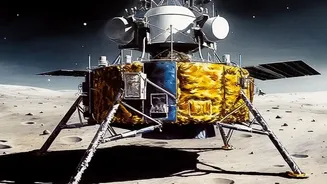
A New Gold Rush in the Sky
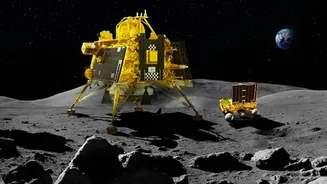
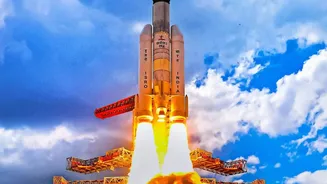
The successful landing of Chandrayaan-3 didn't just place a rover on the Moon; it ignited the ambitions of an entire nation's private sector. The global space economy is booming, and the Moon is its most coveted frontier. With NASA planning multiple crewed
missions under the Artemis program and a slate of commercial payload services, the demand for lunar landers, rovers, and scientific instruments is set to explode. This has created a perfect launchpad for Indian startups, who are leveraging the country's renowned engineering talent and frugal innovation mindset to carve out a niche in the highly competitive commercial space market. The government has fueled this ambition by opening up the space sector, encouraging private investment and providing access to ISRO's expertise. This policy shift signals that India's future in space will be a joint venture between its venerable national agency and a dynamic new generation of entrepreneurs.
The Trailblazers of the New Space Age
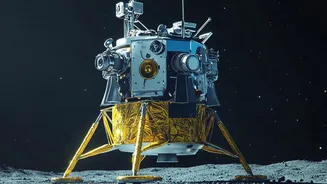
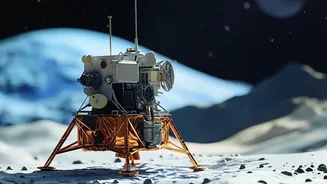
Several Indian startups are leading this charge. ORBITBeyond, for instance, is establishing a major space systems center in Odisha to design and manufacture lunar landers and rovers for the global market, with its first lunar mission planned for 2029. The company explicitly draws on the expertise of engineers who have worked on India's Chandrayaan missions. Meanwhile, other companies are developing critical components and technologies. Bengaluru-based Kepler Aerospace, founded by ISRO veterans, has a co-founder who was involved in developing a lunar nano-rover. While their current focus is on defence satellites, their deep technical expertise is indicative of the talent pool driving the sector. Another prominent name, Pixxel, known for its hyperspectral imaging satellites, has expressed long-term ambitions to explore the Moon and asteroids, potentially using its advanced camera technology to map resources. These companies represent a crucial shift from single, government-led missions to a more diversified, market-driven approach.
What 'Low-Cost' Really Means
The term 'low-cost' is a significant competitive advantage for Indian startups, but it isn't about cutting corners. Instead, it’s about smart engineering and innovative manufacturing. Much of this is inspired by ISRO's own legacy of achieving complex missions on lean budgets. Startups are adopting several strategies to keep costs down. Many are using modular designs, allowing them to build and adapt systems more quickly. Others are leveraging advanced manufacturing techniques like 3D printing to reduce the cost and time associated with producing complex components. For example, Pune-based Astrophel Aerospace has used 3D printing to cut its manufacturing costs by over 40% in its development of reusable rocket engines. By focusing on smaller, lighter rovers and specialized payloads rather than entire missions, these firms can offer targeted, affordable solutions to international partners who need to get their experiments to the lunar surface.
Plugging into the Global Lunar Market
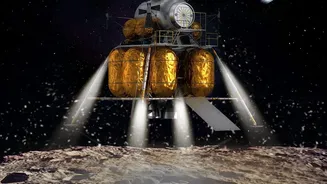
The biggest opportunity for these Indian startups lies in the global ecosystem, particularly NASA’s Commercial Lunar Payload Services (CLPS) initiative. Under CLPS, NASA contracts private companies to deliver science and technology payloads to the Moon. This creates a ready-made market where Indian firms can act as sub-contractors or partners, providing complete rovers or individual scientific instruments. ORBITBeyond is already one of the few companies certified for the CLPS program worldwide. Success in this arena is about reliability and cadence. With over 90 lunar missions planned globally in the next decade, the market has shifted from one-off projects to a production-line mentality. Companies that can consistently and affordably deliver payloads will thrive. This international collaboration boosts confidence among global investors and customers, positioning India not just as a source of engineering talent but as a destination where entire space missions can be executed.
The Challenges Ahead
The path to the Moon, however, is littered with obstacles. Space remains an incredibly harsh and unforgiving environment, where the margin for error is zero. The 2017 Google Lunar XPrize, which saw Indian hopeful TeamIndus and other international teams compete, highlighted the immense difficulty of private lunar missions, with none ultimately launching to meet the prize deadline. Funding remains a significant hurdle. While investment is growing, developing and launching space-qualified hardware requires substantial capital. Furthermore, startups face intense international competition from established aerospace giants and well-funded startups in the US, Europe, and Japan. Navigating the regulatory landscape for launches and operations is another complex challenge. Despite these difficulties, the momentum is undeniable. The combination of government support, a skilled workforce, and a clear market opportunity has created a unique moment for India's space entrepreneurs.