



Ghee's Golden Legacy
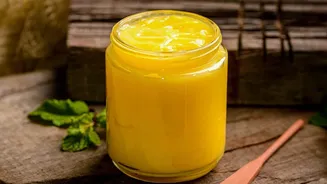
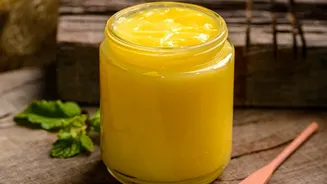
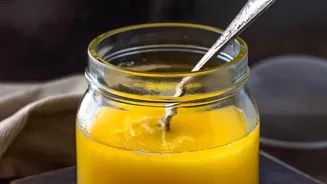
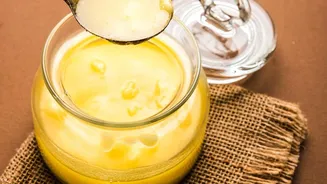
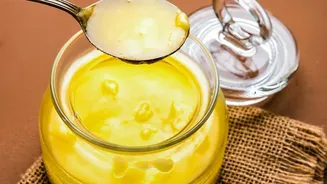
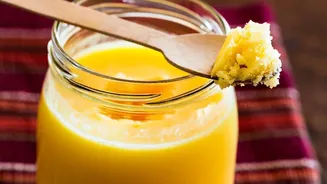
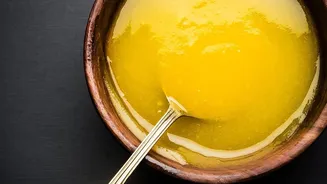
For generations, ghee has been the undisputed king of the Indian kitchen. This clarified butter, prized for its nutty aroma and rich flavour, is woven into the fabric of daily cooking, from dals and biryanis to festive sweets. Its importance is not just
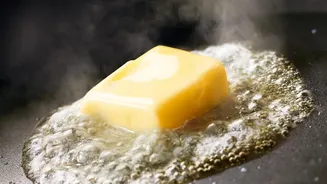
culinary but also cultural, rooted in ancient Ayurvedic practices where it's considered a vital, health-giving fat. Ghee is made by simmering butter to remove water and milk solids, resulting in pure butterfat with a high smoke point of around 250°C (485°F). This stability at high heat makes it ideal for traditional cooking methods like tadka (tempering spices) and deep-frying, ensuring flavours are unlocked without the fat burning.
The High-Heat Challenge
The smoke point of a fat is the temperature at which it stops shimmering and starts smoking, breaking down chemically. When an oil or fat is heated past its smoke point, it not only develops a burnt, acrid taste but can also release harmful compounds called free radicals, which are linked to cellular damage and inflammation. While ghee has a commendably high smoke point, the modern chef's toolkit demands versatility. Factors like dietary restrictions (veganism), concerns over saturated fats, and the desire for different flavour profiles have led to a search for fats that can withstand the intense heat of a professional kitchen while offering new culinary possibilities.
The Rise of Ghee Alternatives
Enter the new generation of cooking oils. Chefs are increasingly turning to refined oils that offer even higher smoke points and neutral flavour bases, making them perfect for a variety of applications. Topping the list is avocado oil, with a remarkably high smoke point of around 270°C (520°F). Its clean, mild taste makes it an excellent vehicle for other flavours. Another strong contender is rice bran oil, which has a smoke point of about 230-255°C and a subtle, buttery essence that complements Indian dishes well. Refined coconut oil, sunflower oil, and even light olive oil are also part of this movement, chosen for their ability to handle high temperatures without breaking down. For chefs, these oils provide a reliable, safe, and consistent medium for high-heat techniques like searing and stir-frying.
Infusion: Flavour Without Compromise
The true genius of this trend lies not just in swapping the fat, but in elevating it. Chefs are using these neutral, high-smoke-point oils as a blank canvas for infusions. By gently heating the oil with whole spices like cardamom, cloves, cinnamon, and star anise, or herbs like curry leaves, they can create bespoke fats that carry complex aromas deep into a dish. This technique allows them to replicate the aromatic qualities of a traditional ghee tadka without using ghee itself. It offers precise control over flavour and opens the door to innovative combinations, blending tradition with a modern, technique-driven approach. This method also caters to a wider range of diners, including those following vegan or dairy-free diets, without sacrificing the layered flavours that define Indian cooking.
Your Guide to a Modern Tadka
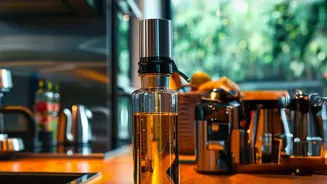
Bringing this chef-driven trend into your home kitchen is simple. Start with a high-quality, high-smoke-point oil like avocado, rice bran, or sunflower oil. To infuse it, gently warm about a cup of oil in a small pan over low heat. Add your choice of whole spices—a few cardamom pods, a cinnamon stick, a couple of cloves—and let them steep in the warm oil for 10-15 minutes. Do not let the oil simmer or smoke. Once the oil is fragrant, turn off the heat and let it cool completely before straining the spices out. You can store your custom-infused oil in a sealed glass bottle in a cool, dark place. Use it for your daily tadkas, for sautéing vegetables, or as a finishing oil drizzled over a dish just before serving to add a burst of fresh, aromatic flavour.