







A Unique Confluence of Conditions
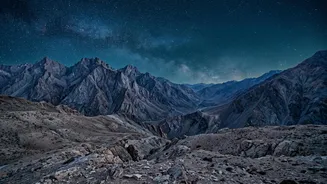
To get the clearest view of distant galaxies and cosmic events, astronomers need three things: darkness, altitude, and dry air. Spiti Valley delivers all three in abundance. Situated at altitudes between 3,000 and 4,500 metres, it lies above a significant
portion of Earth's atmosphere. This thin air means there's less atmospheric turbulence to make stars twinkle and blur images. Crucially, the valley sits in the rain shadow of the Himalayas, creating a cold desert climate with extremely low humidity. Water vapour is a major obstacle for astronomers as it absorbs and distorts light, especially in the infrared and sub-millimeter spectrums. Spiti's bone-dry air provides exceptional transparency, making faint, distant objects visible. Finally, its remoteness and sparse population mean there is virtually no light pollution, earning it a 'Bortle Class 1' rating—the darkest possible sky.
A Window for High-Energy Events
The pristine conditions in the Spiti region are ideal for observing the universe's most energetic and violent phenomena. While the headline focuses on Spiti, much of the formal research infrastructure is located in nearby Hanle, Ladakh, which shares similar high-altitude desert conditions. Here, at 4,500 metres, sits the Indian Astronomical Observatory, one of the highest in the world. It hosts facilities like the Major Atmospheric Cherenkov Experiment (MACE) telescope, Asia's largest and the world's second-largest of its kind. MACE is specifically designed to detect high-energy gamma rays. These are produced by cataclysmic events like supernovae, supermassive black holes, and mysterious gamma-ray bursts, offering scientists insights into particle acceleration and fundamental physics.
India’s Strategic Astronomical Outpost
The high-altitude observatories in the Spiti-Ladakh region are not just a local advantage; they are a strategic asset for global astronomy. The location in India fills a crucial longitudinal gap between major telescopes in Europe and the Americas. This allows for continuous, 24-hour observation of transient cosmic events as the Earth rotates, ensuring that a flare or burst is not missed simply because one part of the world is facing the sun. The MACE telescope, for instance, complements international efforts in multi-messenger astronomy, a field that combines data from different kinds of signals (like light, gravitational waves, and neutrinos) to get a complete picture of a cosmic event. This capability cements India's position at the forefront of high-energy astrophysics research.
More Than Just Research
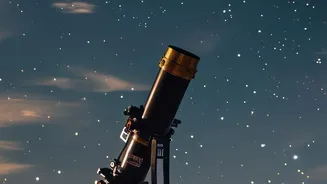
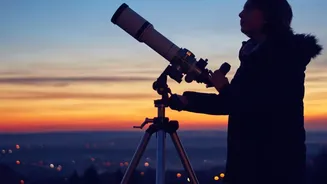
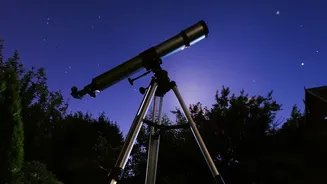
The astronomical potential of Spiti is not limited to professional scientists. The region is rapidly emerging as a major hub for astro-tourism. The same clear, dark skies that attract researchers now draw travellers, photographers, and amateur astronomers from around the world. On a clear, moonless night, the Milky Way is so brilliant it can be seen in vivid detail with the naked eye. Recognizing this, public and private initiatives are being established. For example, a new public dome observatory has opened in Kaza, the main town in Spiti Valley, allowing tourists to use high-powered telescopes under expert guidance. These ventures provide a new, sustainable source of income for local communities and inspire a wider appreciation for the cosmos.