





Our Cities Are Drowning in Light
For most of us living in urban or suburban areas, the night sky is little more than a hazy, orange-tinged blanket. This phenomenon is called light pollution. It's the combined glow of streetlights, buildings, advertising billboards, and factories. This artificial
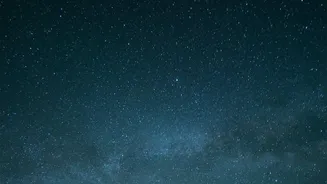
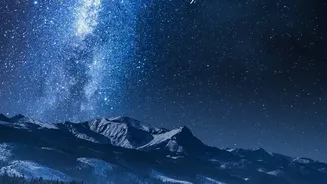
light doesn't just stay on the ground; it scatters upwards into the atmosphere, creating a dome of brightness known as 'sky-glow' that can be seen from kilometres away. The unfortunate result is that it washes out the faint, delicate light from the stars, making it impossible to see all but the brightest celestial objects. More than 80% of the world's population now lives under light-polluted skies, meaning a view of the star-filled Milky Way is a rare sight for many.
Why Darkness is Key for Meteor Spotting
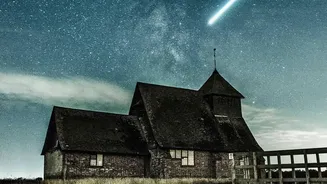
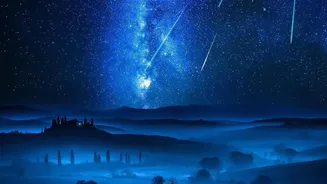
Viewing a meteor shower is a battle between faint light and bright light. Meteors, often no bigger than a grain of sand, create their brilliant streaks by burning up high in our atmosphere. While some are bright fireballs, many are much fainter. Your eyes have a natural superpower for situations like this: dark adaptation. It takes about 20 to 30 minutes for your eyes to adjust fully to the darkness, allowing you to see these dimmer meteors. However, the constant glow from light pollution prevents your eyes from ever reaching this state. It raises the overall brightness of the sky, making it impossible for the fainter shooting stars to stand out. In a truly dark location, you might see dozens of meteors per hour; in a city, you might not see a single one.
This Week: The Perseid Meteor Shower Peaks
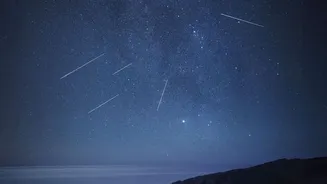
This isn't just a theoretical problem; it's a practical one, especially this week. The famous Perseid meteor shower, one of the best of the year, is set to peak on the night of August 12-13. Caused by debris from Comet Swift-Tuttle, the Perseids are known for being fast, bright, and frequent, with the potential for 50 to 100 meteors per hour under ideal conditions. What makes 2026 truly special is that the peak coincides with a new moon, meaning our sky will be completely free of moonlight, offering the darkest possible conditions. This makes it one of the best opportunities in years to witness this celestial show.
How to Find Your Dark Sky Spot in India
Finding a great viewing location means putting distance between you and the nearest city. You don't need a professional observatory, just a spot with a clear, open view of the sky away from direct lighting. For those seeking the absolute best views, certain regions in India are renowned for their dark skies. The high-altitude deserts of Ladakh and Spiti Valley offer near-perfect conditions, with Hanle in Ladakh being home to India's first official Dark Sky Reserve. Other excellent options include parts of the Rann of Kutch, Coorg, and remote areas in the Western Ghats like Valparai. For most people, even a drive an hour or two away from city limits into the countryside can make a dramatic difference. You can use online light pollution maps to find promising dark patches near you.
Your Checklist for a Perfect Night
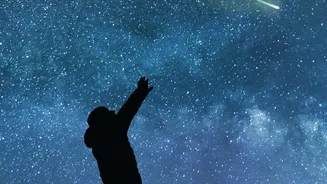
Once you've picked your spot, a little preparation goes a long way. The best viewing time for the Perseids is from midnight until just before dawn, when the radiant point in the constellation Perseus is high in the sky. Dress warmly, as even summer nights can get chilly. Bring a blanket or a reclining chair so you can lie back comfortably and look straight up. Most importantly, put your phone away. The bright screen will ruin your night vision. Allow your eyes at least 20 minutes to fully adapt to the dark. You don’t need a telescope or binoculars; the show is best enjoyed with just your eyes, taking in as much of the sky as possible.