






Ready for a workout that’s cheap, fun, and seriously effective? Jump rope is a full-body cardio powerhouse that burns calories and improves coordination. This guide breaks down everything you need to start with simple, beginner-friendly intervals.
The Undeniable Benefits of Jumping Rope
Before
you start skipping, it helps to know why it's one of the most efficient exercises available. Jumping rope is a full-body workout that engages your legs, core, and upper body simultaneously. This makes it incredibly effective for burning calories; some studies suggest it can burn over 200 calories in just 15 minutes. Beyond weight loss, it’s an excellent cardiovascular exercise that strengthens your heart, improves blood circulation, and builds endurance. It also enhances coordination, balance, and agility, as it requires precise timing between your hands and feet. Best of all, it's a low-cost, portable workout you can do almost anywhere.
How to Choose Your First Jump Rope
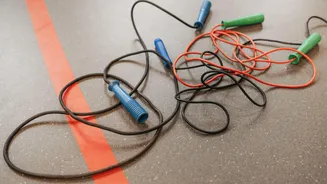
The right rope makes all the difference for a beginner. While thin wire 'speed ropes' are popular, they provide very little feedback, making them difficult for learning rhythm. Instead, beginners often find more success with a beaded rope or a slightly heavier 5mm or 6mm PVC rope. Beaded ropes offer excellent control and audible feedback as they hit the ground, helping you develop a consistent rhythm. To find the correct length, stand on the middle of the rope with both feet. The ends of the handles should reach your armpits. A rope that's too long will slap the ground and ruin your timing, while one that's too short will constantly trip you up.
Mastering Proper Form: The Basic Bounce
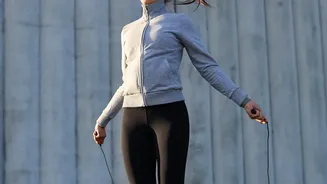
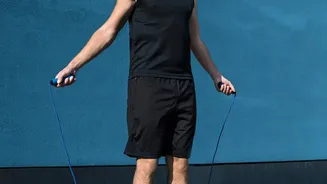
Good form prevents injury and makes jumping rope feel much smoother. Start by standing with an upright posture, shoulders back, and eyes looking forward. Hold the rope handles with a relaxed grip and keep your elbows close to your sides. The rotation should come from your wrists, not your arms or shoulders. Begin with the 'basic bounce', where you jump just once for each revolution of the rope. Your jumps should be small, only an inch or two off the ground—just high enough to clear the rope. Land softly on the balls of your feet with a slight bend in your knees to absorb the impact. Avoid landing flat-footed or jumping too high, as this can strain your joints.
Your First Beginner Interval Workout
High-Intensity Interval Training (HIIT) is a perfect match for jump rope, delivering a powerful workout in a short time. This simple interval plan is a great starting point. After a brief warm-up of light jogging and jumping jacks, follow this pattern: Jump for 30 seconds, focusing on a steady rhythm. Rest for 60 seconds by walking in place. Repeat this cycle 5 to 8 times. The goal here is consistency, not speed. A 2:1 rest-to-work ratio gives you ample recovery time to maintain good form throughout the workout. As you get more comfortable, you can start adjusting the intervals. For a simple progression, you can try 40 seconds of jumping followed by 20 seconds of rest.
Common Mistakes to Avoid
Nearly every beginner makes a few common mistakes. One is jumping too high, which wastes energy and puts unnecessary stress on your knees and ankles. Another is using your entire arms to swing the rope. Remember to keep your elbows tucked in and let your wrists do the work. Many people also 'double-bounce', taking a small extra hop while the rope is overhead. Try to eliminate this by timing one jump per rope revolution. Finally, don't get discouraged by tripping. It’s part of the learning process. Focus on getting five consecutive jumps, then ten, and build from there. Frustration is the biggest obstacle, so be patient with yourself as you develop the skill.