







The Unseen Engine of Digital Life
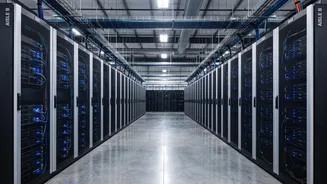
Every time you stream a movie, join a video call, or ask an AI chatbot a question, you are using a data centre. These vast, anonymous buildings are the physical heart of the internet, housing thousands of powerful computer servers that store, process,
and move the world's data. They are the invisible infrastructure powering the cloud, e-commerce, and our increasingly connected lives. For years, their energy use grew steadily. But now, a new technology is pushing their consumption to unprecedented levels, creating a formidable challenge for energy grids and climate goals worldwide.
The AI and Crypto Accelerant
The primary catalyst for this projected surge is artificial intelligence. Training large AI models and running complex queries requires immense computational power, which translates directly into massive electricity consumption. Answering a single query on a generative AI platform like ChatGPT can use up to ten times more electricity than a simple Google search. When scaled to billions of queries a day, the energy demand becomes staggering. The IEA's base case projection sees global data centre electricity consumption rising from about 460 terawatt-hours (TWh) in 2024 to over 1,000 TWh by 2030. That increase alone is more than the current annual electricity consumption of many industrialised nations.
A Global Power Challenge
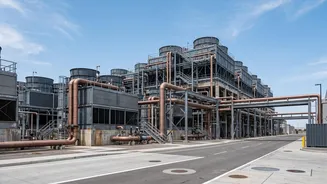
The IEA's forecast highlights a critical tension. While tech companies are major investors in renewable energy, the rapid pace of data centre expansion often outstrips the availability of clean power, forcing reliance on the existing grid. In the US and China, which together account for most of the growth, this means a greater dependence on natural gas and coal, respectively, to power new facilities. The IEA warns that this trend could lead to a 70% increase in carbon emissions from data centres by 2030. The sheer concentration of these facilities also puts immense strain on local power grids and water resources, which are crucial for cooling the powerful servers.
India's High-Stakes Data Boom
This global trend has profound implications for India, which is experiencing its own data centre construction boom. Driven by data localisation laws, a burgeoning digital economy, and massive investments from global hyperscalers, India's data centre capacity is projected to see exponential growth. Cities like Mumbai, Chennai, and Hyderabad are rapidly becoming major hubs. While this represents a huge economic opportunity, it also presents a significant energy challenge. Projections suggest India's data centre electricity consumption could grow nearly fivefold by 2030, putting pressure on an already strained national grid. The country's ability to meet this new demand with sustainable energy will be a critical test of its climate commitments.
The Quest for Green Computing
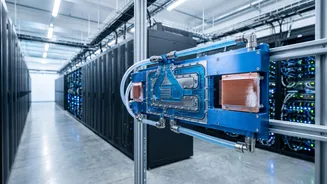
The industry is not standing still. There is a concerted push towards greater efficiency and sustainability. Innovations in cooling technology, which can account for a substantial portion of a data centre's energy use, are a key focus. Companies are also exploring locating new facilities in colder climates to reduce cooling costs naturally. The most significant long-term solution, however, is powering data centres directly with renewable energy. Major tech firms are the world's largest corporate buyers of clean power, signing large-scale agreements for wind and solar energy. Some are even exploring novel solutions like small modular nuclear reactors to provide consistent, carbon-free power for their campuses. The race is on to ensure that our digital future does not come at an unsustainable environmental cost.