





A Predictable Pattern of Chaos
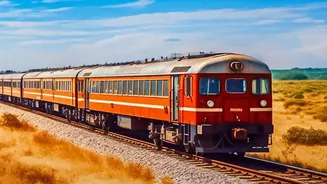
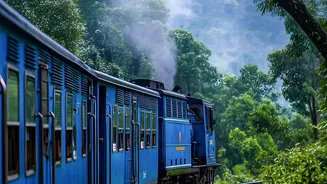
Every year, as the monsoon sweeps across India, the story repeats itself. Heavy rainfall leads to waterlogged tracks, landslides disrupt key sections, and operational caution forces trains to run at reduced speeds. Recent reports from July 2026 show services
on major routes in Western, Central, and Northeast Frontier Railways being cancelled, diverted, or significantly delayed. Incessant rains have submerged tracks and caused landslides in critical ghat sections, forcing authorities to suspend or reschedule dozens of trains for safety. While Indian Railways undertakes extensive pre-monsoon preparations, including cleaning drains and strengthening embankments, the sheer intensity of the weather often overwhelms these measures. The result is a cascade of delays that, while born from necessary safety protocols, throws the travel plans of lakhs of passengers into disarray. This isn't an unforeseen crisis; it's a seasonal certainty.
The Human Cost of a Missed Connection
For a passenger with a single ticket, a delay of a few hours is an inconvenience. For someone with a connecting journey, it's a crisis. The current system places the entire burden of risk on the traveler. A delay on the first leg of the journey routinely leads to a missed second train, and because the tickets are booked under separate PNRs, there is often no automatic refund or re-accommodation. Passengers are left stranded, often late at night, in an unfamiliar city. They face the unexpected financial shock of booking a new ticket at last-minute prices, finding accommodation, and the immense stress of rearranging their entire journey. Social media and forums are filled with stories of travelers who left what they thought was a safe buffer of three, four, or even five hours, only to find it completely erased by a single, severely delayed train. This transforms a planned trip into a frantic, expensive, and mentally exhausting ordeal.
Why Standard Buffers Fail
The concept of a 'buffer' is subjective and currently left to passenger guesswork. While a three-hour gap might be ample during dry seasons, the monsoon changes the entire equation. Delays aren't just minor; they can be extensive and unpredictable. A train can be held up for hours due to water on the tracks or a landslide ahead. Furthermore, arriving at a major hub like Mumbai, Delhi, or Kolkata is only half the battle. If the connecting train departs from a different station within the same city, the passenger must then navigate urban traffic, which is also significantly slowed by the rains. A journey between two stations that normally takes an hour can easily double. The current system offers no dynamic, season-specific guidance. Passengers book tickets months in advance, with no official warning that a two-hour connection in July is far riskier than one in January. Experienced travelers sometimes recommend buffers as long as 10-12 hours, a duration that is impractical for most people.
A Call for a Monsoon Timetable Logic
The solution isn't to stop running trains, but to manage expectations and scheduling with the reality of the season. Indian Railways could implement a 'monsoon logic' for its booking system. When a passenger books a connecting journey between June and September, the system could automatically flag connections with less than a four or five-hour buffer, advising a safer margin. Some zones, like the Konkan Railway, already implement a separate monsoon timetable with adjusted speeds and schedules from June to October. This model could be expanded. A more ambitious step would be to link PNRs for journeys booked together, even if on separate tickets. While IRCTC has a 'Connecting Journey Booking' option, it is not widely used or understood. If the first train's delay causes a missed connection on a linked PNR, the passenger should be entitled to an automatic refund or be accommodated on the next available service without penalty. This would shift the operational accountability from the passenger back to the system.