

Beyond the Rainbow
Our eyes are incredible, but they can only perceive a tiny sliver of the full range of light that exists, known as the electromagnetic spectrum. We see the universe in what we call visible light—the familiar rainbow of colors. But this spectrum also includes
much longer wavelengths, like radio waves and infrared, and much shorter, higher-energy ones, like ultraviolet (UV), X-rays, and gamma rays. Different celestial objects and events emit light at different wavelengths depending on their temperature and energy. A cool cloud of gas and a superheated disk of matter falling into a black hole will shine in completely different parts of the spectrum. To get a complete picture of a galaxy, astronomers must become cosmic detectives, viewing it through multiple lenses to piece together all the clues.
Visible Light: The Galaxy We Know
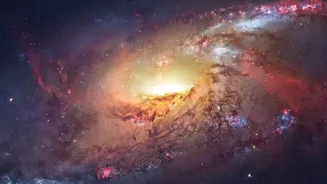
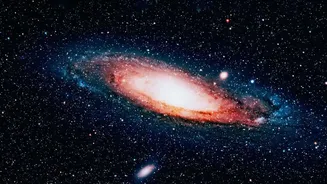
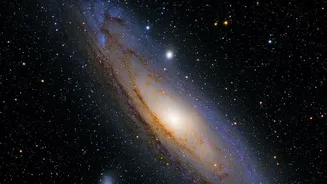
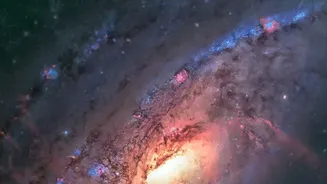
The classic, postcard-perfect image of a galaxy is typically taken in visible light. This is the light produced by stars similar to our Sun. This view shows us the grand structure—the swirling spiral arms, the bright central bulge, and the distribution of mature stars. However, visible light is easily blocked and scattered by cosmic dust. This means that dense, dusty lanes often appear as dark, empty patches, obscuring what lies within and behind them. While beautiful, a visible-light image is like looking at a house from the outside; you see its shape, but you can't see the plumbing, wiring, or what’s happening in every room.
Infrared: Peering Through the Dust
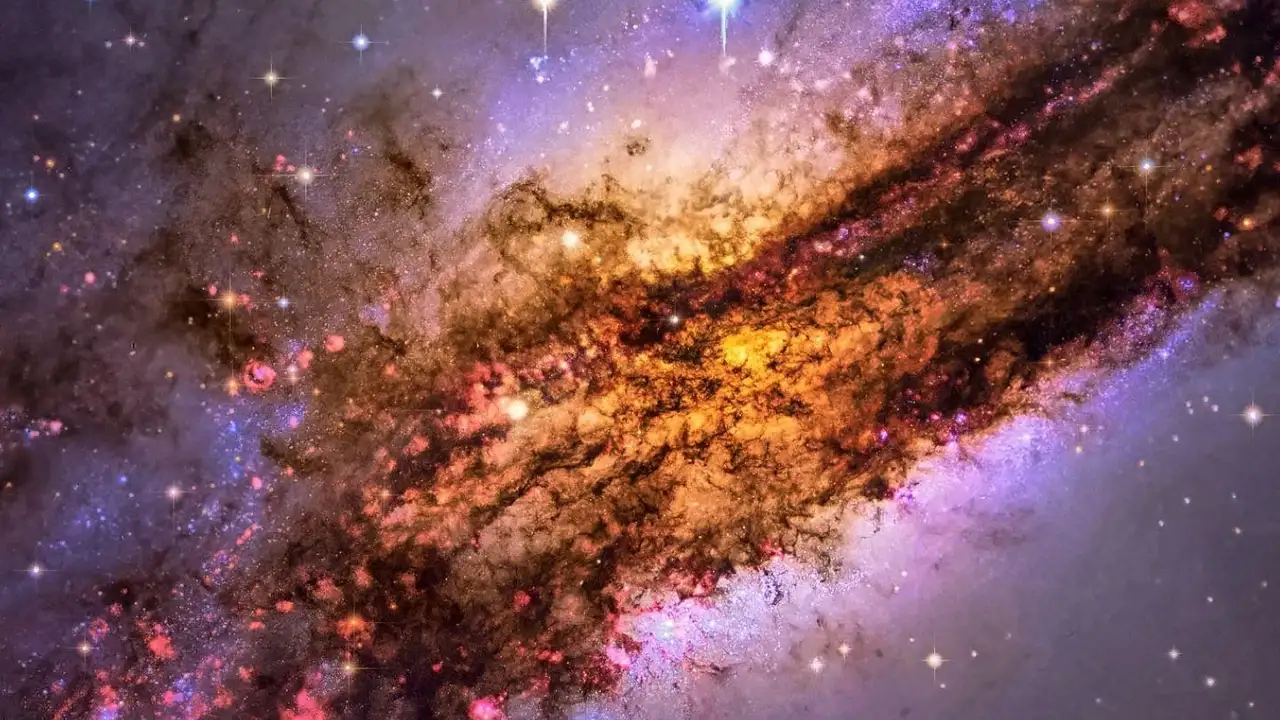
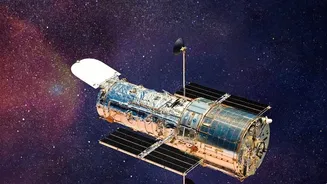
This is where infrared light comes in. With its longer wavelength, infrared radiation can pass through the dense clouds of dust that block visible light. Telescopes like the James Webb Space Telescope are designed to see in infrared, and what they reveal is breathtaking. Those dark, dusty lanes that look empty in visible light suddenly glow brightly in infrared, showing where heat is being radiated by cosmic dust. More importantly, infrared allows astronomers to see directly into stellar nurseries—the dense cocoons of gas and dust where new stars are being born. It unveils a hidden population of cool, young stars and the very structure of the galaxy's dusty skeleton, giving us a look inside the rooms we couldn't see before.
Radio Waves: Mapping Fuel and Jets
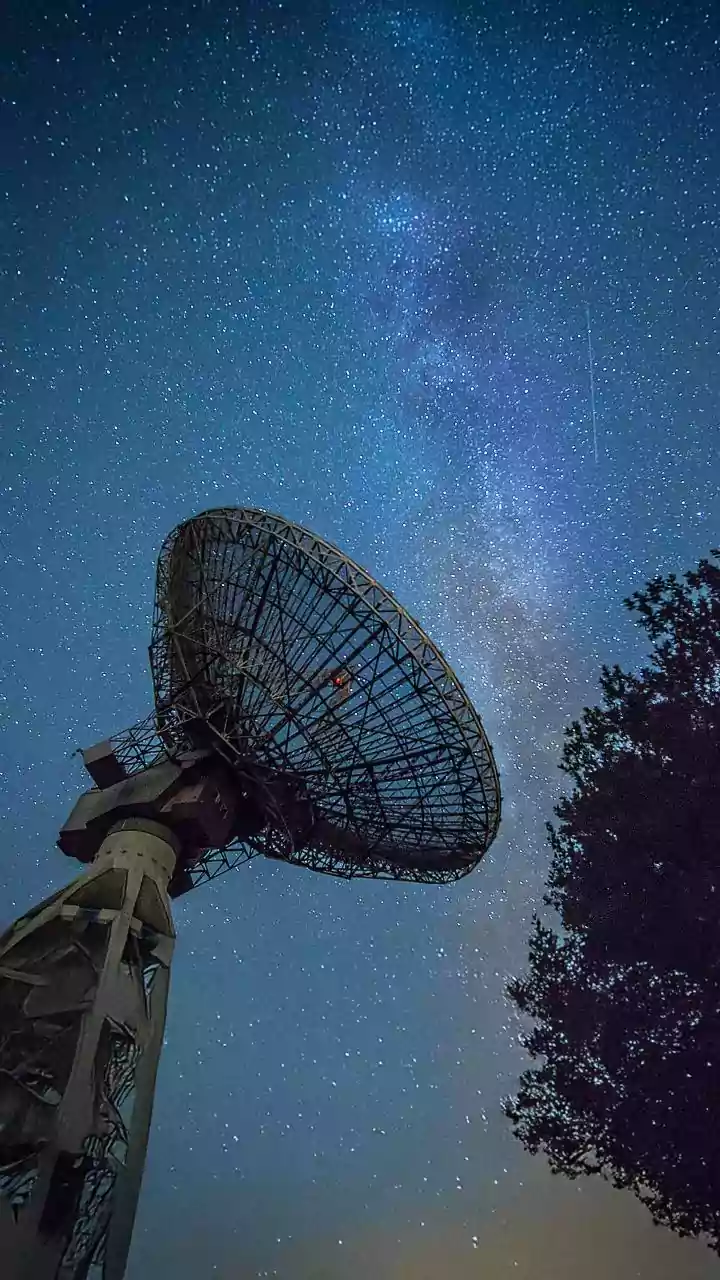
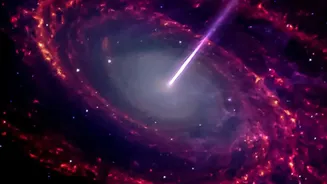
Moving to even longer wavelengths, radio telescopes reveal a completely different aspect of a galaxy. Instead of stars or dust, they primarily map out vast clouds of cold hydrogen gas. This gas is the raw fuel for future star formation, so radio maps show astronomers where the next generation of stars will likely ignite. But that's not all. Radio waves also trace some of the most powerful phenomena in the universe. They can detect the immense jets of material being blasted out from the vicinity of a supermassive black hole at the galaxy's center. In a radio image, the galaxy of stars might be nearly invisible, but these colossal jets, stretching for millions of light-years, can dominate the view.
X-Rays: A Glimpse of the Violent Universe
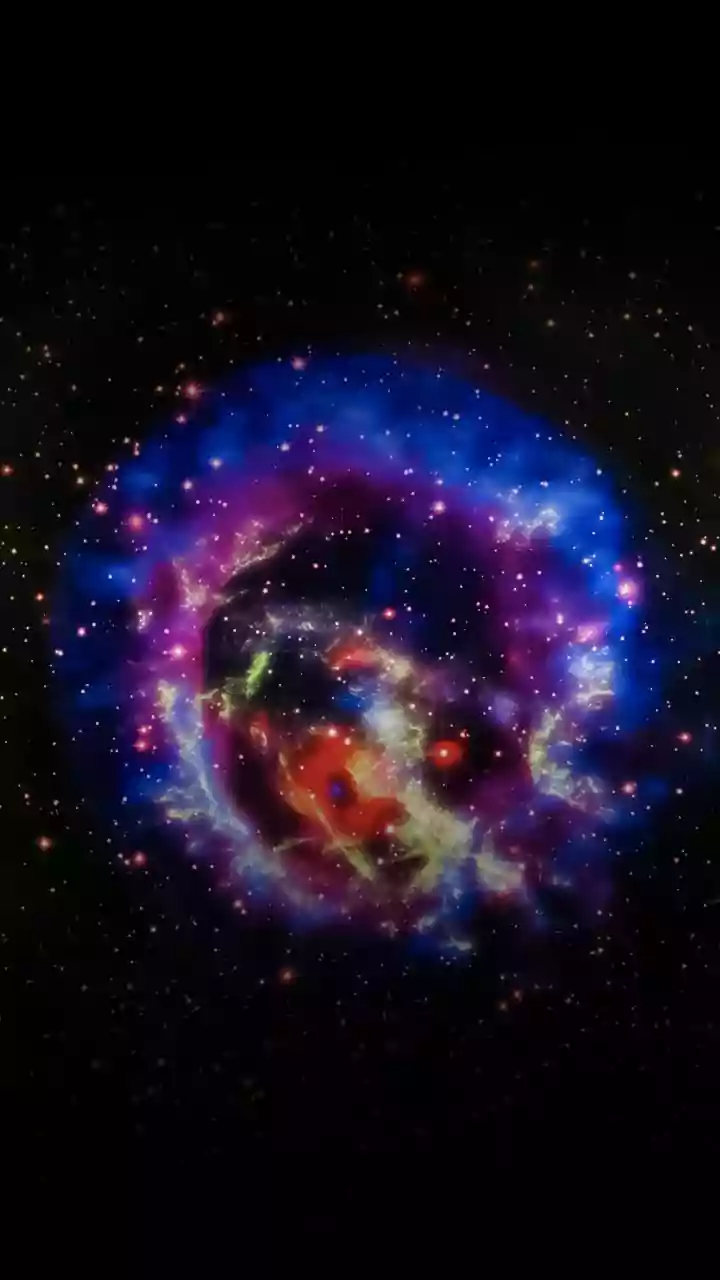
At the other end of the spectrum, X-rays show us the hottest and most violent events. To emit X-rays, matter must be heated to millions of degrees Celsius. Space-based observatories like the Chandra X-ray Observatory are pointed at galaxies to find these high-energy hotspots. An X-ray view reveals the chaotic regions around a supermassive black hole, where gas is superheated as it's pulled in. It also pinpoints the remnants of exploded stars (supernovae), neutron stars, and binary star systems where one star is stripping material from its companion. Looking at a galaxy in X-rays is like putting on glasses that only show you things that are on fire, revealing a universe of constant, high-energy action.
The Full Picture
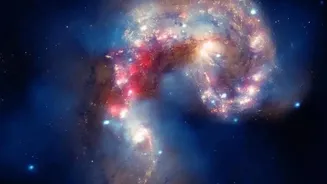
No single wavelength can tell the whole story. The true magic happens when astronomers combine these different views into a single composite image. By assigning visible colors (like red, green, and blue) to data from radio, infrared, and X-ray telescopes, they create a multi-wavelength masterpiece. In these images, you can see the elegant spiral arms of stars (visible), the glowing network of star-forming dust (infrared), the reservoirs of hydrogen fuel (radio), and the violent hotspots around black holes (X-ray) all at once. This combined view provides a far more complete understanding of a galaxy's structure, life cycle, and the intricate dance of matter and energy within it.