


A Puzzling Overlap
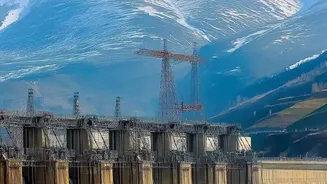
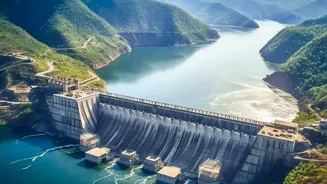
Recent reports have highlighted a curious geographical correlation between Iran's extensive network of dams and areas targeted in airstrikes believed to be aimed at missile sites. Nima Shokri, a water security expert at Germany's Hamburg University of Technology,
noted that after mapping 533 dams across Iran, he saw a striking resemblance to the pattern of recent military strikes. This has led experts to speculate whether the placement is a coincidence of geography or a deliberate military strategy. The speculation, while not yet confirmed with conclusive evidence, suggests some of Iran’s numerous dam and water-transfer projects may have been developed, at least in part, to support the country's sprawling underground missile facilities.
The Strategic Rationale
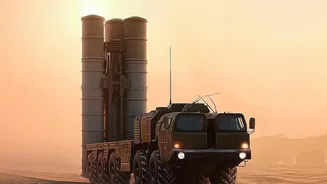
Experts interviewed by media outlets suggest that large-scale military complexes, like Iran's underground 'missile cities', require steady, independent sources of water and electricity to ensure operational continuity. Dams can provide both. By placing these critical military assets near essential civilian infrastructure, Iran could be creating a strategic buffer. Danny Citrinowicz, a former analyst for Israeli military intelligence, noted that Iran has a strong incentive to make its missile complexes self-sufficient and not reliant on the national grid. This strategy is consistent with the Islamic Revolutionary Guard Corps' (IRGC) history of embedding military assets within civilian areas. The IRGC, which controls Iran's ballistic missile program, has a documented practice of using public and civilian sites for military purposes, effectively creating human shields.
Grave Risks for Civilians
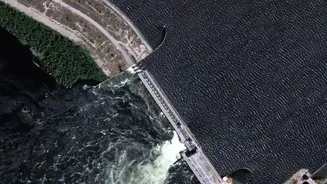
The potential consequences of this strategy for Iran's population are severe. Under international law, civilian sites can lose their protected status if used for military purposes. This means a dam or reservoir deemed to be supporting a missile base could become a legitimate military target in a conflict. The destruction of a dam could lead to catastrophic flooding, loss of life, and the contamination of water supplies essential for drinking and agriculture. Furthermore, the day-to-day operation of military facilities presents its own environmental hazards. Military bases are often sources of significant water and soil contamination from hazardous materials, chemicals, and fuel leaks, posing long-term health risks to nearby communities.
A Pattern of Behavior
This potential strategy is part of a broader pattern. In March 2026, the US Central Command (CENTCOM) issued a warning that the Iranian regime was using heavily populated civilian areas in cities like Dezful and Esfahan to launch drones and ballistic missiles. Reports have emerged of the IRGC moving personnel and equipment into schools, hospitals, and other public spaces. An investigation by Iran International found that during military exchanges, forces were moved into at least 70 civilian sites. This approach deliberately shifts the risk of conflict onto the civilian population. Critics argue this is a cynical tactic to either deter attacks or to generate propaganda value by blaming an adversary for any resulting civilian casualties.
Official Reactions and Denials
Iranian officials have pushed back against these interpretations. Iran's Parliament Speaker, Mohammad Bagher Ghalibaf, dismissed a New York Times report on the topic as a pretext for future attacks on civilian infrastructure. He argued that by this logic, any dam, port, or power plant near a US or Israeli base could also be considered 'dual-use'. However, the debate itself highlights a dangerous reality. Simply promoting the narrative that civilian infrastructure is being militarized, even if speculative, can increase the risk to those facilities during a conflict. Dams and water facilities are protected under international law, but that protection is jeopardized when they are integrated with military operations.