




Your Stargazing Starter Pack
Before we get to the main events, let's talk basics. Stargazing in India during the monsoon requires patience. The key is to grab those moments right after a rain shower when the sky is often washed clean of dust and haze. Head to a location away from
city lights; even the outskirts of your town can make a huge difference. Let your eyes adjust to the darkness for about 20-30 minutes and avoid looking at your phone screen. Use stargazing apps like Stellarium or Sky Map, which can help you identify what you're seeing. A good pair of binoculars is a great starting point before you consider a telescope.
July 4: Mars and Uranus Get Close
Kicking off the month is a rare and exceptionally close alignment of Mars and Uranus. The two planets will appear just 0.1 degrees apart, their closest conjunction until 2053. Look to the eastern sky after 2:30 AM. Mars will be easy to spot as a bright, reddish object, visible to the naked eye. Uranus will be a much fainter blue-green dot right next to it, and you'll likely need binoculars to pick it out from the glare. It’s a fantastic opportunity to see a distant ice giant with a convenient, bright signpost right beside it.
July 7-11: A Dance of the Moon and Planets
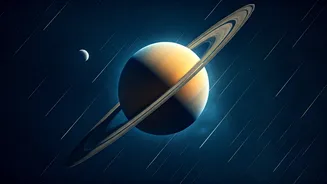
The Moon takes centre stage for a few nights. On the morning of July 7, the third-quarter Moon will cozy up to Saturn. Look east just after midnight to see the pair travel across the sky together, with Saturn appearing as a steady, golden point of light that doesn't twinkle. Then, on the mornings of July 10 and 11, a beautiful crescent Moon will form a stunning trio with Mars and the Pleiades star cluster, also known as the Seven Sisters. This picturesque gathering will be visible in the eastern sky about an hour and a half before sunrise.
Mid-July: Spot the Summer Constellations
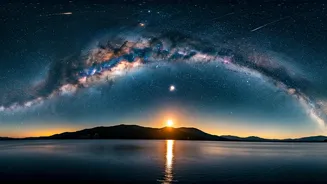
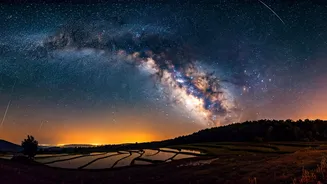
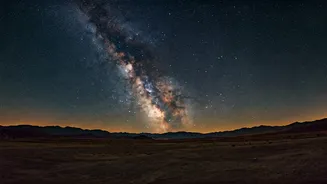
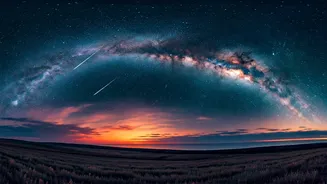
July is a prime month for some of the most famous constellations. Look south for Scorpius, easily identifiable by its hook shape and the bright red star Antares, which marks the scorpion's heart. High overhead, you can find the Summer Triangle, an asterism formed by three bright stars: Vega in the constellation Lyra, Deneb in Cygnus, and Altair in Aquila. On dark, moonless nights around the New Moon on July 14, you might even see the Milky Way arching through this part of the sky, a truly breathtaking sight.
July 29-30: A Double Meteor Shower
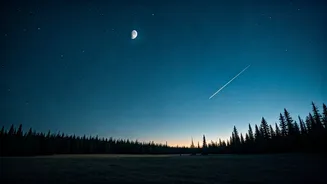
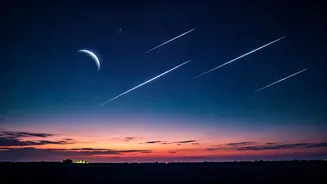
July closes with a celestial fireworks display as two meteor showers, the Southern Delta Aquariids and the Alpha Capricornids, peak on the same night. Together, they can produce up to 25 meteors per hour under ideal conditions. However, there's a catch: the Full Buck Moon on July 29 will be shining brightly, washing out many of the fainter meteors. The best time to watch will be in the pre-dawn hours of July 30 and 31, between 1:30 AM and 4:30 AM IST. While the Delta Aquariids are faint, keep an eye out for the Alpha Capricornids, which are known for producing slow, bright fireballs that might be able to outshine the moonlight.
A Note on the Full Moon
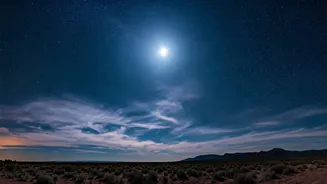
The month's full moon on July 29 is known as the Buck Moon. For many in India, this date also coincides with the celebration of Guru Purnima. While its bright light presents a challenge for meteor-watching, the full moon itself is a beautiful sight. It will reach peak illumination around 8:00 PM IST, offering a brilliant spectacle to observe all night long.