



More Than Just Heavy Rain
Every year, the monsoon season paints a familiar, chaotic picture across urban India. Roads transform into canals, vehicles float like abandoned toys, and daily life grinds to a halt. While it's easy to blame the torrential downpour, the reality of urban flooding
is far more complex. It's a crisis fueled by decades of unplanned development, ageing infrastructure, and the systematic destruction of natural flood defences. Cities have expanded over wetlands and floodplains, replacing absorbent green spaces with impermeable concrete. Our drainage systems, many designed for a bygone era with smaller populations and less intense rainfall, are frequently choked with solid waste and silt, rendering them useless when they're needed most. The result is a man-made disaster where even a few hours of heavy rain can lead to catastrophic waterlogging, causing immense economic damage and risk to human life.
What Is Smart Drainage?
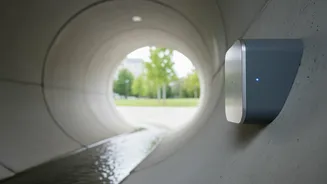
The solution isn't just about building bigger pipes; it's about making the entire system smarter. Enter smart drainage, a modern approach that uses technology to manage stormwater proactively rather than reactively. Think of it as giving the city's circulatory system a brain. At its core, smart drainage integrates the Internet of Things (IoT), artificial intelligence (AI), and real-time data analytics. Instead of relying on manual intervention, this approach deploys a network of sensors to monitor environmental conditions. These sensors track critical parameters like water levels in drains, rainfall intensity, soil moisture, and even the operational status of pumps and gates. This constant stream of data is fed into a central control system, allowing authorities to see what's happening across the entire city at a glance and, crucially, to predict what might happen next.
A System in Action
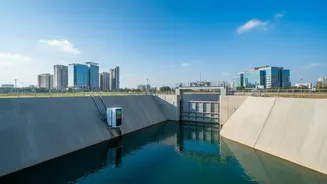
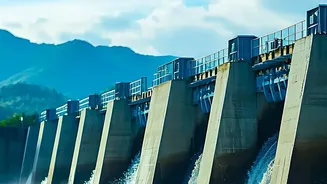
Imagine a monsoon cloudburst over a major city. In a traditional system, authorities would wait for flood reports to come in. With a smart system, the response begins before the streets are even submerged. As rain begins, IoT sensors instantly report the increase in water flow. An AI-powered model, fed with this real-time data and weather forecasts, predicts which specific areas are most at risk of flooding within the next few hours. Armed with this predictive insight, the system can take automated action. Sluice gates can be opened remotely to divert water to under-utilised parts of the drainage network or into large underground storage tanks. Pumping stations can be activated precisely when needed. Simultaneously, an early warning can be sent to citizens' phones, advising them of flood-prone routes and allowing them to move to safety. This shift from damage control to pre-emptive action is the fundamental promise of smart drainage.
From Theory to Reality
This technology is no longer just a futuristic concept. Cities across India are beginning to embrace it. Chennai has become the first city in the country to fully implement a Real-Time Flood Forecasting and Spatial Decision Support System (RTFF & SDSS). Operational since late 2025, this system integrates data from hundreds of rain gauges, weather stations, and water level sensors to manage flood events across its major river basins. In Vijayawada, an AI-based system launched in 2026 provides rainfall forecasts up to 48 hours in advance and flash flood warnings six hours before they occur. Similarly, a detailed project report for Kolkata and Howrah has proposed a smart drainage system using IoT sensors and automated gates, estimating it could reduce waterlogging duration by up to 80%. These initiatives, often developed in collaboration with premier institutions like IIT Madras and IIT Bombay, show a clear path forward for urban India.
The Challenges Ahead
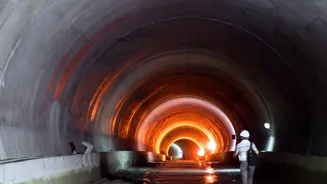
Despite these promising developments, implementing smart drainage on a national scale is a monumental task. The primary hurdles are cost, complexity, and coordination. Upgrading decades-old drainage infrastructure and embedding it with sophisticated technology requires significant financial investment. There is also the challenge of integrating new systems with existing, often poorly documented, networks. Furthermore, urban water management in India is often handled by multiple, fragmented agencies, making a unified, city-wide approach difficult to execute. Success depends not just on technology but on strong political will, dedicated funding, and robust governance to oversee these complex projects from planning to long-term maintenance.