






What Makes a Broadcast ‘FIFA-Style’?
For decades, the FIFA World Cup has been the pinnacle of sports broadcasting, setting a global standard for how a major tournament should look and feel. It’s more than just showing the match; it’s about creating an immersive narrative. This involves a combination
of advanced camera technology—including ultra-slow-motion, aerial, and tactical cameras—that capture every angle with cinematic flair. It also relies heavily on data-driven graphics, such as real-time player statistics, heat maps, and augmented reality overlays that help viewers understand team strategy. The goal is to give every fan the “best seat in the house,” combining visceral, on-field sounds with detailed analytics to tell a complete story of the game. This approach transforms the broadcast from simple coverage into a deeply engaging entertainment product.
The New Tech Making Its Cricket Debut
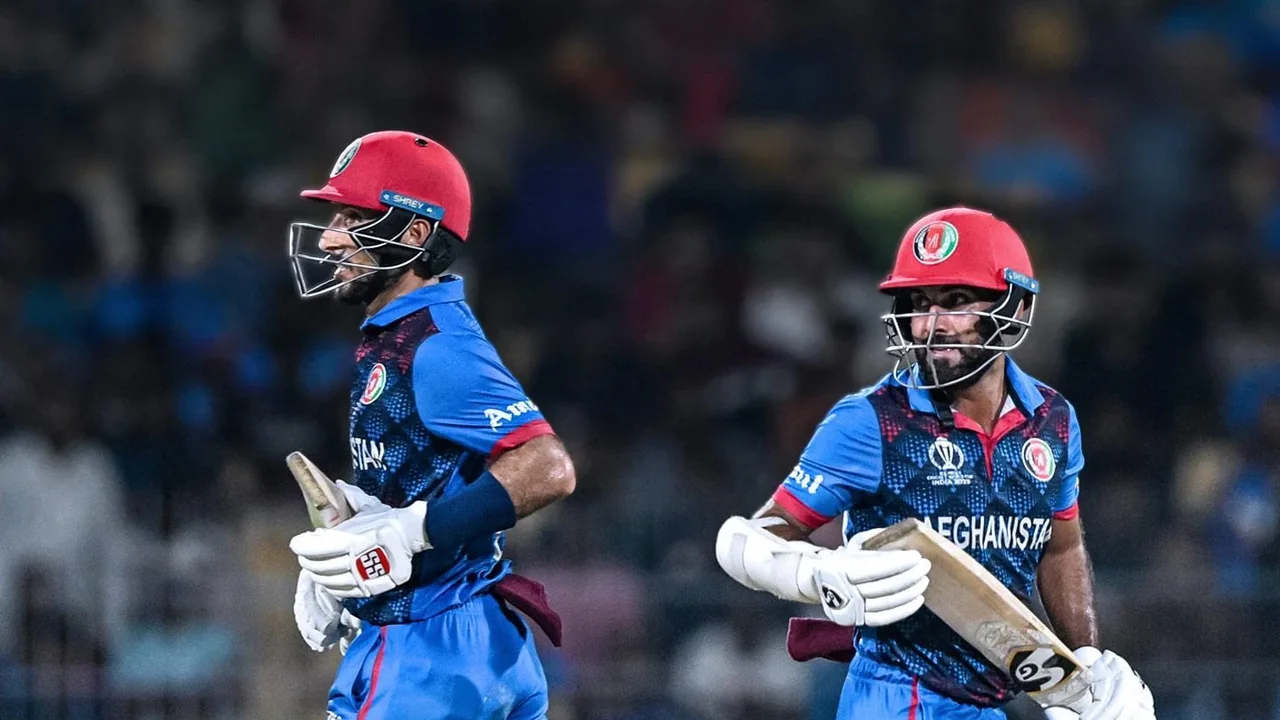
The upcoming three-match T20I series between India and Afghanistan, hosted by the Afghanistan Cricket Board in New Delhi, will be the first to feature this level of production. The production, managed by ITW Universe, will be led by Jamie Oakford, a director who has worked on every FIFA World Cup since 2002. Several key innovations will be introduced. Volumetric free-viewpoint technology will use a network of cameras to create a 3D digital model of the action, allowing for replays from virtually any angle. The Spatio system, developed by Quidich Innovation Labs, will combine stabilised drone feeds with real-time optical player tracking and augmented reality graphics. Furthermore, AI-stabilised cameras, an advanced Spidercam, and ultra-slow-motion systems capable of recording at over 600 frames per second will provide unprecedented detail on crucial moments like close calls and bat-ball contact.
How Will This Change Your Viewing Experience?
For the average fan watching on Sony Sports or streaming on FanCode, these changes will be immediately noticeable. The free-viewpoint technology means you could see a controversial run-out from the batsman's own perspective or a spectacular catch from an angle that was previously impossible. The Spatio system will allow broadcasters to overlay tactical graphics directly onto the field of play, showing fielding placements, player running speeds, and the distances covered to stop a boundary. Ultra-slow-motion replays will offer forensic detail on faint edges or stumping decisions, potentially settling debates before they even begin. The entire production aims to feel more cinematic and less like a traditional sports broadcast, focusing on storytelling and giving viewers a deeper appreciation of the athleticism and strategy involved in T20 cricket.
A Strategic Play Beyond Just One Series
Introducing such high-end production to a bilateral series is a significant statement. Typically, this level of investment is reserved for major ICC tournaments or high-profile leagues like the IPL. For the Afghanistan Cricket Board, this serves as an opportunity to generate significant revenue and showcase their 'home' series on a global stage. For the production company, ITW Universe, it’s a chance to move away from what its founder called the “same old production technology” used in cricket for the past decade and create a new standard. This trial run during the India-Afghanistan series could serve as a proof-of-concept for broadcasters and cricket boards worldwide, demonstrating a new commercial and viewing model for bilateral cricket, which often struggles for context and viewership compared to World Cups.