







A Tale of Two Kishans
The statistical difference between Ishan Kishan’s performances at home versus away is stark. In familiar subcontinental conditions, his bat does the talking with a high average and a blistering strike rate. His phenomenal 210 against Bangladesh in Chattogram
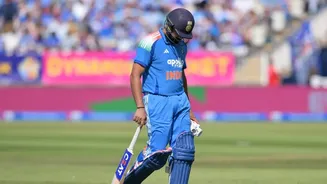
and a recent blistering century against Afghanistan in Lucknow are prime examples of his destructive capabilities on pitches that are true and predictable. However, the numbers tell a different story in overseas conditions, particularly in countries like England where the ball tends to move more. Recent scores during the 2026 tour of England—1 off 8 balls and 14 off 12—highlight this struggle. A fan analysis points to an away average of just 20.2 compared to a home average of 32.3, with a significant drop in strike rate as well. This isn't a new trend; it's a pattern that has followed him, raising questions about his adaptability.
The Challenge of the Moving Ball
One of the primary technical challenges for Kishan appears to be against the moving ball. In conditions prevalent in England, New Zealand, or South Africa, the ball swings and seams more than it does in Asia. Analysts have noted that Kishan can seem caught on the crease, making him vulnerable. His aggressive, front-foot dominant style, which is so effective on flatter tracks, can become a weakness when the ball is nipping around. He has shown a vulnerability against hard-length bowling on the stump line, and opposition teams have clearly taken note of this technical aspect in their game plans against him. This struggle isn't just limited to pace; on spinning tracks, a tendency to get stuck in the crease makes it difficult to rotate the strike, leading to a high percentage of dot balls and building pressure.
A Question of Strike Rotation
Beyond just big shots, the art of building an ODI innings lies in rotating the strike. This is an area where Kishan has faced criticism. His game is often built around boundary-hitting, and on days when he finds his rhythm, it's a spectacle. However, when the boundaries dry up, especially in difficult away conditions, he has shown a tendency to consume a high number of dot balls. This can stall the momentum of the innings, particularly during the crucial powerplay overs. Kishan himself has acknowledged that his strength is hitting sixes, not necessarily rotating the strike. While this approach works wonders when he is in full flow, its limitations are exposed when he struggles to find his timing or when facing a disciplined bowling attack on a challenging surface.
The Middle-Order Conundrum
Kishan's role in the team has also been a factor. He has played as both an opener and in the middle order. While his most explosive innings have come at the top, he has also been tasked with a middle-order role to accommodate other players. Batting in the middle brings a different set of challenges, especially overseas. It often involves facing older, softer balls and manipulating the field against experienced spinners. While he has played impactful knocks from this position, like his crucial 82 against Pakistan in the 2023 Asia Cup, consistency remains an issue. The constant shuffling between opening and the middle order may also make it difficult for him to settle into a specific role and master the unique demands each position has in varying conditions.