




What Exactly is a 'Dark Store'?
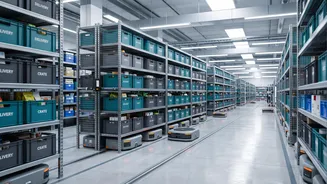
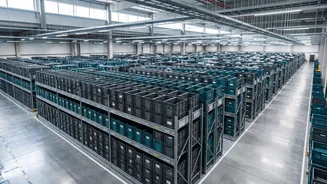
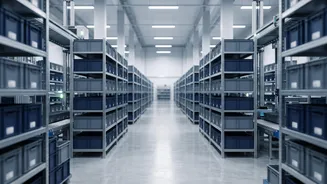
The engine room of the quick-commerce (q-commerce) revolution is the 'dark store'. Despite the name, there’s nothing mysterious about it. A dark store is a small, exclusive warehouse or fulfilment centre that is not open to the public. Think of it as
a supermarket without shoppers, signboards, or checkout counters. These facilities, typically ranging from 2,000 to 5,000 square feet, are strategically located in dense residential neighbourhoods and exist for a single purpose: to fulfil online orders at lightning speed. Major players like Blinkit, Zepto, Swiggy Instamart, and others have blanketed cities like Bengaluru with hundreds of these micro-hubs. Each one serves a tight delivery radius of just 2 to 3 kilometres, ensuring that inventory is already hyper-local before you even open the app.
The Anatomy of a 10-Minute Delivery
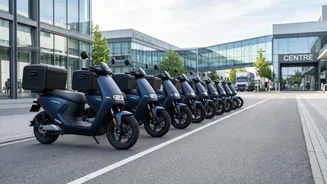
The journey from 'place order' to your doorstep is a masterclass in efficiency. The moment you pay, the order is routed to the nearest dark store and appears on a picker’s handheld device. Inside, the store layout is optimised for speed, not for browsing. Fast-moving items like bread, milk, and snacks are placed near the packing station to minimise walking distance. Aided by barcode scanners and optimised pick-lists, an order is typically picked and packed in under two minutes. A delivery rider, who is often already waiting, then takes the package for the final, short journey. Because the travel distance is so small, the delivery can be completed safely and without rushing. The entire process, from order to delivery, hinges on proximity and operational precision, not reckless speed on the roads.
Why Bengaluru is the Q-Commerce Capital
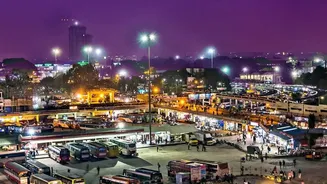
With over 629 dark stores, Bengaluru has more than any other city in India, making it the nation's undisputed quick-commerce hub. Several factors make the city the perfect market. First, its demographic profile is ideal: a large, dense population of tech-savvy young professionals in dual-income households who value convenience and have higher disposable incomes. Second, Bengaluru's chronic traffic congestion makes the hyperlocal model of short-distance deliveries far more efficient than traditional logistics. Finally, the city serves as the research and development lab for the industry. Three of the five major platforms—Swiggy, Flipkart, and BigBasket—are headquartered here, and all major players test new features and services in Bengaluru before a national rollout.
The High-Stakes Economics
While convenient for consumers, the business model for q-commerce is challenging. Profitability hinges on achieving massive order volumes to offset high operational costs. These costs include not just the delivery fleet but also real estate leases for hundreds of dark stores, employee salaries, and technology investments. The model is funded by significant venture capital, with companies focused on gaining market share. To improve unit economics, platforms focus on increasing their average order value (AOV) by encouraging customers to buy more per transaction and expanding into higher-margin categories beyond groceries, like electronics and beauty products. Profitability remains a long-term goal for many, with the current focus being on scaling operations and building customer loyalty through unparalleled convenience.
The Human Engine of Instant Delivery
This entire ecosystem is powered by thousands of gig-economy workers: the pickers inside the dark stores and the delivery partners on the roads. For every crore of monthly sales, the q-commerce sector creates an estimated 62-64 jobs, a majority of which are in last-mile delivery. These workers operate in a high-pressure environment driven by performance targets and speed. While offering flexible employment opportunities, the model also raises questions about job security and worker well-being, which are becoming central to the conversation about the industry's long-term sustainability. As platforms expand, managing this human element effectively will be as crucial as optimising their technology and logistics.