




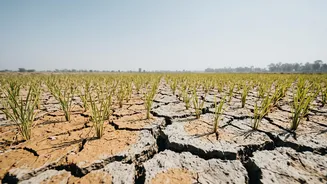


Timing is Everything: The Crop's Growth Stage
A plant's vulnerability to water stress heavily depends on where it is in its life cycle. September is a crucial month for many Kharif crops, as they are often in their reproductive or grain-filling stages. A water deficit during flowering or seed development
can severely reduce yields, much more so than during the early vegetative growth phase. For a crop like paddy rice, this period is particularly sensitive; a lack of water can disrupt grain formation and lead to significant losses. Conversely, if a crop has already passed this critical window, a late-season dry spell might have a much milder effect. Some plants might even respond to drought by accelerating their life cycle, rushing to maturity at the expense of yield.
Inherent Thirst: The Plant's Natural Water Needs
Not all crops are created equal when it comes to water consumption. Paddy rice, for instance, is famously water-intensive, often grown in flooded fields and requiring vast amounts of water to thrive. On the other end of the spectrum are millets, such as bajra and jowar, which are naturally drought-tolerant. These hardy crops have deep root systems and lower water requirements, making them far more resilient during dry spells. Pulses and some oilseeds also tend to be less thirsty than rice or sugarcane. This fundamental difference in physiology means that in a rain-deficient September, fields of millets might remain healthy while adjacent paddy fields suffer.
The Foundation: Soil Type and Health
The ground beneath the crops plays a vital role in mediating the impact of a drought. Different soil types have varying capacities to hold water. Heavy black soils, found in parts of Maharashtra and Madhya Pradesh, have a high clay content and can retain moisture for longer periods, providing a buffer for plants during dry spells. In contrast, sandy or porous soils, which are common in other regions, drain quickly and leave crops vulnerable to water stress almost immediately after the rain stops. Soil health also matters. Land rich in organic matter acts like a sponge, absorbing and holding rainwater more effectively, giving crops a better chance of survival when the monsoon recedes early.
The Human Factor: Access to Irrigation
Perhaps the most significant differentiator is the availability of irrigation. In India, a stark divide exists between rain-fed agriculture and irrigated farming. Regions with extensive canal networks, tube wells, and reservoirs—such as Punjab, Haryana, and parts of Uttar Pradesh—are far less dependent on the whims of the monsoon. Farmers in these areas can supplement rainfall deficits by pumping groundwater or using stored water, protecting their crops from ruin. However, large swathes of central and eastern India remain heavily reliant on rain. For these farmers, a weak end to the monsoon can be catastrophic, as they have no backup water source. Government data often highlights districts with low irrigation coverage as high-priority areas during a weak monsoon for this very reason.
Regional Rains: The Patchy Nature of the Monsoon
Finally, a 'drier September' for the country as a whole doesn't mean it's dry everywhere. Monsoon rainfall is notoriously uneven, especially in its withdrawal phase. Some districts might experience a complete lack of rain, while neighbouring areas could receive sporadic, crop-saving showers. This spatial variability creates a patchwork of outcomes. A weak monsoon system might deliver just enough rain to some parts of the country to see the crops through to harvest, while leaving others completely dry. This geographic lottery is a key reason why predicting the exact nationwide impact of a poor monsoon is so challenging until after the season has fully concluded.