





Beneath the frozen, fractured surface of Jupiter's moon Europa lies one of the most promising places to search for life: a vast, saltwater ocean. But how do you take the temperature of a hidden sea from millions of kilometres away?
The Lure of a Hidden Ocean
For decades, scientists
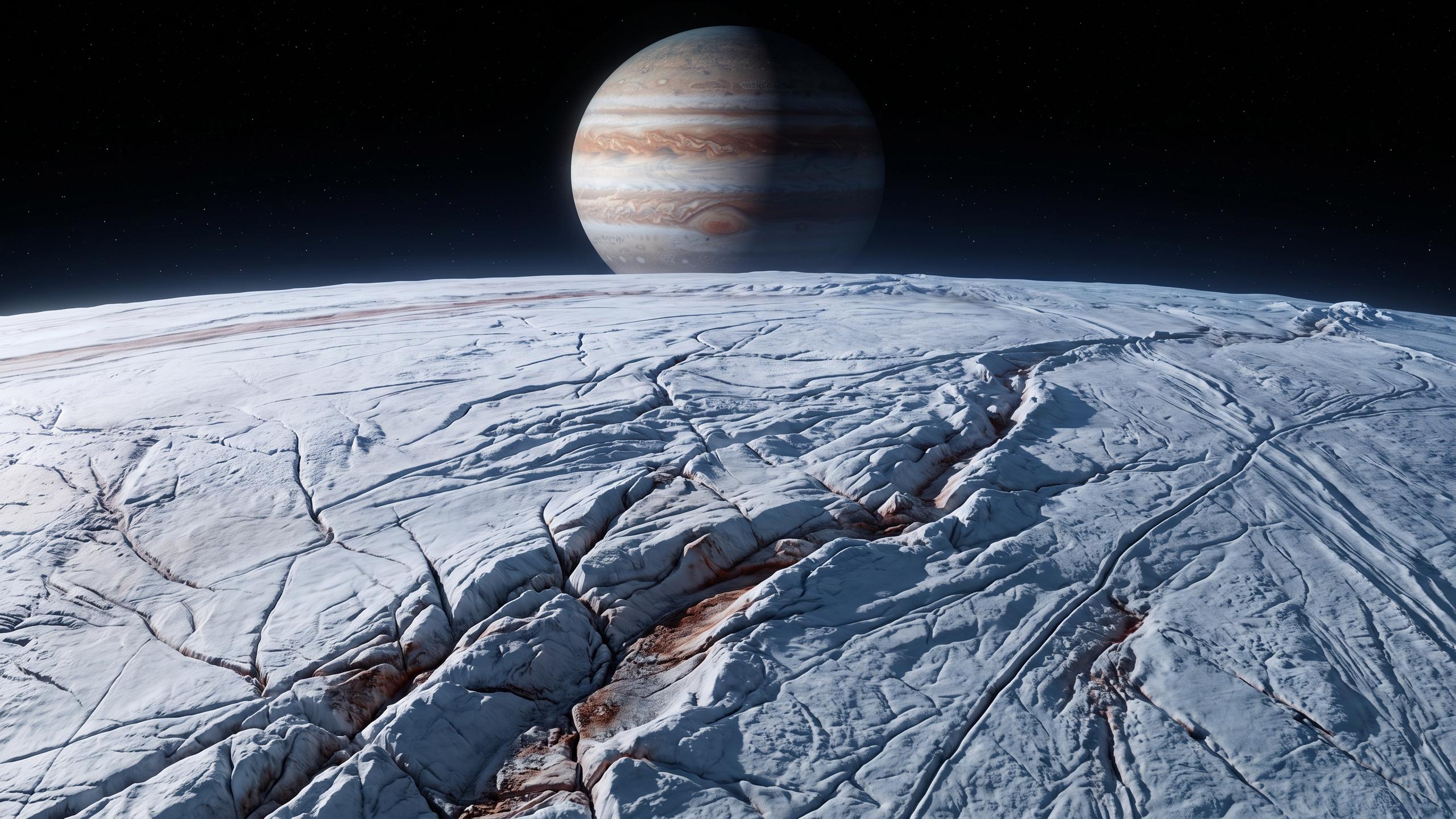
have been captivated by Europa. Smaller than Earth's moon, it is believed to hold a global ocean of liquid saltwater containing twice as much water as all of Earth's oceans combined. This ocean is shielded from the vacuum of space and Jupiter's harsh radiation by a thick, icy shell, estimated to be 15 to 25 kilometres thick. The key ingredients for life as we know it are liquid water, chemistry, and energy. Europa appears to have all three, with tidal flexing from Jupiter's immense gravity providing the energy to keep the ocean from freezing solid. This makes Europa a top candidate in the search for habitable environments beyond Earth, but confirming the nature of this ocean is the first step.
Meet the Detective: Europa Clipper
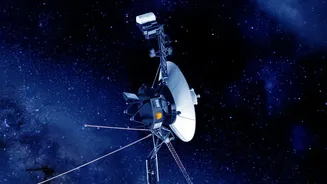
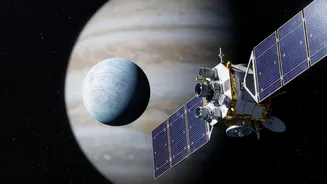
Enter NASA's Europa Clipper, the most advanced spacecraft ever sent to investigate an ocean world. Launched in October 2024, this robotic explorer is on a multi-year journey to the Jupiter system. Upon arrival in 2030, it won't orbit Europa directly, which would expose it to damaging radiation. Instead, it will orbit Jupiter and perform dozens of close, strategic flybys of the icy moon, some as low as 25 kilometres above the surface. During these brief encounters, a suite of nine advanced scientific instruments will gather data to investigate everything from the ice shell's thickness to the ocean's depth and salinity. But one instrument is specifically designed to hunt for heat.
The Heat Detector: E-THEMIS
The key to measuring thermal energy is an instrument called the Europa Thermal Emission Imaging System, or E-THEMIS. Developed by Arizona State University, this sophisticated infrared camera is designed to do something remarkable: create a detailed temperature map of Europa's surface. Everything in the universe with a temperature above absolute zero emits thermal energy in the form of infrared light, which is invisible to the human eye. E-THEMIS acts like a highly sensitive infrared camera, detecting this faint heat glow from Europa's frigid surface, which can range from -210°C at the equator to -370°C at the poles.
Seeing Heat Through Kilometres of Ice
E-THEMIS doesn't measure the ocean's temperature directly. Instead, it looks for indirect clues on the surface. The instrument scans Europa in three different bands of infrared light, allowing scientists to detect subtle temperature variations across the icy crust. The core idea is that if the hidden ocean is closer to the surface in certain areas, or if plumes of warmer water have recently erupted, these locations will appear as 'hotspots' on the thermal map. Even if an eruption happened long ago, the residual warmth might still be detectable. By mapping these thermal anomalies, E-THEMIS can pinpoint geologically active zones and areas where the ice shell might be thinner, providing crucial intelligence for understanding the moon's inner workings.
From Heat Maps to Habitability
The data from E-THEMIS is about more than just temperature; it's about identifying targets. Regions identified as unusually warm will become prime targets for Europa Clipper's other instruments. Spectrometers can then analyze the chemical composition of these areas, searching for salts and organic compounds that might originate from the ocean below. Furthermore, by observing how quickly the surface cools when it rotates out of sunlight, E-THEMIS can also determine the texture of the surface—distinguishing between solid ice and fine, snow-like particles. This information is vital not just for science, but for planning potential future missions that might one day land on the surface to search for life directly.