



The Ultimate Goal: Catching a Rocket
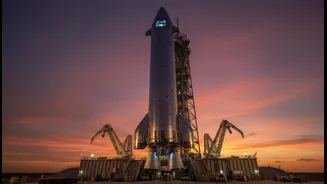
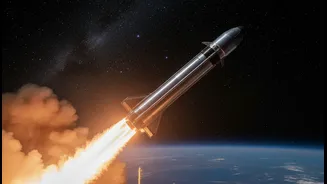
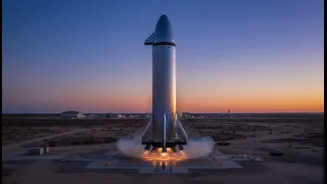
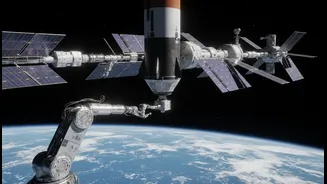
SpaceX's ambition for Starship is full and rapid reusability, a goal that hinges on a seemingly impossible feat: catching the massive Super Heavy booster with the launch tower itself. This method, nicknamed 'Mechazilla', involves the booster flying back
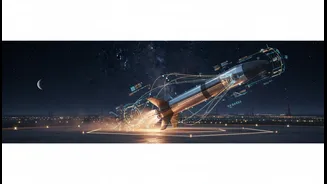
to the launch site, hovering, and being grabbed by two giant arms on the tower. This eliminates the need for ocean recovery, which is slow, costly, and exposes the rocket to corrosive saltwater. To achieve this, the booster must perform a perfect, automated return trip, landing with pinpoint accuracy. Every experimental flight, even those ending in a controlled ocean splashdown, is a step toward perfecting the complex maneuvers required for this tower catch.
A Different Kind of Return Journey
The key objective for the booster on Flight 13 was to execute a series of precise burns after separating from the upper stage. This included the 'boostback burn,' designed to reverse its course and aim it back towards the launch area, followed by a landing burn to slow it for a soft touchdown in the Gulf of Mexico. Unlike previous flights which suffered from engine failures or control issues during this phase, Flight 13 was a crucial test of fixes implemented after the twelfth flight's anomalies. On that mission, engine timing issues caused the booster to rotate incorrectly and several engines failed to relight, compromising the return maneuver. Successfully demonstrating a controlled boostback and landing sequence is the foundational requirement for any future attempt at a tower landing.
The Flight Path as a Dress Rehearsal
The trajectory of the Flight 13 booster was, in essence, a dry run for a true return-to-launch-site maneuver. By targeting a specific point in the Gulf of Mexico, SpaceX gathered critical data on the booster's aerodynamic performance and the precision of its guidance systems during the high-stress return flight. The path wasn't random; it was calculated to simulate the energy and control needed to eventually reach the launch tower. A successful soft splashdown at a predetermined offshore location proves that the booster can, in principle, be steered to a much smaller target on land. Observers are watching to see if SpaceX can shrink the gap between test flights, a sign that the system is moving from experimental development to a more routine operational schedule.
Scaling Up for a Starship Economy
Perfecting this recovery method is not just a technical challenge; it's the core of Starship's business model. Elon Musk's vision of a self-sustaining city on Mars, along with more immediate goals like deploying thousands of Starlink satellites and supporting NASA's moon missions, requires an unprecedented launch frequency. This is only possible if the most expensive part of the rocket, the Super Heavy booster, can be recovered, refurbished, and relaunched in a matter of hours or days, not weeks. A tower catch is the fastest theoretical way to do this. The booster is caught, placed back on the launch mount, refueled, and prepared for its next flight. The success of Flight 13's return path provides the strongest evidence yet that this ambitious, cost-slashing operational plan is not just science fiction, but an achievable engineering roadmap.