







The 'Health Halo' Deception
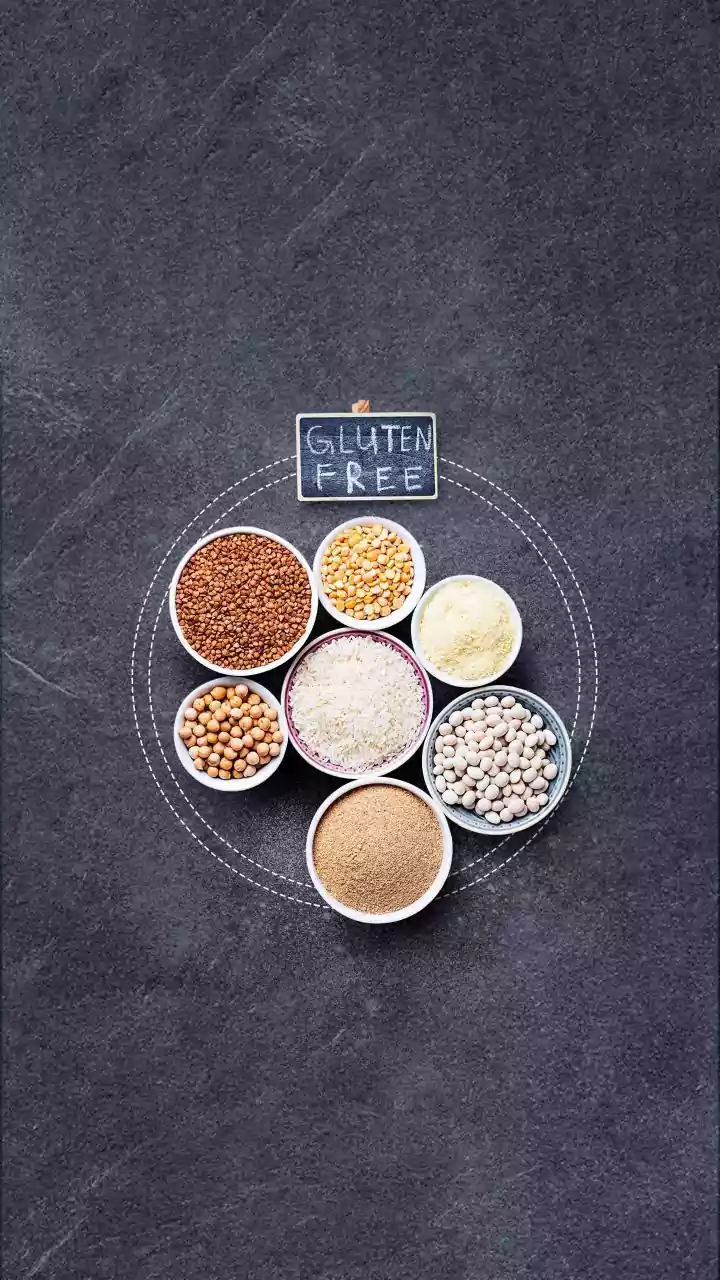
Food marketers are experts at creating a 'health halo' around their products. By highlighting a single positive attribute—such as 'made with whole grains,' 'gluten-free,' or 'organic'—they make the entire snack feel virtuous. This clever tactic distracts
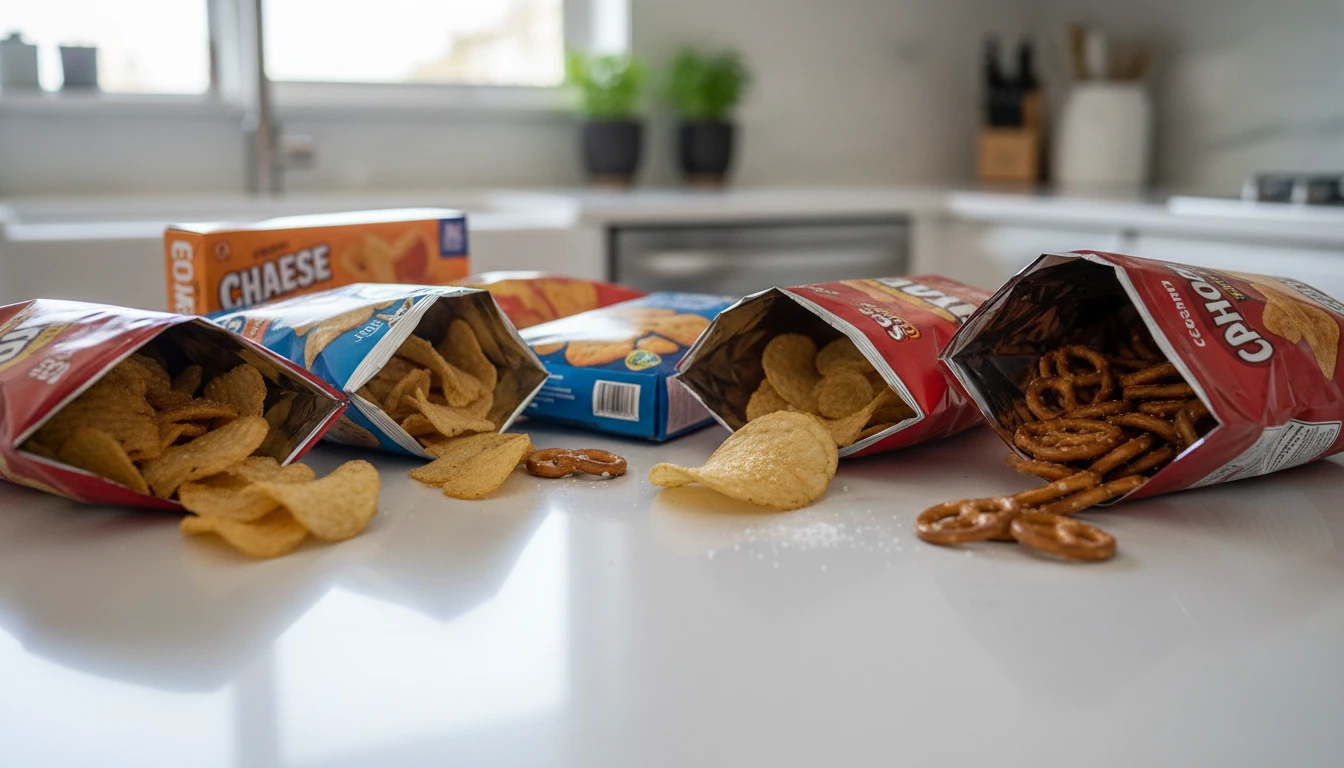
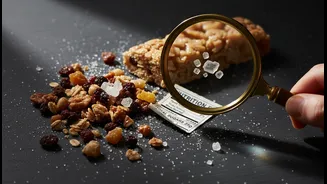
you from less desirable ingredients, especially added sugars. A packet of 'baked, not fried' crisps or a 'real fruit' energy bar might seem like a guilt-free choice, but these claims say nothing about the sugar content. Consumers often underestimate the calories and sugar in products with these health-focused buzzwords, leading them to believe they are making a much healthier choice than they actually are. The front of the pack sells a story; the back tells the facts.
How to Read the Nutrition Label
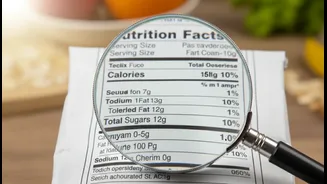
The key to uncovering the truth lies on the back of the pack. In India, the Food Safety and Standards Authority of India (FSSAI) mandates a nutrition information panel. First, look for the 'Added Sugars' line, which is listed separately under 'Total Carbohydrates' and 'Total Sugars'. 'Total Sugars' includes both naturally occurring sugars (like those in milk or fruit) and added sugars. It's the 'added' amount you need to watch closely. The World Health Organization (WHO) recommends keeping free sugar intake below 10% of your daily calories. For an average adult, that’s no more than 50 grams (about 10 teaspoons) per day, with further benefits if you stay below 25 grams. A quick glance at the 'Per 100g' column gives you the most straightforward comparison between products.
Sugar's Many Disguises
Sugar is a master of disguise, hiding under at least 60 different names on ingredient lists. Since ingredients are listed by weight, manufacturers sometimes use several different types of sugar so that none of them appear at the top of the list. Be on the lookout for words ending in '-ose', such as dextrose, fructose, maltose, and sucrose. Other common culprits include high-fructose corn syrup, corn syrup solids, cane juice, fruit juice concentrate, maltodextrin, rice syrup, barley malt, and caramel. Even 'natural' sweeteners like honey, maple syrup, and agave nectar are considered added sugars by your body and contribute to your daily limit.
The Serving Size Trap
Another common tactic is the misleading serving size. A brand might list the nutritional information for a tiny serving of 2-3 biscuits or 30g of a snack, which is far less than what most people would eat in one sitting. The calorie and sugar counts might look impressively low, but the packet could contain four or five such servings. Always check the number of servings per container and multiply the sugar content accordingly to understand how much you are actually consuming if you finish the entire bag or box. This simple calculation often reveals a surprisingly high sugar intake that was hidden in plain sight.
Smarter Snacking Strategies
Becoming a sugar detective doesn't mean you have to give up snacks. The goal is to make more informed choices. The best snacks are often whole foods that don't need a label at all. Think fresh fruit, a handful of unsalted nuts like almonds or walnuts, vegetable sticks with hummus, or a bowl of plain Greek yogurt topped with berries. When you do buy packaged snacks, look for options that are high in protein and fibre, as these nutrients help you feel full and provide sustained energy. Check the label for snacks with less than 5g of added sugar per serving. Air-popped popcorn, roasted chickpeas, or a hard-boiled egg are all excellent, convenient choices that will nourish your body without the sugar crash.