








The Great Time Contradiction
We've all been there. You book a two-hour flight from Delhi to Mumbai, feeling efficient. But then you spend an hour and a half in a cab just to reach the airport, and another two hours navigating traffic after you land. Suddenly, your 'quick' two-hour flight is
a five-hour ordeal. This is the great contradiction of modern air travel in India. Airlines have mastered the art of speed in the sky, but on the ground, the passenger experience often falls apart. The total travel time from door to door is what truly matters, and the so-called 'last mile' to and from the airport has become the most unpredictable and stressful part of the journey. This issue is particularly acute in cities where new, sprawling airports are built far from the city center to accommodate growth, but without adequate transport links planned from day one.
Bengaluru: A Case Study in Disconnect
Kempegowda International Airport (KIA) in Bengaluru is a prime example of this disconnect. Located about 35 kilometres from the city centre, the commute can be a nightmare of legendary traffic, often taking longer than the flight itself. A recent social media post by a traveller highlighted this absurdity, stating his drive from HSR Layout to the airport took more time than his flight to Kolkata. While the airport itself is modern, the primary reliance on road transport—via expensive taxis or buses susceptible to traffic jams—undermines its efficiency. This reliance adds to road congestion and pollution. Plans for a metro link have been in the works for years but are yet to be completed, leaving millions of passengers to factor in a massive buffer time just for the commute, eroding the very convenience air travel is supposed to offer.
Delhi’s Integrated Success Story
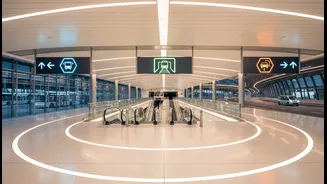
In contrast, Delhi's Indira Gandhi International Airport (IGI) offers a glimpse of how things can be done right. The Airport Express Metro Line is a game-changer, connecting the airport to the heart of the city in about 20 minutes for a reasonable fare. Though it had a rocky start with low ridership, a combination of fare reductions, increased frequency, and better integration with the rest of the metro network turned it into a success. It provides a fast, reliable, and stress-free alternative to the unpredictable road journey. The success of the Airport Express proves that when mass transit is seamlessly integrated with airport infrastructure, passengers will use it. It demonstrates that holistic planning, treating the journey to the airport as part of the flight experience, pays off.
The Hidden Costs of the Last Mile
The problem extends beyond just lost time. The financial burden on passengers is significant. Without affordable and efficient public transport, travellers are at the mercy of surge pricing from ride-hailing apps and high taxi fares, which can sometimes cost as much as the flight ticket itself. A study on Mumbai's airport found travel costs to reach the airport ranged between Rs 500 and Rs 900, with a majority of travellers facing traffic congestion. Furthermore, there is a mental cost—the anxiety of not knowing whether you will make your flight due to an unexpected traffic snarl. This friction before even getting on the plane creates a negative travel experience. For India’s aviation sector to truly flourish, the focus cannot just be on building bigger terminals and adding more flights; it must include creating a seamless, affordable, and predictable journey from the city to the airport gate.
Planning for End-to-End Journeys
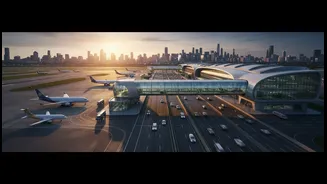
As India continues its ambitious airport expansion, including in Tier-II and Tier-III cities, it is critical to avoid repeating the same mistakes. The Ministry of Civil Aviation's own policy has long recognised the need for efficient surface access and rail links, yet implementation remains patchy. Experts argue that the ecosystem around smaller airports often lacks basic ground transport infrastructure, hindering their potential. New airport city projects, like those planned by Adani Group, aim to create integrated districts around airports, which could be a step in the right direction if public transit is at their core. The goal should not be to simply build an airport, but to create a connected transport hub. Planners must view the airport as part of a larger urban system, not as an isolated island of infrastructure.