





The Dark Store: Quick Commerce's Engine Room
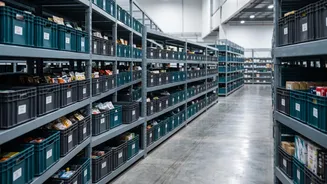
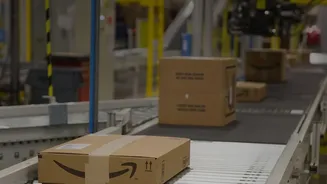
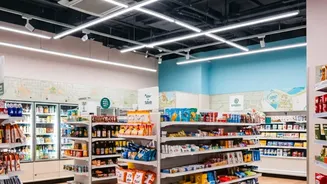
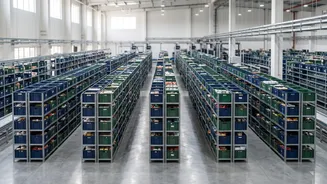
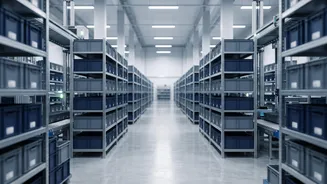
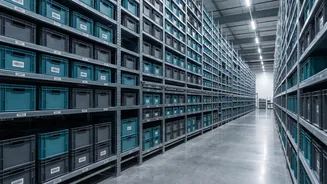
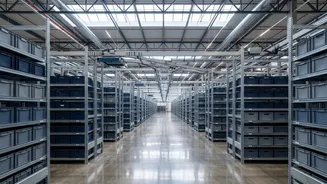
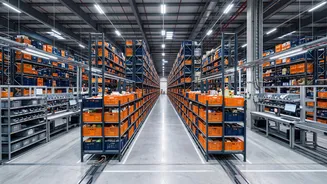
If you've had groceries or a late-night snack delivered in under 15 minutes, you've experienced the magic of a dark store. These are not shops you can walk into; they are small, hyperlocal warehouses exclusively for fulfilling online orders. Spread across
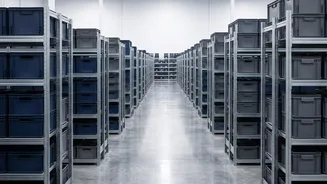
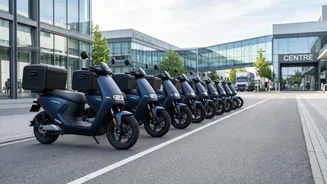
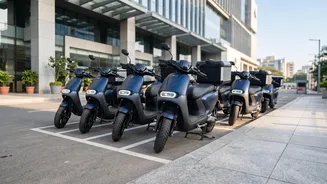
dense residential areas, these 2,000-4,000 sq. ft. spaces are the backbone of the 10-minute delivery promise made by platforms like Zepto, Blinkit, and Swiggy Instamart. Their entire layout is optimised for speed: pickers can grab items in under 90 seconds, and because stores are located within a 2-3 km radius of customers, delivery is incredibly fast. In a city like Bengaluru, notorious for its traffic, this model isn't just a convenience; it's a powerful solution.
The Density Game: Why More Stores?
Bengaluru has become the undisputed dark store capital of India, with over 629 stores mapped as of mid-2026, more than any other city. This intense concentration, especially in tech corridors and areas with large apartment complexes, points to the core strategy of quick commerce. The goal isn't just to serve existing orders. It's about achieving 'density'. The closer a dark store is to you, the faster the delivery. The faster the delivery, the more likely you are to use the service again. This creates a powerful competitive moat; a platform with a dense network can offer a 10-minute promise that a competitor with fewer stores simply cannot match. A product available in 120 stores across Bengaluru can sell up to six times faster than the same product in only 30 stores. This shows that store count is a direct driver of sales velocity.
Store Count vs. Orders: The Strategic Disconnect
Here lies the heart of the puzzle: a high number of dark stores doesn't always correlate directly with the highest order volume on day one. Opening a new dark store is a forward-looking investment, a bet on future demand. Companies are engaged in a land grab, securing prime real estate in high-potential neighbourhoods before rivals do. Zepto, for instance, has been known to aggressively open stores in areas where Blinkit has a head start, creating overlapping delivery zones to compete directly. The strategy is to build the infrastructure first, knowing that the hyper-convenience of a nearby store will eventually convert residents into frequent users. This means some newer stores may initially operate below the break-even point of 1,200-1,250 orders per day, especially in less mature areas. The focus is on long-term market capture, not immediate store-level profitability.
The Unit Economics Challenge
While the strategy is aggressive, the economics are challenging. The promise of speed often leads to smaller, more frequent orders, which can hurt profitability. Each order has associated costs: picking and packing labour (around ₹8-15), and last-mile delivery (which can be ₹40-60). Dark store operations themselves account for about 7-10% of the average order value. Profitability hinges on 'order density' — getting enough orders within a small area to keep delivery partners busy and reduce the cost per delivery. As companies expand into new product categories beyond groceries, like electronics and cosmetics, the average order value increases, helping to offset these costs. This push, combined with advertising revenue from brands, is crucial for making the economics of each dark store work.
The Future: Saturation and Evolution
The relentless expansion in Bengaluru is already leading to saturation in core areas like Koramangala and Whitefield. As this happens, the focus is shifting. Companies are now looking to improve the utilisation and efficiency of their existing stores rather than just adding new ones. Swiggy, for example, has stated its current network can handle double the order volume with better operational efficiency. The future will likely involve consolidation in some areas, expansion into less-served parts of North and West Bangalore, and a greater emphasis on profitability per store. The dark store itself is evolving from a simple grocery hub into a multi-category fulfilment centre, a trend that will continue to shape the city's retail landscape.