







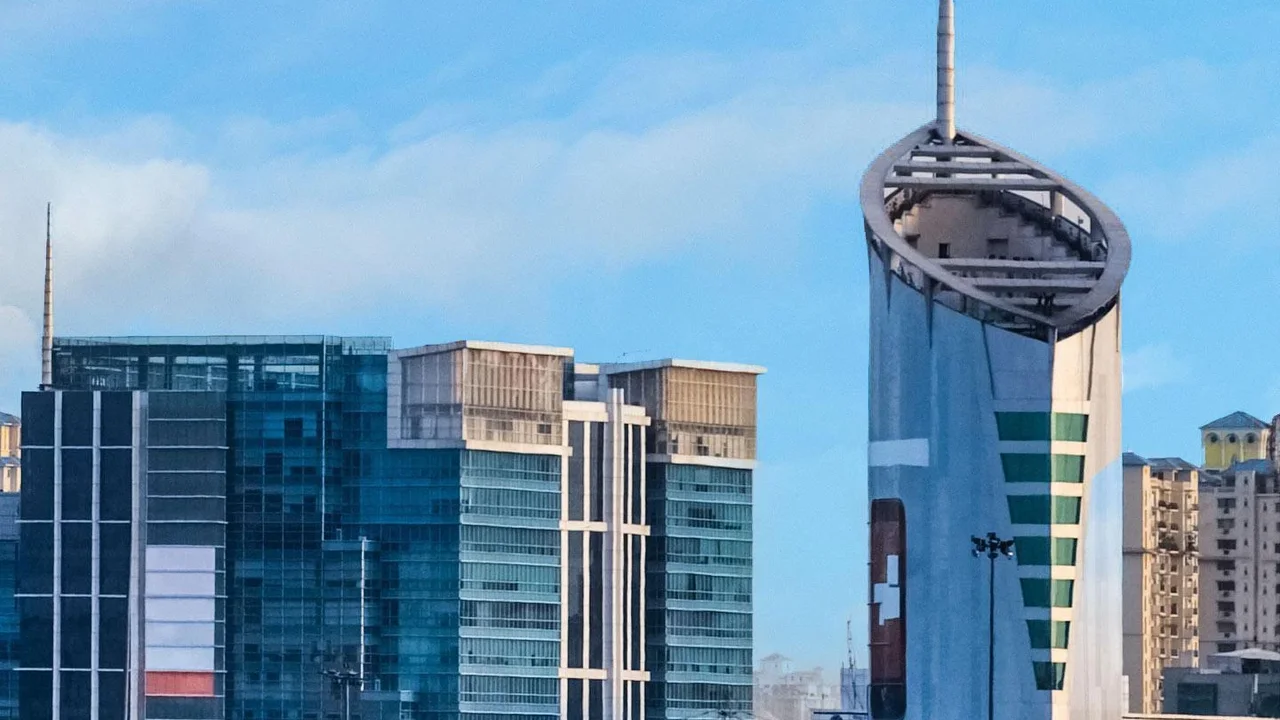

The Core Problem: A City Out of Space
Delhi's housing squeeze starts with a simple, unchangeable fact: the city has limited physical land. Much of the National Capital Territory is either already built up, protected as green belt or part of the ecologically sensitive Yamuna floodplain where
construction is restricted. For decades, the Delhi Development Authority (DDA) acquired land for planned development, but this process became slow and fraught with legal challenges. As a result, the supply of fresh, developable land within the city proper has dwindled, pushing prices for available plots to astronomical levels and making large-scale housing projects unfeasible in most central areas. This scarcity has forced developers and policymakers to look for creative solutions beyond traditional land acquisition.
Policy's New Playbook: Land Pooling
To solve the land crunch, authorities are now banking on the Land Pooling Policy (LPP). Instead of acquiring land, the DDA is acting as a facilitator, encouraging private landowners, often in rural or urban villages, to pool their holdings. Under this model, landowners give a portion of their combined land to the DDA for infrastructure development like roads, parks, and utilities. In return, they get to keep the remaining, more valuable, consolidated land for residential and commercial construction. This policy is primarily targeted at Delhi's 'urban extension' areas, unlocking vast tracts of land in outer zones like Narela, Bawana, and Najafgarh for planned, high-density development. The aim is to create lakhs of new homes without the government having to buy the land first.
Infrastructure as the New Kingmaker
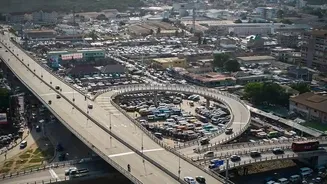
New housing follows new infrastructure. The expansion of the Delhi Metro and the construction of major expressways have become the primary drivers of real estate growth. Corridors along projects like the Dwarka Expressway and the Delhi-Mumbai Expressway are turning into hotspots for residential projects. Improved connectivity makes previously remote areas more accessible and attractive to homebuyers who are priced out of central Delhi. This has shifted the focus to peripheral zones and even satellite towns like Gurugram, Noida, and Ghaziabad, which benefit from enhanced transport links to Delhi's economic hubs. Developers are actively launching projects in these newly connected areas, confident that accessibility will drive demand.
The Rise of Redevelopment
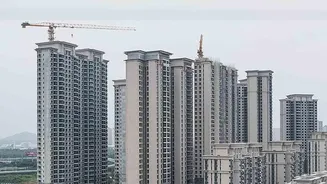
With no new land to build on, the focus is also shifting to rebuilding on old land. Redevelopment is emerging as a key trend in established parts of Delhi. Older, low-rise DDA colonies and dilapidated residential areas are being targeted for vertical growth. The Master Plan for Delhi 2041 actively promotes this, allowing for higher Floor Area Ratio (FAR) and greater building heights, especially in zones near public transport, a concept known as Transit-Oriented Development (TOD). This encourages the replacement of old, structurally weak two-storey homes with modern high-rise apartments. Neighbourhoods like Moti Nagar, Kirti Nagar, and Patel Nagar are already seeing significant redevelopment activity, transforming their skylines and adding housing stock without using new land.
The Blurring Lines with NCR
Ultimately, Delhi's land constraints have pushed the boundaries of its housing market into the wider National Capital Region (NCR). For many homebuyers, the search for a new property now invariably leads to Gurugram, Noida, Greater Noida, and Faridabad. These satellite cities have more available land and are aggressively developing high-rise residential projects that are often more affordable than options within Delhi. With infrastructure like the Rapid Rail Transit System (RRTS) further bridging the distance, these NCR hubs are no longer just suburbs but are becoming self-sustaining economic centres. This outflow means that while new housing within Delhi is concentrated in specific land-pooled or redeveloped pockets, the bulk of the region's new supply is now rising outside the capital's official borders.