



The Cosmic Paradox Explained
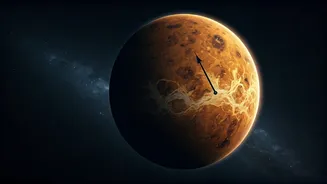
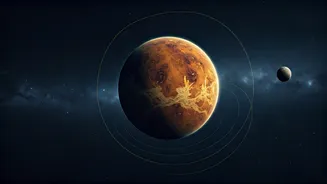
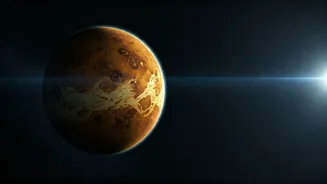
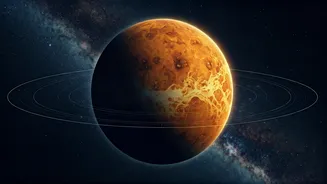
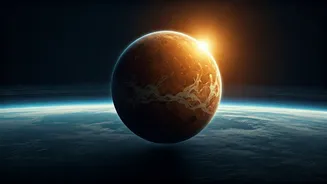
Let's get the mind-bending numbers out of the way first. A year on Venus—the time it takes to complete one full orbit around the Sun—is approximately 225 Earth days. However, a single day on Venus—the time it takes for the planet to complete one full rotation
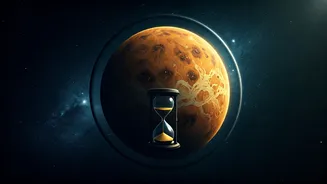
on its axis—is a staggering 243 Earth days. That’s right: a Venusian year is shorter than a Venusian day. You would celebrate your first birthday on Venus before you’ve even experienced a full day-night cycle from the planet’s perspective. This isn’t a riddle; it's a fascinating quirk of celestial mechanics that makes Venus one of the strangest places in our solar system.
The Slow, Backward Spin
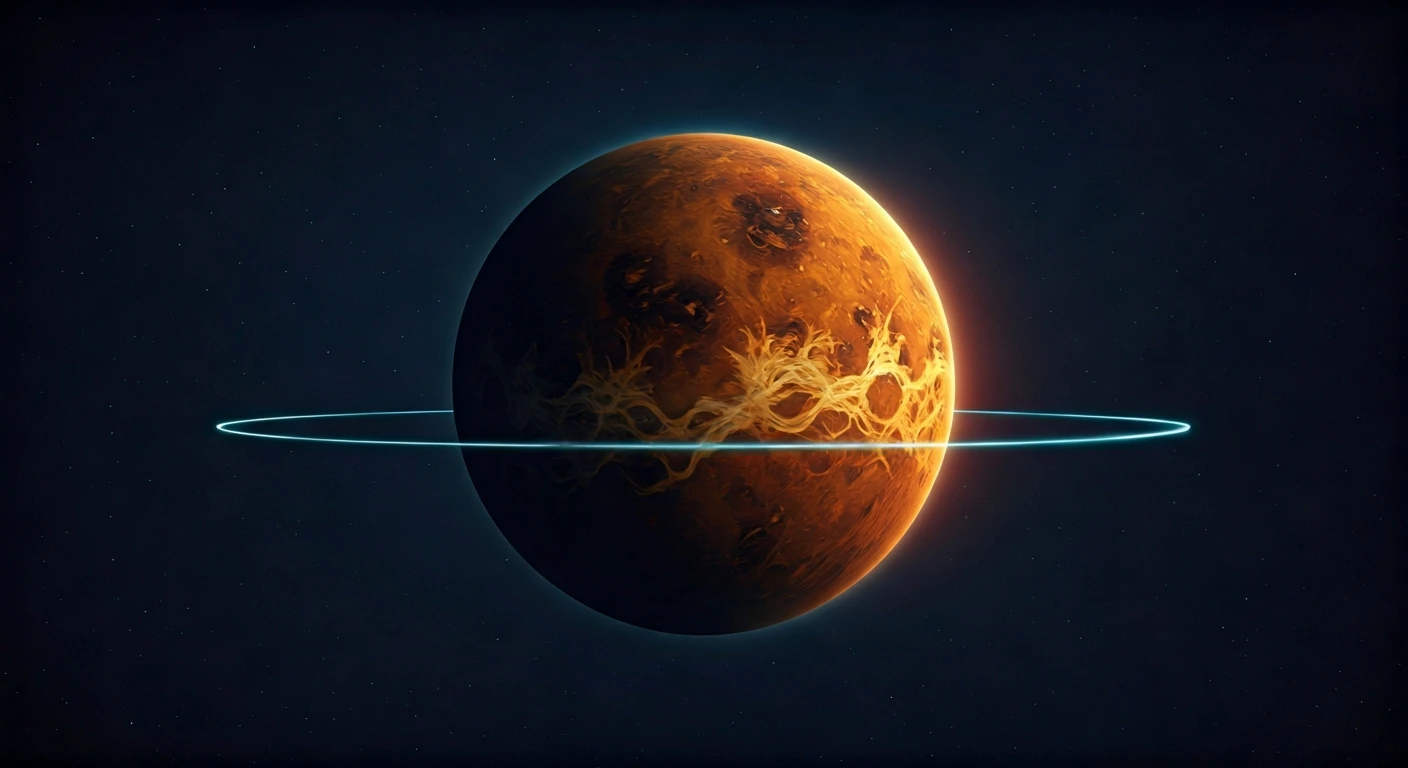
Unlike Earth and most other planets in our solar system, which spin counter-clockwise on their axis, Venus spins clockwise. This is known as retrograde rotation. If you could stand on the surface of Venus (which you can’t, due to the crushing pressure and searing 460°C heat), you would see the Sun rise in the west and set in the east. Not only is its spin backward, but it's also agonisingly slow. While Earth whips through a rotation in 24 hours, Venus takes 243 Earth days to do the same. This means a single spin of the planet takes longer than its entire trip around the Sun.
A Day Isn't Always a Day
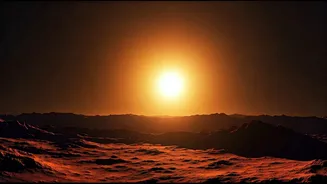
Here's where it gets even weirder. When we talk about a 'day', we usually mean the time from one sunrise to the next. This is called a solar day. But the 243-day figure is for a 'sidereal day'—the time it takes for the planet to turn 360 degrees on its axis relative to the distant stars. Because Venus rotates backwards while also orbiting the Sun, these two motions work against each other in a strange way. The result is that a solar day on Venus (sunrise to sunrise) is actually much shorter than its sidereal day. One Venusian solar day is about 117 Earth days long. So, you'd experience roughly two sunrises and two sunsets in a single Venusian year. Your 'day' would still feel incredibly long, with daylight lasting for nearly two Earth months at a time.
Why Is Venus So Strange?
Scientists are still debating the exact cause of Venus's bizarre rotation. One leading theory suggests that billions of years ago, a massive planet-sized object slammed into Venus, sending it into its backward, slow spin. Imagine a cosmic collision so powerful it literally reversed the direction a planet spins and slowed it to a crawl. Another theory points to its incredibly thick and heavy atmosphere. This dense blanket of gas, 90 times thicker than Earth's, might have created powerful atmospheric tides. Over millions of years, the friction between the solid planet and its soupy atmosphere could have acted like a brake, slowing its rotation and eventually flipping it over.
What This Teaches Us
Venus's peculiar timing serves as a powerful reminder that our Earthly concepts of time are not universal. We are so accustomed to our 24-hour day and 365-day year that it's easy to assume this is the norm. But the cosmos is filled with worlds that operate on completely different clocks. Studying planets like Venus, our so-called 'sister planet' due to its similar size, pushes the boundaries of our understanding. It shows us the sheer diversity of planetary evolution and the chaotic, powerful forces that have shaped our solar system. It’s a lesson in cosmic humility, proving that the universe is far stranger and more wonderful than we can often imagine.