








More Than Just a 'Red Tide'
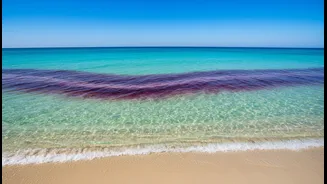
A harmful algal bloom is the rapid, excessive growth of microscopic algae in water. While many blooms are harmless, certain species produce potent toxins that can be dangerous to marine life and humans. These events are often called 'red tides', but they
can also appear as green, brown, or blue, and sometimes cause no discolouration at all. The problem starts when an excess of nutrients, mainly nitrogen and phosphorus from sources like agricultural runoff and untreated sewage, enters the water. Combined with factors like warming water temperatures and sunlight, these nutrients act like a super-fertiliser, causing a massive population explosion among the algae.
The High Cost of a Bloom
The economic consequences for India's coastal regions are severe. For fisheries, a toxic bloom can be catastrophic, causing mass fish kills either by depleting oxygen in the water or through direct poisoning. Shellfish like mussels and oysters can accumulate these toxins, making them unsafe for human consumption and leading to widespread bans and recalls, sometimes causing illnesses like Paralytic Shellfish Poisoning (PSP). The tourism sector suffers just as acutely. Beach closures, health advisories, and the foul smell of decaying algae can decimate visitor numbers, impacting local hotels, restaurants, and recreational businesses that depend on a healthy coastline.
The Limits of Prediction
One of the greatest challenges is that we can't reliably predict HABs. While we understand the general ingredients—nutrients, warmth, and sunlight—forecasting the precise timing, location, and toxicity of a bloom is incredibly complex. The life cycles of algae are intricate, and their growth is influenced by a chaotic mix of ocean currents, water column stratification, and changing weather patterns. Even when a bloom is detected, it's hard to know if it will produce toxins, as not all blooms of a toxic species are actively harmful. This uncertainty makes it difficult for officials to issue timely warnings without risking false alarms that could needlessly damage local economies.
Why We Can't Just 'Clean It Up'
Once a large-scale bloom is underway in open marine waters, there are few effective options to stop it. Spraying chemicals like copper sulphate can kill the algae but may also cause massive collateral damage to the entire marine ecosystem. Other methods, like dispersing clay to sink the algae, have been tested but are difficult and expensive to scale up for widespread blooms that move in three dimensions. Furthermore, killing the algae cells can cause them to release all their stored toxins into the water at once, potentially making a bad situation even worse. Management is further complicated by the fact that what works in a small lake may be completely impractical along a vast, dynamic coastline.
Planning for Uncertainty
Given these limitations, the focus must shift from reactive crisis management to proactive, long-term resilience. For fisheries, beach, and tourism planners, this means developing a robust playbook. First, investing in consistent monitoring programs is critical for early detection. This allows for faster public health advisories and targeted fishing closures. Second, establishing clear communication plans is essential to inform the public and stakeholders without causing panic. Third, long-term prevention is the best cure. This involves working across sectors to reduce the nutrient pollution that fuels these blooms by improving wastewater treatment and managing agricultural runoff. Finally, exploring strategies like co-cultivating seaweed, which can absorb excess nutrients, may offer innovative, localized mitigation in the future.