







Understanding Whole vs. Refined Grains
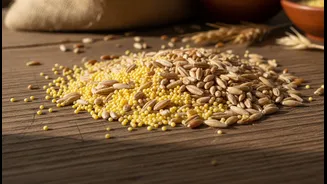
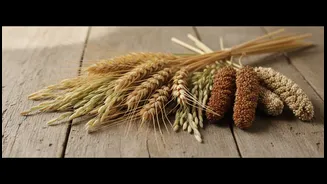
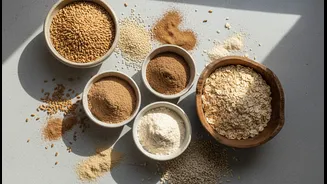
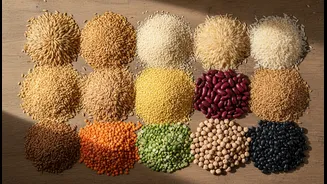
First, let's clarify what a 'whole grain' actually is. A whole grain contains all three parts of the kernel: the bran, the germ, and the endosperm. This complete package is rich in fibre, vitamins, minerals, and other beneficial compounds. Common whole grains
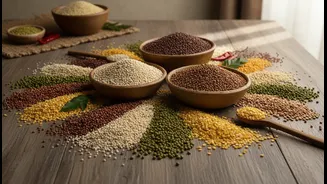
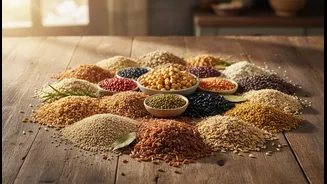
available in India include whole wheat (atta), brown rice, oats, barley (jau), and a variety of millets like ragi (finger millet), jowar (sorghum), and bajra (pearl millet). In contrast, refined grains, like white rice and maida, have had the bran and germ removed. This process strips away most of the fibre and many crucial nutrients, leaving behind mostly starch. While some refined grains are 'enriched' by adding back certain vitamins and minerals, the fibre is typically not replaced.
The Powerful Health Benefits
Choosing whole grains over refined ones offers significant health advantages. The high fibre content keeps you feeling full for longer, which can help with weight management. Studies show that a diet rich in whole grains can help lower bad cholesterol (LDL), reduce the risk of heart disease, stroke, and type 2 diabetes, and support healthy digestion. The nutrients in whole grains, such as B vitamins, iron, and magnesium, are vital for overall health, helping to form new cells and maintain a healthy immune system.
Finding Your Portion-Size Sweet Spot
Here's where we address the 'free-for-all' concern. While nutritious, whole grains are still a source of calories, and portion control is essential. Health guidelines generally recommend that at least half of the grains you eat should be whole grains. For most adults, this translates to about three to six ounce-equivalents of grains per day, with at least half being whole. What does that look like in real food? A one-ounce equivalent is roughly one slice of whole-wheat bread, half a cup of cooked rice or pasta, or one small roti. A simple visual guide is to use your hand: a serving of carbohydrates like cooked grains should be about the size of your cupped hand.
Building a Balanced Plate
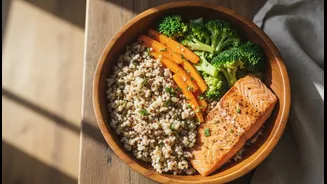
The easiest way to ensure you're not overdoing it is to use the balanced plate method. Imagine your plate divided into sections. Fill half your plate with non-starchy vegetables or salad. This provides volume and nutrients with fewer calories. One quarter of your plate should be a source of lean protein like dal, chicken, fish, or tofu. The final quarter is for your whole grains. This visual method helps you create a satisfying, nutrient-dense meal without needing to weigh or measure everything. For example, a balanced dinner could be a katori of dal, a large serving of sabzi, and one or two small jowar rotis.
Simple Swaps for Everyday Meals
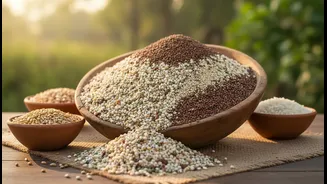
Incorporating more whole grains doesn't require a complete diet overhaul. Start with simple swaps. Replace white rice with brown rice, quinoa, or millets. Use whole-wheat atta for your rotis instead of more refined flour. Begin your day with a bowl of oatmeal or a whole-grain cereal instead of sugary options. You can add cooked barley or farro to soups and salads for extra texture and fibre. Even snacks can be an opportunity—air-popped popcorn is a whole grain! Preparing a batch of a whole grain like brown rice or quinoa at the start of the week makes it easy to add a healthy scoop to any meal.