





What is a Low-Impact Workout?
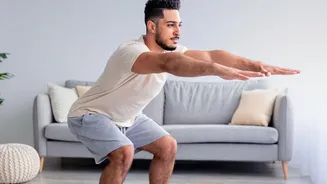
The term 'low-impact' refers to exercises that are gentle on your joints. Unlike high-impact activities such as running or jumping, these workouts ensure that you keep at least one foot on the ground at all times. This approach minimises the jarring stress
on your knees, hips, and ankles, making it an ideal choice for beginners, individuals with joint pain, or anyone recovering from an injury. But don't mistake low-impact for low-intensity. You can still achieve an excellent cardiovascular workout and build strength, all while protecting your body from unnecessary strain. The focus is on fluid, controlled movements that build fitness sustainably.
Finding Your 'Comfortable' Intensity
The key to a successful start is finding an intensity that challenges you without causing burnout. Pushing too hard can lead to injury and demotivation. Instead of guessing, you can use simple, proven methods to gauge your effort. The goal is to work at a moderate intensity, where you feel you are working but can maintain the activity for a sustained period. Two of the most accessible tools for beginners are the 'Talk Test' and the 'Rate of Perceived Exertion' (RPE) scale.
Method 1: The Talk Test
The Talk Test is the easiest way to measure your intensity without any equipment. It's based on how your breathing affects your ability to speak. Here’s how it works: If you can talk comfortably or even sing, your intensity is likely low. If you can hold a conversation but can't sing, you're in the moderate-intensity zone—the perfect spot for most beginners. If you can only get out a few words at a time before needing to take a breath, you're in the vigorous-intensity zone. For your initial workouts, aim to stay in that conversational, moderate sweet spot.
Method 2: Rate of Perceived Exertion (RPE)
The Rate of Perceived Exertion (RPE) scale asks you to subjectively rate how hard you feel you're working. The most common version is a simple 0-10 scale. Zero is how you feel while resting, and 10 is an all-out, maximum effort you can't sustain. As a beginner, you should aim for a level between 3 and 5. This corresponds to a light-to-moderate effort. It should feel like you're doing something, but you're not struggling. This internal gauge helps you listen to your body and adjust your workout based on how you feel on any given day, accounting for factors like sleep and stress.
Great Low-Impact Workouts to Try
Now that you know how to measure your intensity, here are some excellent low-impact exercises to start with: Walking: Simple, free, and incredibly effective. You can easily adjust your pace to stay in a moderate intensity zone. Cycling: Whether on a stationary bike or outdoors, cycling is a fantastic cardiovascular workout that's easy on the knees. Swimming and Water Aerobics: Water supports your body weight, taking all pressure off your joints while providing full-body resistance. Elliptical Trainer: This gym machine simulates a running motion without the impact, providing a great cardio session. * Yoga and Pilates: These practices build strength, flexibility, and body awareness through controlled movements and postures.