

Capturing the Flash
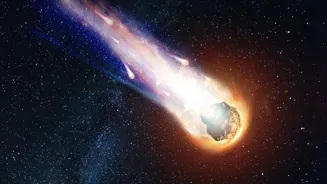
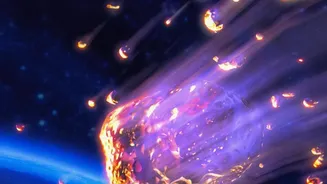
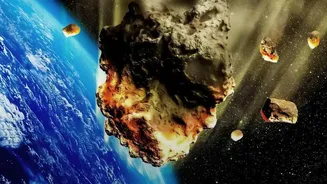
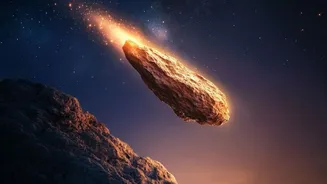
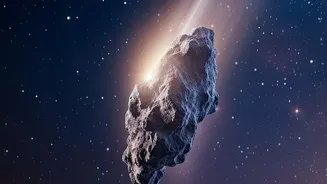
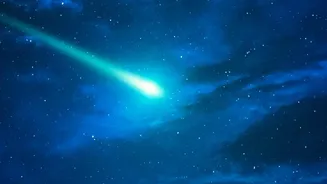
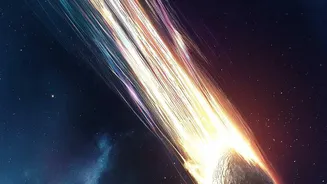
The entire process begins with observation. When a meteoroid—a rock in space—hits Earth's atmosphere at blistering speeds, it compresses and heats the air in front of it, creating a bright, glowing trail we call a meteor, or fireball if it's especially
bright. This fiery entry is the first piece of the puzzle. It's a transient event, lasting only seconds, so catching it is crucial. To do this, scientists don't just rely on luck; they use dedicated networks of automated cameras pointed at the sky. These systems are designed to watch for these sudden, bright events against the backdrop of stars.
A Network of Digital Eyes
One camera is not enough. To reconstruct a meteor's path, you need at least two, and preferably more, observing the same event from different locations. This is the principle behind projects like the Desert Fireball Network (DFN) in Australia and the global CAMS (Cameras for Allsky Meteor Surveillance) project. These networks consist of dozens of autonomous camera stations, sometimes spread across millions of square kilometers. Each station is equipped with a fisheye lens to see a large portion of the sky and operates from dusk until dawn, taking continuous exposures. When a fireball appears, it's captured by multiple cameras simultaneously, providing the multiple viewpoints needed for the next step.
Reconstructing the Path with Triangulation
With images of the same meteor from different angles, researchers can use a method called triangulation. Think of it like geometric surveying. By comparing the meteor's trail against the known positions of background stars in each image, scientists can precisely calculate its path through the atmosphere in three dimensions. This allows them to determine its trajectory, including its angle of entry, speed, and how much it slowed down as it passed through the air. Sophisticated software automates much of this process, taking the raw data from the cameras to build a detailed 3D model of the meteor's flight.
Rewinding the Cosmic Clock
Once scientists have an accurate measurement of the meteoroid's velocity and direction just as it entered the atmosphere, they have the key to its past. They can then perform the final, mind-bending step: calculating its orbit before it ever encountered our planet. Using the laws of planetary motion and accounting for the gravitational pulls of the Sun, Earth, and other planets, they can effectively “rewind” its journey. This calculation projects the trajectory backward from Earth's atmosphere out into space, revealing the heliocentric orbit—the elliptical path the rock followed around the Sun. This tells them if the object came from the asteroid belt between Mars and Jupiter, the icy realm of comets, or perhaps even another planet.
The Scientific Payoff
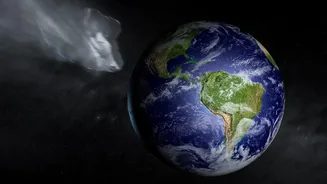
This complex work is far more than a simple academic exercise. By tracing meteorites back to their parent bodies, scientists gain what they call "ground truth" for astronomy. It allows them to link a physical rock they can study in a lab—a meteorite—to a specific place in the solar system, like a particular class of asteroid. This helps answer fundamental questions about the formation of our solar system 4.6 billion years ago. Furthermore, tracking these objects helps map the traffic of near-Earth objects, improving our understanding of potential impact hazards and ensuring the safety of spacecraft and future space missions.