






What is Food Fortification?
Food fortification is the process of adding essential vitamins and minerals, also known as micronutrients, to staple foods to improve their nutritional quality. The goal is to address deficiencies in the general population without requiring people to change
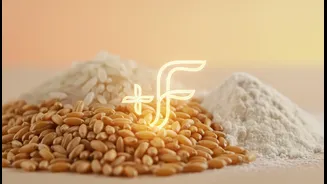
their eating habits. Think of it as a quiet, background intervention working to make everyday meals healthier. In India, the Food Safety and Standards Authority of India (FSSAI) has identified key staples like rice, wheat flour, salt, milk, and oil for fortification. Products that meet these standards can carry a special ‘+F’ logo, making them easy for consumers to identify.
India’s Battle with ‘Hidden Hunger’
While India has made progress in fighting hunger, a more insidious problem known as 'hidden hunger'—or micronutrient deficiency—persists. A large portion of the population, over 70% by some estimates, consumes less than the recommended daily amount of micronutrients. This has led to a severe public health crisis, most notably a high prevalence of anaemia. According to the latest National Family Health Survey (NFHS-5), anaemia affects a staggering 67% of young children and 57% of women. This deficiency is primarily linked to a lack of iron, but deficiencies in vitamin B12 and folic acid are also significant contributing factors. This widespread issue impacts everything from cognitive development in children to the overall productivity of the nation.
The Power Trio: Iron, Folic Acid, and B12
The choice of iron, folic acid, and vitamin B12 for fortifying rice and flour is highly strategic. This trio directly tackles anaemia and other widespread deficiencies. Iron is a crucial component of haemoglobin, the protein in red blood cells that carries oxygen throughout the body; a lack of it leads to fatigue and weakness. Folic acid is vital for forming healthy cells, especially red blood cells, and is famously important during pregnancy to prevent birth defects. Vitamin B12 is essential for producing red blood cells and maintaining a healthy nervous system. By adding these three micronutrients together to staple foods, the aim is to create a powerful, synergistic effect to boost the nation's health.
How to Fortify a Grain of Rice
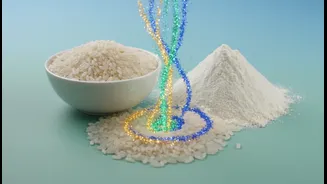
Fortifying rice might sound complex, but the technology is well-established. The most common method in India uses extrusion. First, regular rice is ground into a fine flour. This flour is then mixed with a premix of vitamins and minerals, including iron, folic acid, and vitamin B12. This nutrient-rich dough is then passed through an extruder machine, which shapes it into kernels that look almost identical to regular rice grains. These are called Fortified Rice Kernels (FRK). To create the final product, these FRKs are blended with traditional rice, usually in a ratio of 1:100. The result is fortified rice that looks, cooks, and tastes just like the original but is packed with essential nutrients. A similar process of adding a nutrient premix is used for fortifying wheat flour.
Government's Push Through Public Schemes
Recognising the massive potential of fortification, the Indian government has made it a cornerstone of its public health initiatives. A centrally sponsored scheme aims to distribute fortified rice across all government food security programs by 2024. This includes the Public Distribution System (PDS), the PM-POSHAN scheme (formerly Mid-Day Meals), and the Integrated Child Development Services (ICDS) anganwadis. By leveraging this vast network that reaches hundreds of millions of people, especially women and children, the government aims to deliver vital nutrients to the most vulnerable sections of society. This large-scale rollout is a crucial step in institutionalizing fortified foods as a public health norm.
Challenges and the Road Ahead
Despite the clear benefits and government backing, the path to universal food fortification has its challenges. The fragmented nature of India's rice and wheat milling industry, which is dominated by many small-scale players, makes widespread implementation and quality control difficult. Building public awareness to drive demand and dispel any myths about fortified foods is another critical hurdle. Ensuring a robust regulatory framework for monitoring and maintaining quality standards across the board is also essential for the program's long-term success. Overcoming these logistical and social challenges will be key to unlocking the full potential of food fortification to build a healthier India.