




India's Ambitious Leap to Venus
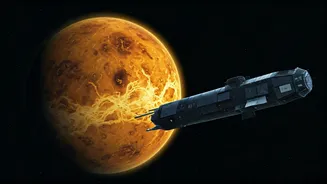
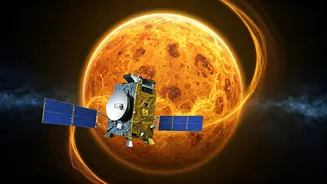
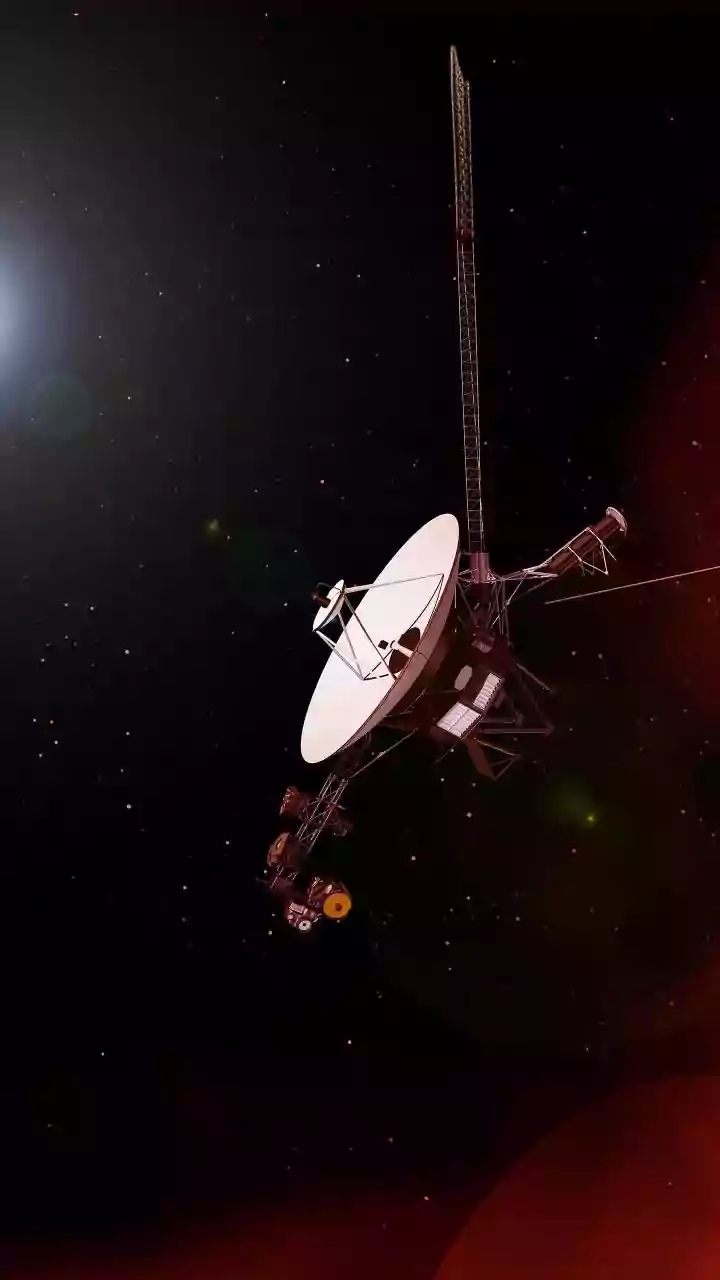
The Indian Space Research Organisation (ISRO) is charting its next great interplanetary journey after the successes of its Mars and Moon missions. The destination is Venus, the second planet from the Sun, with a mission aptly named Shukrayaan-1, from the Sanskrit
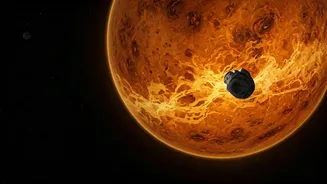
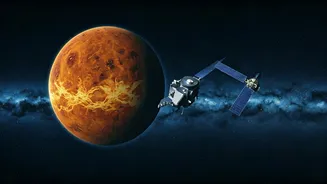
name for Venus. Planned for a 2028 launch, this orbiter mission represents a significant step for India's capabilities in deep space exploration. The spacecraft, equipped with a suite of sophisticated Indian and international instruments, will spend years orbiting Venus. Its goals are to study the planet's mysterious, cloud-shrouded surface and its incredibly dense atmosphere.
A Tale of Two Twins
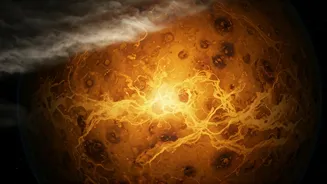
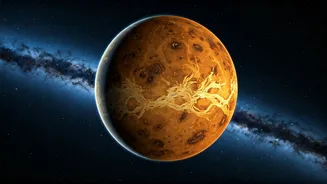
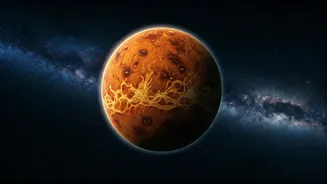
Venus is often called Earth's twin because of its similar size, mass, and density. However, the resemblance ends there. Venus is a hellish world with surface temperatures hot enough to melt lead and a crushing atmospheric pressure over 90 times that of Earth's. Its skies rain sulphuric acid, and its atmosphere is overwhelmingly composed of carbon dioxide. Scientists believe Venus wasn't always this way. Evidence suggests it may have once had liquid water oceans, similar to early Earth. Understanding what went so catastrophically wrong on Venus is a primary driver for the Shukrayaan-1 mission. By studying its divergent evolutionary path, scientists hope to gain crucial insights into the factors that make a planet habitable—and what can make it hostile.
The Ultimate Greenhouse Laboratory
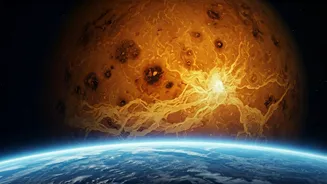
The core of Venus's transformation lies in a phenomenon known as a runaway greenhouse effect. On Earth, greenhouse gases trap heat and keep our planet warm enough for life. On Venus, this process went into overdrive. Early in its history, as the sun's energy evaporated its oceans, the resulting water vapour—a potent greenhouse gas—trapped more heat, which in turn caused more evaporation. This created a vicious cycle that boiled the oceans away and baked the planet. With nearly all its carbon locked in the atmosphere, Venus became a planetary-scale cautionary tale. For Indian scientists, Venus offers a natural laboratory to study extreme climate dynamics without the complexities of human activity. The data gathered by Shukrayaan-1 on Venus's atmospheric composition and dynamics will be invaluable for testing and refining our own climate models.
From Venusian Clouds to Indian Monsoons
The connection between a distant planet's atmosphere and predicting weather patterns in India might seem tenuous, but the underlying physics is the same. The climate models used to forecast monsoons, predict cyclones, and understand long-term temperature trends are based on fundamental principles of atmospheric circulation, energy transfer, and chemistry. By studying an atmospheric system as extreme as Venus's, scientists can push these models to their limits. The insights gained from Shukrayaan-1 on how Venus's thick atmosphere circulates, interacts with solar winds, and maintains its super-heated state can help calibrate and improve the accuracy of climate models on Earth. A better understanding of these complex processes can lead to more reliable long-term climate predictions and more accurate forecasting of seasonal phenomena like the Indian monsoon, which is vital for the country's economy and food security.