

What Are Coronal Mass Ejections?
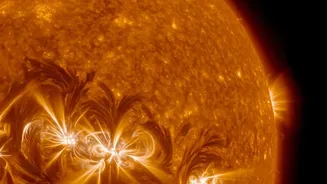
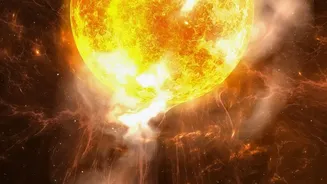
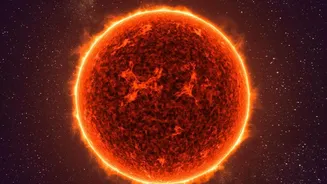
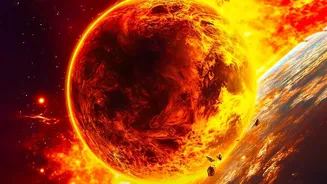
A Coronal Mass Ejection, or CME, is one of the most powerful types of solar events. It is a massive and explosive burst of plasma and magnetic fields from the Sun's outer atmosphere, the corona. Think of it as a billion-tonne solar cannonball, travelling
at speeds from 250 to nearly 3,000 kilometres per second. These are not the same as solar flares, which are intense bursts of radiation. CMEs are vast clouds of solar material that travel through space and can cause significant disturbances if they are aimed at Earth. Their frequency varies with the Sun's 11-year cycle, increasing from about one per week at the solar minimum to several per day during the solar maximum.
The Threat to Our Digital World
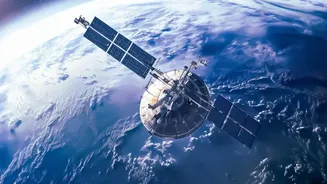
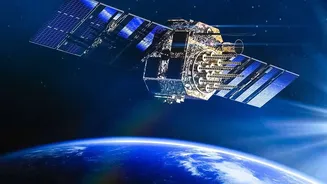
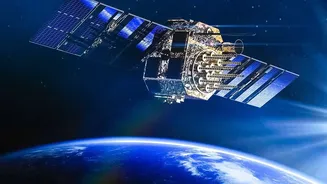
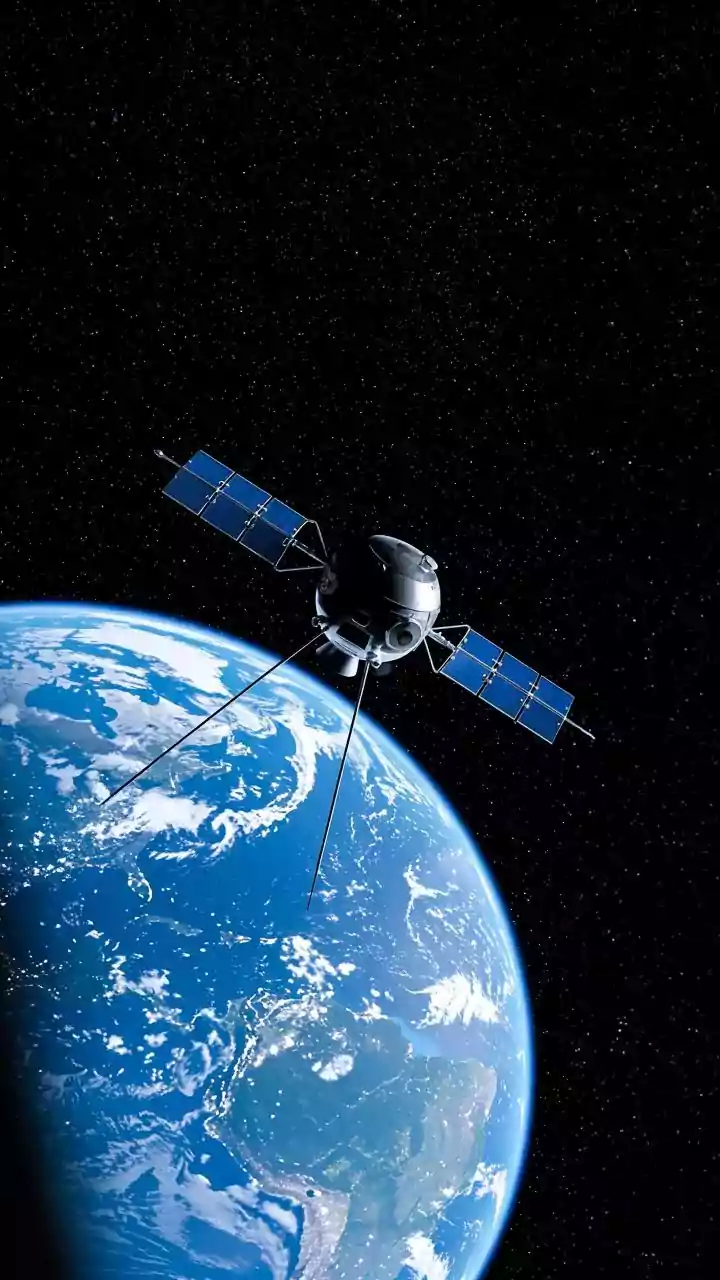
When an Earth-directed CME hits our planet's magnetic shield, it can trigger a geomagnetic storm. While these storms can produce beautiful auroras, they also pose a serious risk to the technology that underpins modern society. These storms can induce powerful electrical currents in power grids, potentially causing widespread blackouts. They can disrupt high-frequency radio communications and degrade GPS signals, affecting aviation and navigation. Furthermore, the high-energy particles are dangerous for satellites in orbit and astronauts on space stations, threatening everything from television broadcasting and mobile communication to critical weather monitoring.
The Science of Prediction
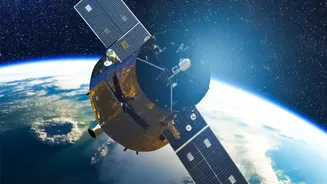
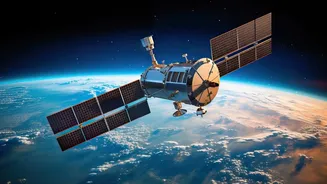
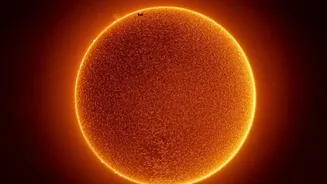
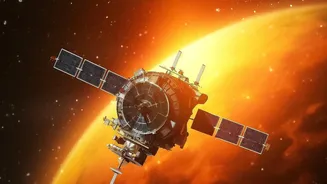
Just like meteorologists forecast weather on Earth, space weather forecasters predict storms from the Sun. This process begins with constant observation. A fleet of satellites, such as NASA's Solar and Heliospheric Observatory (SOHO), constantly watches the Sun, looking for tell-tale signs of an eruption. When a CME is detected, forecasters analyse its size, speed, and direction to determine if it poses a threat to Earth. This data is then fed into complex computer models that simulate the CME's journey through the 150 million kilometres of space between the Sun and Earth to predict its arrival time and potential severity.
A Global Network of Sentinels
Space weather is a global challenge that requires international cooperation. Agencies like the U.S. National Oceanic and Atmospheric Administration's Space Weather Prediction Center (SWPC) and the European Space Agency's Space Weather Coordination Centre serve as key hubs. These centres operate 24/7, analysing model outputs and issuing watches, warnings, and alerts to government agencies, power grid operators, airlines, and satellite companies around the world. This coordinated effort, supported by organisations like the World Meteorological Organization (WMO), ensures that stakeholders have enough time—sometimes hours, sometimes days—to take protective measures, such as powering down sensitive satellite components or preparing grid infrastructure.
India’s Eye on the Sun
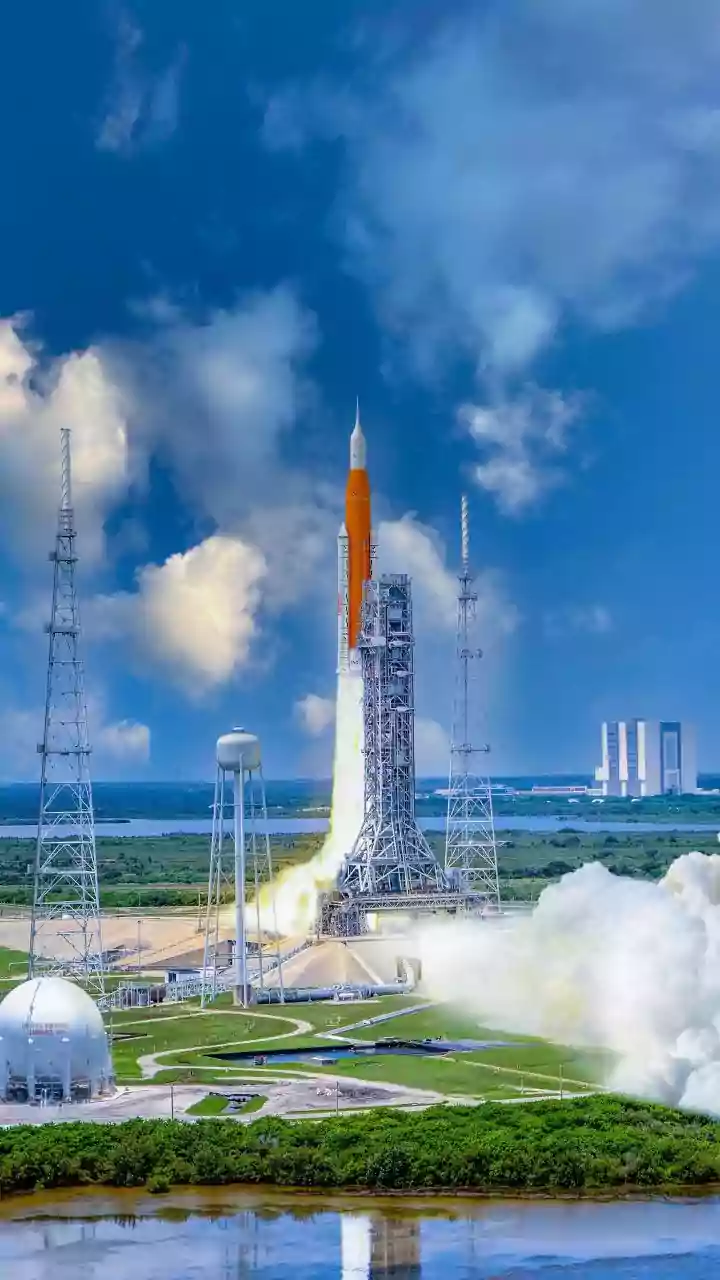
India has become a key player in this global effort with its Aditya-L1 mission. Launched by the Indian Space Research Organisation (ISRO), Aditya-L1 is positioned at a special location called Lagrange Point 1 (L1), about 1.5 million kilometres from Earth. From this vantage point, it gets a continuous, uninterrupted view of the Sun. Equipped with seven scientific instruments, Aditya-L1 studies the solar atmosphere and provides crucial data on solar eruptions. This information helps refine global prediction models and improves our ability to forecast space weather events, safeguarding India's own growing satellite and technological infrastructure.