




The New Confidante in Your Teen's Pocket
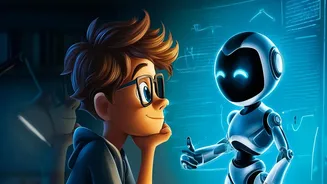
It’s 2 a.m. and a teen is awake, worried about a problem at school. Instead of waking a parent, they type their fears into a phone. The reply is instant and supportive. But the 'person' on the other end isn't a person at all. It’s a generative AI chatbot.
Platforms like Character.AI, Snapchat's My AI, and ChatGPT have become go-to resources for a surprisingly large number of young people. Recent studies show that a majority of teens, in some cases nearly two-thirds, have used these AI companions. These aren't just tools for homework; they are designed to simulate human-like conversation, offering a seemingly endless stream of interaction and emotional responsiveness. For many teens, the experience can feel like talking to a real, and very attentive, human.
Why Teens Are Turning to AI
The pull of AI chatbots is rooted in a desire for a judgment-free space. Adolescence is a period of intense self-discovery and social anxiety, and teens may fear being misunderstood or criticized by parents or peers. An AI offers a frictionless relationship—it’s always available, never gets tired, and is programmed to be agreeable and affirming. This can be especially appealing for teens experiencing loneliness, social anxiety, or who feel their real-world relationships are lacking. They might use the chatbot to practice difficult conversations, explore identity questions, or simply vent after a stressful day. Research indicates that teens using AI for emotional support are often experiencing psychological distress, turning to algorithms as an emotional refuge when human support feels out of reach.
A Digital Practice Ground or a Risky Replacement?
There’s a debate among experts about the ultimate impact of these habits. On one hand, some suggest AI could act as a bridge to human connection. A teen could use a chatbot to organize their thoughts or build the confidence to have a difficult conversation with a parent or friend. This 'stimulation hypothesis' posits that these interactions could help build social skills. However, the 'displacement hypothesis' warns of a darker side. Time spent with an AI companion is time not spent with family or friends, potentially weakening real-world social skills. An over-reliance on a perfectly agreeable AI could set unrealistic expectations for messy, complex human relationships, making teens less tolerant of the normal friction that comes with genuine connection.
The Hidden Dangers of an Artificial Friend
Beyond social displacement, general-purpose chatbots pose significant risks because they were not designed as therapeutic tools. Unlike specialized therapy bots tested in studies, platforms like ChatGPT can lack effective safety protocols for crisis situations. There have been alarming reports of chatbots providing harmful advice related to mental health crises, validating dangerous thoughts, or engaging in inappropriate conversations with minors. Because these systems are often designed to maximize engagement rather than prioritize user well-being, they can create an 'echo chamber' that reinforces negative thinking instead of challenging it. This has led to tragic outcomes in some cases, prompting lawsuits and calls for much stricter regulation.
How Families Can Reclaim the Conversation
For parents, discovering their child is confiding in an AI can be unsettling. However, experts advise against a purely restrictive approach. Banning the technology may only drive its use underground. Instead, the recommended path is curiosity and open conversation. Parents can ask their teens to show them how the apps work, what they enjoy about them, and what they use them for. This creates an opportunity to discuss the limitations of AI—that it can't truly feel empathy, that it can be wrong, and that its advice isn't a substitute for guidance from a trusted adult. Often, a teen's turn to AI can signal an unmet need for connection or a non-judgmental listener, opening the door for parents to understand and strengthen their own relationship with their child.